
易车贷

Search documents
三块“试金石” 检验中小银行改革发展成色
Jin Rong Shi Bao· 2025-10-15 01:21
Core Insights - The reform and risk management efforts for small and medium-sized financial institutions have significantly intensified since the "14th Five-Year Plan," with a more than 40% increase in the disposal of non-performing assets compared to the "13th Five-Year Plan" [1] - The ultimate goal of these reforms is not merely to reduce the number of small and medium-sized financial institutions or dispose of non-performing assets, but to enhance their ability to serve the real economy [1] Group 1: Improvement in Services to SMEs - The transformation of Helan Huishang Village Bank into a branch of Ningxia Bank has led to a significant increase in credit limits for SMEs, from 3 million yuan to nearly 8 million yuan, breaking previous financing bottlenecks [3][6] - The integration has resulted in improved service efficiency, with dedicated account managers providing tailored financial solutions that align with the operational needs of SMEs [3][15] - The merger has allowed for a substantial increase in financing for companies like Shared Equipment Co., which saw its credit limit rise from 20 million yuan to 306 million yuan, demonstrating the enhanced capacity of the new banking structure [5][6] Group 2: Sustainable Development of Banks - Shizuishan Bank is actively addressing the challenges posed by industrial upgrades and the need for sustainable development by enhancing its capital structure through both internal and external sources [10] - The bank has implemented a more rigorous customer approval process, focusing on balancing risk and efficiency rather than merely pursuing growth [11] - The bank's strategic focus on supporting traditional industries' green and intelligent upgrades, as well as emerging sectors like photovoltaics and energy storage, reflects its commitment to aligning financial services with local economic development [11] Group 3: Enhanced Quality and Stability of Financial Services - The merger has led to a notable increase in business volume at the new Ningxia Bank Helan branch, with a significant uptick in loan processing efficiency and the introduction of innovative loan products tailored to local market needs [14][15] - The integration has facilitated a digital transformation, allowing for streamlined processes and improved customer experiences, such as a "one-stop" service for vehicle loans [15] - The overall enhancement in service quality and stability is evidenced by customer feedback, highlighting the transition from traditional banking services to more innovative and efficient offerings [15][16]

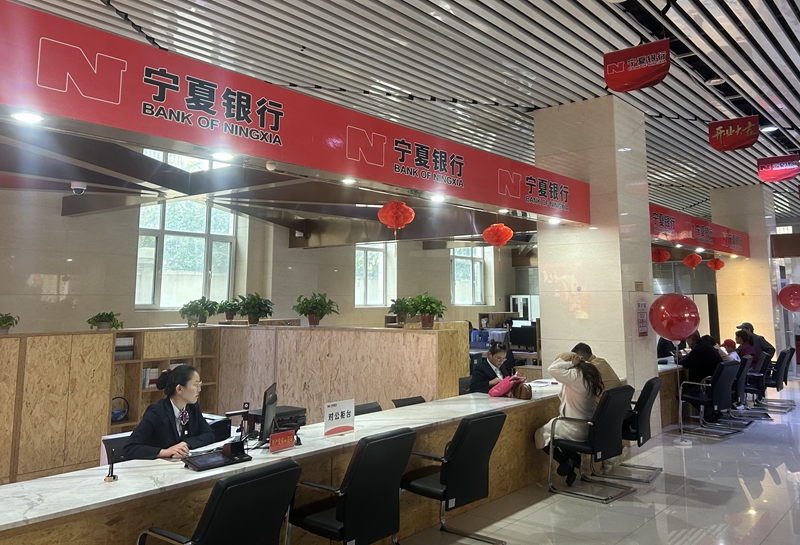
探路中小金融机构改革促进区域经济高质量发展
2 1 Shi Ji Jing Ji Bao Dao· 2025-10-15 00:28
Core Viewpoint - The reform and risk management of small and medium-sized banks in Ningxia serve as a model for national financial reform, focusing on enhancing financial stability and supporting local economic development during the "14th Five-Year Plan" period [1][2][3]. Group 1: Financial Reform and Risk Management - The "14th Five-Year Plan" emphasizes the importance of preventing and resolving financial risks, particularly for small and medium-sized banks, with a focus on tailored strategies for different regions [2][3]. - The total scale of capital and provisions in the industry has exceeded 50 trillion yuan, with a more than 40% increase in the disposal of non-performing assets compared to the previous five-year period [2]. - The number of high-risk small and medium-sized banks has significantly decreased from its peak, with some provinces achieving a "dynamic zero" for high-risk institutions [2]. Group 2: Case Study of Shizuishan Bank - Shizuishan Bank faced challenges such as rising credit risks and capital replenishment pressures but has made progress through a reform path that includes enhanced supervision and collaboration with stakeholders [4][5]. - The bank has implemented a dual approach to capital replenishment, combining internal and external sources, and has developed a structured management mechanism for large-risk clients [4][5]. - The bank's governance has been improved by increasing the number of independent directors and establishing a comprehensive compliance management framework [7]. Group 3: Case Study of Helan Huishang Village Bank - The reform of Helan Huishang Village Bank involved its acquisition by Ningxia Bank and transformation into a branch, which was more complex than typical village bank mergers [8][9]. - The reform process included cross-provincial coordination and the establishment of a working mechanism to ensure effective risk management and service capability enhancement [9]. - Following the merger, the new branch has seen significant growth in asset scale and has diversified its product offerings, enhancing customer service experiences [10][11]. Group 4: Future Outlook - The practices of Shizuishan Bank and Helan Huishang Village Bank exemplify Ningxia's efforts to deepen financial reform and maintain risk control, aiming to reshape the financial ecosystem and refocus on serving the real economy [11]. - The ongoing reforms are expected to lead to further specialization and differentiation in the development of small and medium-sized banks, with a focus on technology finance, green finance, and inclusive finance [11].
探路中小金融机构改革促进区域经济高质量发展|一线调研
2 1 Shi Ji Jing Ji Bao Dao· 2025-10-15 00:21
Core Viewpoint - The reform and risk management of small and medium-sized banks in Ningxia serve as a model for national financial reform, focusing on enhancing financial stability and supporting local economic development during the "14th Five-Year Plan" period [1][2][3]. Group 1: Financial Reform and Risk Management - The "14th Five-Year Plan" emphasizes the importance of preventing and resolving financial risks, particularly for small and medium-sized banks, with a focus on tailored reform strategies for different regions [2][3]. - The total scale of capital and provisions in the industry has exceeded 50 trillion yuan, with a more than 40% increase in the disposal of non-performing assets compared to the previous five-year period [2][3]. - The number of high-risk small and medium-sized banks has significantly decreased from its peak, with some provinces achieving a "dynamic zero" for high-risk institutions [2][3]. Group 2: Case Study of Shizuishan Bank - Shizuishan Bank faced challenges such as high credit risk and capital replenishment pressure but has made progress through a reform path that includes enhanced supervision and collaboration with stakeholders [3][4]. - The bank implemented a "project-based" management approach for large-risk clients, establishing a monitoring mechanism to effectively manage and dispose of non-performing assets [4][5]. - The bank's governance has been improved by increasing the proportion of independent directors and enhancing compliance management, leading to significant improvements in operational indicators and risk management [6][5]. Group 3: Case Study of Helan Huishang Village Bank - The reform of Helan Huishang Village Bank involved its acquisition by Ningxia Bank and transformation into a branch, which was complex due to its previous status as the largest village bank in the region [7][8]. - The reform process included a three-party agreement to determine equity transfer and governance procedures, ensuring a smooth transition and risk resolution [8][9]. - Post-reform, the new branch has seen a significant increase in asset scale, with deposits surpassing 5 billion yuan, and has shifted towards a more comprehensive business model [9][10]. Group 4: Future Outlook - The ongoing reforms are expected to further enhance the focus on specialized and differentiated development in small and medium-sized banks, particularly in areas like technology finance and green finance [10].
告别“划着小舢板出海” 宁夏中小银行改革样本调查
Zhong Guo Zheng Quan Bao· 2025-10-14 20:17
Core Insights - The article highlights the significant progress made in the reform of small and medium-sized financial institutions in China, particularly in Ningxia, where the number of high-risk financial institutions and high-risk asset scales have been substantially reduced, achieving a "dynamic zero" for many local institutions [1][2] Group 1: Reform and Risk Management - The reform aims to enhance the ability of small financial institutions to serve the real economy, resulting in lower loan rates, increased credit limits, and more diverse financial products [1][2] - The transformation of the He Lan Hui Commercial Village Bank into a branch of Ningxia Bank exemplifies successful reform, showcasing improved financial services and product offerings [2][5] - The collaboration between local governments and financial regulators has been crucial in addressing the challenges faced by small banks, leading to effective risk management and governance [3][4] Group 2: Financial Performance and Growth - The data indicates that the disposal of non-performing assets has increased by over 40% during the "14th Five-Year Plan" period compared to the previous five years, reflecting enhanced regulatory capabilities [3] - The total assets of Shizuishan Bank reached 66.471 billion yuan, marking a 9.15% growth since the end of the "13th Five-Year Plan," with key regulatory indicators showing improvement [5] - The reform has led to a significant enhancement in financial service capabilities, with banks now offering tailored solutions to meet the specific needs of businesses [6][8] Group 3: Case Studies and Examples - The case of Ningxia Weier Precision Engineering Co., Ltd. illustrates how local banks have supported innovation and growth by providing essential funding for technology upgrades [6] - Shared Equipment Co., Ltd. benefited from lower loan interest rates after the reform, saving approximately 400,000 yuan in interest, demonstrating the positive impact of the banking reforms on local enterprises [7] - The synergy created by merging the strengths of village banks with larger banking institutions has resulted in a substantial increase in financial service capabilities, achieving a "1+1>2" effect [8]