智慧供热

Search documents
京能热力:在新能源供热、多能耦合供热、智慧供热、余热回收等领域形成深厚技术积累与专利储备
Zheng Quan Ri Bao Zhi Sheng· 2026-01-30 12:08
Core Viewpoint - The company emphasizes its commitment to green and low-carbon development, focusing on the Beijing heating market and leveraging its extensive operational management experience in various innovative heating technologies [1] Group 1: Company Strategy - The company plans to acquire the New Third Board listed company, Jingneng Huaqing, by 2025, which specializes in shallow to medium geothermal energy development and cooling and heating applications [1] - The integration of geothermal system design and intelligent control platform construction is a key focus, aiming to explore complementary utilization of geothermal energy with traditional energy sources [1] Group 2: Technological Development - The company has developed deep technical expertise and a strong patent reserve in areas such as new energy heating, multi-energy coupling heating, smart heating, and waste heat recovery [1] - The technologies and practices align closely with the capital's green and low-carbon construction development needs [1] Group 3: Future Outlook - The company aims to seize opportunities presented by Beijing's goal to become an international benchmark city for green economy, focusing on reform, innovation, and low-carbon transformation [1] - The commitment to optimizing and reconstructing heating systems is part of the company's strategy to become a leading comprehensive energy service listed company centered on heating business [1]

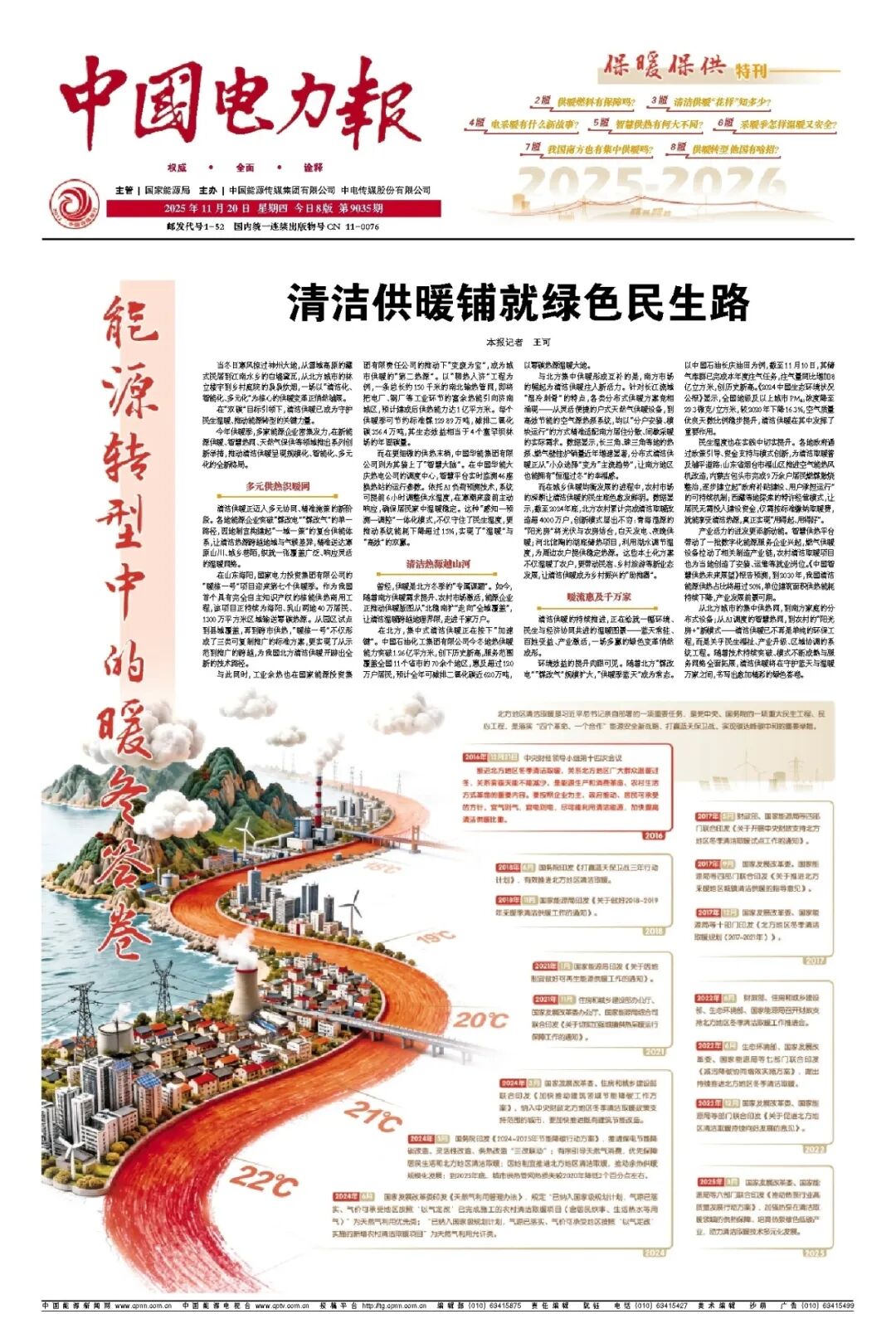
关于采暖季,你想知道的都在这里!
Zhong Guo Dian Li Bao· 2025-11-20 08:02
Core Insights - The article discusses the importance of energy supply and heating solutions for the winter season, highlighting various strategies and technologies being implemented to ensure reliable heating for households across different regions [1][7][11]. Group 1: Energy Supply and Heating Solutions - The article emphasizes the need for secure heating fuel and innovative clean heating methods to meet the rising demand during winter [1][7]. - It mentions the integration of smart heating technologies that enhance efficiency and reliability in energy supply [9][19]. - The article outlines the proactive measures taken by energy companies to ensure heating services are operational ahead of the winter season, including early preparations and system upgrades [7][12][16]. Group 2: Regional Heating Strategies - The article highlights the role of major energy companies, such as China Huaneng Group, in providing heating services across northern regions, ensuring timely and adequate supply [8][11]. - It discusses the implementation of centralized heating systems in areas where traditional heating methods may not suffice, particularly in southern regions [1][22]. - The article notes the collaboration between various government departments and energy companies to promote clean heating initiatives and improve energy efficiency [3][21]. Group 3: Clean Energy Innovations - The article details the advancements in renewable energy sources, such as solar and wind power, being utilized for heating solutions, contributing to a greener energy landscape [15][27]. - It mentions the increasing adoption of geothermal and nuclear energy for heating purposes, showcasing the diversification of energy sources [24][34]. - The article highlights the significant growth in clean heating areas, with a reported 209 billion square meters of clean heating coverage in northern regions [22][19].



2025-2031年中国智慧供热行业深度研究与市场运营趋势报告
Sou Hu Cai Jing· 2025-07-30 07:13
Core Viewpoint - The report provides a comprehensive analysis of the smart heating industry in China, covering market development, operational status, competitive landscape, key enterprises, and future trends from 2025 to 2031 [2][3][4]. Group 1: Industry Overview - The smart heating industry is defined as a sector utilizing IoT technology for remote management and operation of heating systems [2]. - Key characteristics of the smart heating industry include quasi-public goods nature, regional specificity, and seasonality [2]. - The report outlines various business models in the smart heating industry, including procurement, production, and sales models [2]. Group 2: Development Environment - The macroeconomic environment in China is analyzed, highlighting GDP growth, industrial economic conditions, and fixed asset investment trends [3]. - Social factors such as population size, urbanization rate, and energy consumption structure are examined [3]. - The regulatory framework includes significant policies like the "14th Five-Year Plan" and various environmental protection initiatives [3]. Group 3: Current Status and Future Prospects - The current state of the smart heating industry is assessed, including market competition and operational conditions of heating enterprises [4]. - The report predicts the market size of the smart heating industry from 2020 to 2024, indicating growth potential [4]. - Demand analysis for urban heating is conducted, focusing on market structure and supply-demand balance [4]. Group 4: Industry Chain Analysis - The structure of the smart heating industry chain is analyzed, including upstream sectors like coal, oil, natural gas, and new energy [4]. - The report discusses the market conditions of these upstream industries, including enterprise growth and profit trends [4]. Group 5: Key Enterprises - Leading companies in the smart heating sector are analyzed, including their development status, product offerings, and competitive advantages [7]. - Companies such as New Tian Technology Co., Ltd. and Weihai Thermal Power Group are highlighted for their contributions to the industry [7]. Group 6: Investment Trends and Strategies - The report outlines investment trends in the smart heating industry from 2025 to 2031, emphasizing market opportunities and potential barriers [8]. - Strategic planning for smart heating enterprises is discussed, focusing on the need for transformation, resource allocation, and market positioning [8].

新能源建设提速打造绿色航空新城
Xi An Ri Bao· 2025-07-11 08:27
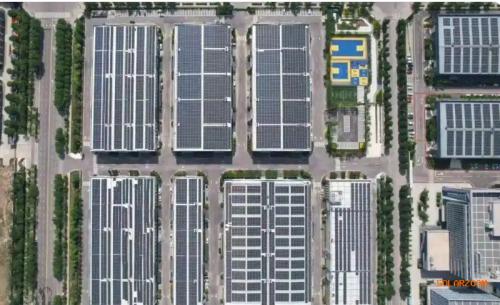
Group 1 - The core direction of national strategy is to develop a green low-carbon economy, with a focus on achieving carbon peak and carbon neutrality by 2025 [1] - Xi'an Aviation City Group actively practices its responsibilities as a state-owned enterprise, focusing on distributed photovoltaics, energy storage, and smart heating to inject green genes into the regional new energy industry [1][2] Group 2 - In response to the national "dual carbon" goals, Xi'an Aviation City Group is advancing the construction of new energy facilities, with 8.41 MW of new distributed photovoltaic capacity added in the first half of the year, bringing the total to 60 MW and generating 28.6 million kWh of electricity [2] - The company has successfully integrated photovoltaic projects that significantly reduce non-renewable energy consumption and optimize energy structure, contributing to both ecological and economic benefits [2] Group 3 - Xi'an Aviation City Group's subsidiary, Hangyuan Company, has obtained various qualifications to meet the requirements for distributed photovoltaic project design, construction, and operation, forming an integrated capability of investment, design, construction, and operation [4] - The company plans to expand its business model to include light asset operations such as EPC engineering contracting, electricity trading, green certificate trading, and carbon trading, enhancing its presence in the new energy sector [4] Group 4 - Hangyuan Company is extending its services from photovoltaic energy to comprehensive energy services, establishing integrated projects that achieve a closed-loop operation of clean power generation, energy storage, and charging services [5] - The company has signed and completed its first out-of-province EPC project, expanding its network and promoting multi-energy complementarity in line with national development strategies [5] Group 5 - Xi'an Aviation City Group aims to adhere to the "dual carbon" goals and promote the "green Yanliang" development concept, contributing to the high-quality development of the Yanliang District [6]