智慧课堂产品

Search documents
最早用上AI的山村小学,八年后怎么样了?
Di Yi Cai Jing Zi Xun· 2026-01-16 10:37
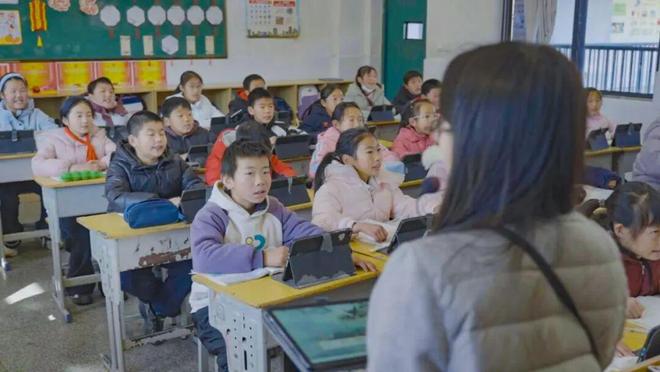
Core Insights - The article highlights the integration of AI technology in rural education, specifically at Tongxin Primary School in Tianzhuzhai, Anhui Province, showcasing its potential to bridge the urban-rural education gap [2][12][32]. Group 1: AI Integration in Education - Tongxin Primary School has implemented AI-based smart classrooms, allowing students to engage with learning materials through tablets, which has become a routine part of their education [2][4]. - The use of AI tools, such as automated essay grading, has significantly reduced teachers' workloads, enabling them to focus more on personalized student interactions [7][8]. - Teachers at the school, including veteran educators, have adopted a practical approach to AI, viewing it as a means to enhance teaching effectiveness rather than a replacement for traditional methods [5][12]. Group 2: Teacher and Student Engagement - The enthusiasm of students for AI-assisted learning is evident, as they actively participate in classroom activities, such as responding to prompts on their tablets [3][4]. - Young teachers, like Gao Xian, have embraced AI as a collaborative tool, facilitating their growth and effectiveness in the classroom [13][14]. - The school environment fosters a sense of confidence and boldness among students, contrasting with previous experiences of shyness and reluctance to engage with outsiders [33]. Group 3: School Leadership and Vision - Principal Shu Chengchao emphasizes the importance of equitable education and has actively sought external resources to enhance the school's capabilities, including the establishment of smart classrooms [21][22]. - The school has gained recognition as a model for rural education, being one of the first to implement smart classroom technology in Anhui Province [18][24]. - The commitment to using technology in education is seen as essential for reducing disparities between urban and rural students, with a focus on preparing students for future opportunities [25][28].


最早用上AI的山村小学,八年后怎么样了?
第一财经· 2026-01-16 10:15
Core Viewpoint - The article highlights the transformative impact of AI in rural education, specifically at Tongxin Primary School in Tianzhuzhai, Anhui Province, showcasing how technology can bridge the educational gap between urban and rural areas [4][19]. Group 1: AI Integration in Education - Tongxin Primary School has implemented AI-based smart classrooms, allowing students to engage with learning materials through tablets, which has become a routine part of their education [4][12]. - Teachers like Huang Liqin utilize AI tools for grading and classroom engagement, significantly improving student participation and reducing the burden of manual grading [6][7]. - The AI system assists in identifying students' weaknesses and provides tailored feedback, enhancing the overall learning experience [14][25]. Group 2: Teacher Perspectives and Adaptation - Teachers at Tongxin Primary School, including both experienced and younger educators, view AI as a practical tool rather than a replacement, focusing on its utility in improving teaching effectiveness [8][19]. - Younger teachers, such as Gao Xian, embrace AI more readily, using it to facilitate lessons and engage students, while older teachers may be more cautious due to concerns about technology management [13][14]. - The integration of AI has led to a shift in teaching dynamics, with teachers feeling empowered to focus on personalized student interactions rather than administrative tasks [9][12]. Group 3: School Development and Community Impact - Under the leadership of Principal Shu Chengchao, Tongxin Primary School has evolved into a model for rural education, receiving recognition as a demonstration school for smart classrooms in Anhui [19][25]. - The school has expanded its facilities and resources, offering a variety of extracurricular activities and fostering a supportive learning environment [20][23]. - The community has observed a positive change in students' confidence and social skills, indicating the broader impact of educational reforms on rural youth [34][35].