智能体软件

Search documents
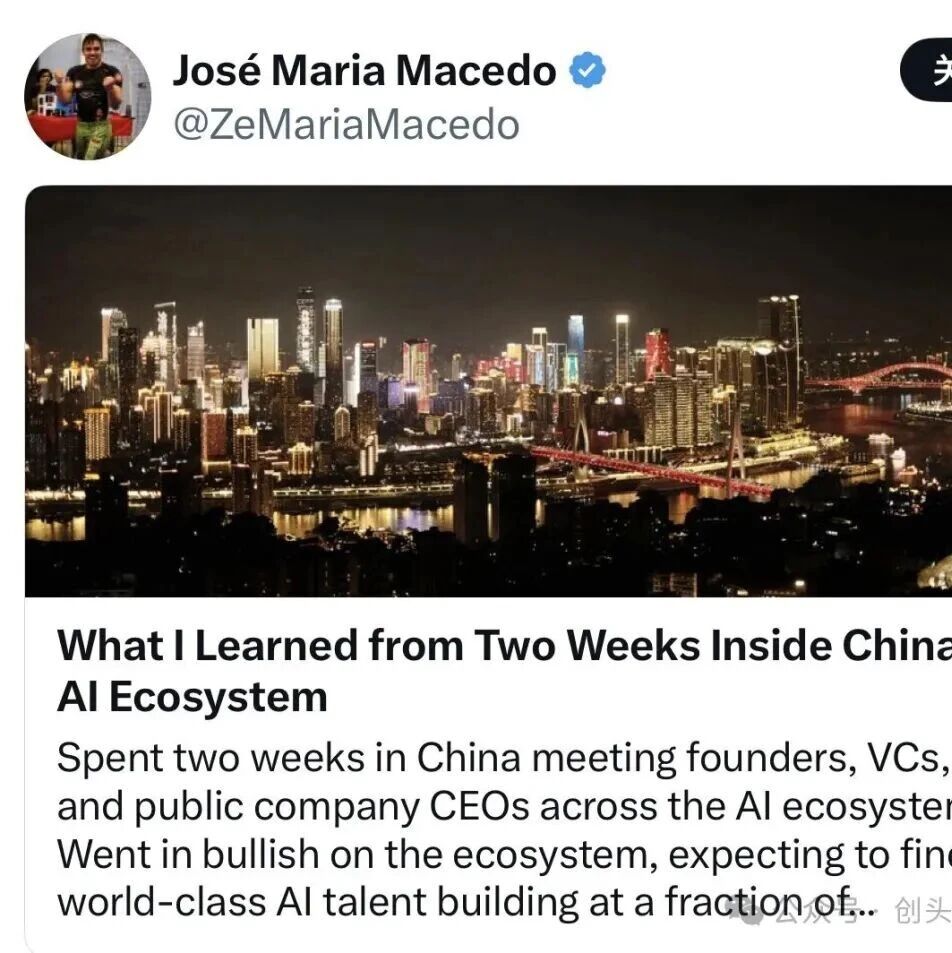
美国VC的中国AI考察笔记:有创始人竟然在妻子分娩当天来见我们!
凤凰网财经· 2026-03-28 10:24
Core Insights - The article discusses the complexities and nuances of the Chinese AI ecosystem, highlighting a shift in perspective from initial optimism to a more cautious outlook regarding software while maintaining a positive view on hardware [6][7]. Group 1: Observations on Founders - Many founders in China are highly qualified, with impressive educational backgrounds and experience at leading companies like ByteDance and DJI, but they often lack independent thinking and a rebellious spirit [14][17]. - The prevailing educational system in China produces excellent talent but does not encourage unconventional thinking, resulting in founders who are top-notch executors rather than innovative problem solvers [19][20]. - Local VCs tend to reinforce this pattern by favoring candidates from established companies, focusing on pedigree rather than unique vision, which may limit the discovery of truly innovative founders [21][22][25]. Group 2: Hardware Ecosystem in Shenzhen - Shenzhen's underground hardware workshops are notable for their rigorous reverse engineering practices, creating a competitive environment that many Western hardware founders may not fully comprehend [26]. - Over 70% of hardware materials are sourced from the Greater Bay Area, providing a significant supply chain advantage that allows for rapid product iteration [27]. - Companies like Bambu, a 3D printing firm, reportedly achieve annual profits of $500 million and are growing at a doubling rate, showcasing the potential of the hardware sector in China [28]. Group 3: Software Market Concerns - The article expresses skepticism about investment opportunities in the Chinese software sector, noting a significant gap in closed-source models compared to Western counterparts [29]. - Revenue data illustrates this disparity, with companies like Anthropic generating $6 billion in February alone, while the best Chinese models achieve only a few million in annual recurring revenue [30][31]. - There is a noticeable absence of large, rapidly growing private software companies in China, with most notable exceptions opting to expand overseas once they find success [31]. Group 4: Valuation Bubble - The article highlights a valuation bubble in the Chinese market, where early-stage companies are valued similarly to their U.S. counterparts despite lower talent costs [32]. - Pre-seed funding rounds exceeding $30 million are becoming common, and mid-stage companies like MiniMax are valued at $40 billion with revenues under $100 million, indicating unsustainable valuation metrics [33][34]. - The article raises concerns about the ability of the Hong Kong market to absorb numerous high-valuation companies, particularly in the humanoid robotics sector, which may face longer commercialization timelines than anticipated [37][38]. Group 5: Global Market Focus - Many founders prioritize global markets over domestic ones, leveraging China's engineering capabilities and hardware expertise to align with Western market strategies [39]. - This approach could lead to the emergence of remarkable companies if the right entrepreneurial teams are formed [40]. - The search for unconventional founders who do not fit the traditional VC mold is identified as a key objective for future investment opportunities [41].

消息称DeepSeek四季度发布新一代模型:聚焦智能体,梁文锋督战
Feng Huang Wang· 2025-09-05 10:36
Group 1 - DeepSeek is developing an advanced AI model with intelligent agent capabilities to compete with US rivals like OpenAI [1] - The new AI model will execute multi-step operations with minimal user input and learn from past actions [1] - DeepSeek's founder, Liang Wenfeng, aims to release the new software in the last quarter of this year [1] Group 2 - DeepSeek's R1 model, released in January, mimics human reasoning at a development cost of only a few million dollars [1] - Since the R1 model, DeepSeek has only made minor upgrades while competitors have launched numerous new models [1] - The trend in the tech industry is towards developing intelligent agent software to simplify personal and work tasks [1][2] Group 3 - The goal of DeepSeek and the industry is to create increasingly autonomous AI systems capable of initiating and completing complex real-world tasks with minimal human intervention [2] - Currently, AI agents still require significant "adult supervision" [2]