智能生产管理系统

Search documents
如何认识人工智能对就业的影响
Jing Ji Ri Bao· 2026-02-02 22:30
Core Insights - Artificial intelligence (AI) is a disruptive technology of the 21st century, influencing economic and social development at an unprecedented pace, creating new opportunities while posing challenges to labor skills, corporate structures, and social security systems [1][2] Group 1: Impact on Employment - AI has dual effects on employment: it creates new jobs while also replacing existing ones, particularly in standardized and procedural tasks such as customer service and data entry [2][3] - The demand for composite skills is increasing, with a focus on algorithm application, data processing, and human-machine collaboration, even in traditional roles [3] - The labor market is experiencing new characteristics, with stable demand for high-end technical positions and low-skill service jobs, while middle-tier conventional roles are being squeezed [3][4] Group 2: Current Stage of AI Impact - The current phase of AI's impact on the labor market in China is characterized by visible replacement effects, emerging job creation, and structural adjustments [4][5] - Industries with strong digital foundations, such as finance and manufacturing, are the first to feel the impact, while sectors like healthcare rely more on AI as an auxiliary tool [4][5] Group 3: Long-term Observations and Recommendations - The long-term effects of AI on employment require careful observation, as the dynamic relationship between replacement and creation effects is still unclear [3][4] - A comprehensive policy framework is recommended to monitor and evaluate AI's impact on employment, optimize talent training systems, and enhance employment services and rights protection [5][6] - Workers are encouraged to adopt a mindset of lifelong learning and adaptability, focusing on developing skills that AI cannot easily replicate, such as creative thinking and emotional communication [6]
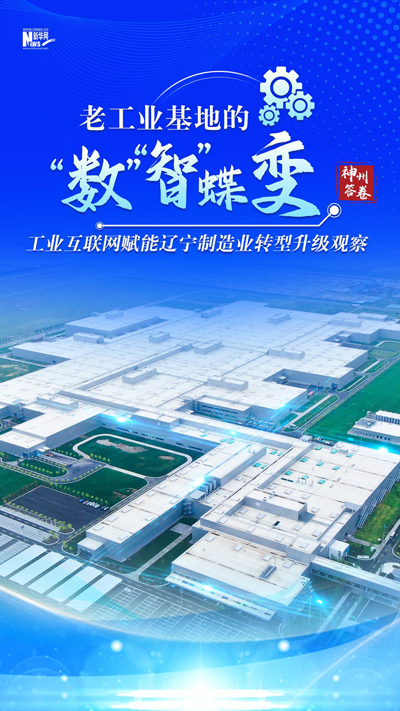
神州答卷|老工业基地的“数”“智”蝶变——工业互联网赋能辽宁制造业转型升级观察
Xin Hua Wang· 2025-09-05 01:51
Group 1 - The core viewpoint of the articles highlights the transformation of Liaoning's manufacturing industry through digitalization and intelligent manufacturing, showcasing a shift from traditional labor-intensive methods to data-driven processes [2][5][7] - Liaoning is leveraging digital technologies to enhance productivity and efficiency in traditional manufacturing sectors, with significant improvements in operational metrics such as a 20% increase in production efficiency and a 10% reduction in costs at the Angang Steel plant [5][6] - The province has established a robust digital infrastructure, with 50.8% of production equipment connected digitally and 469 provincial-level digital workshops built, indicating a strong commitment to digital transformation [6][10] Group 2 - The integration of industrial internet technologies is facilitating a comprehensive upgrade across the entire manufacturing value chain in Liaoning, including design, production, supply, and sales [6][10] - Liaoning's digital economy is experiencing rapid growth, with the core industry value added increasing by 18% year-on-year in the first half of 2025, reflecting the successful implementation of digital strategies [12][17] - The province is actively promoting artificial intelligence and low-altitude economy initiatives, aiming to cultivate over 300 AI enterprises and develop a low-altitude economic industry chain, which will further enhance its industrial capabilities [15][16] Group 3 - Liaoning's industrial ecosystem is evolving with the emergence of new technologies and business models, such as the "industrial matchmaking" platform that connects small parts manufacturers with larger enterprises, reducing design cycles by 30% and customer acquisition costs by 40% [10][11] - The province is focusing on building a comprehensive digital economy, with 14.3 million 5G base stations established, ensuring full coverage across all prefecture-level cities, which supports the development of smart manufacturing [16][17] - Liaoning is fostering a collaborative environment for high-tech companies in sectors like intelligent connected vehicles, enhancing innovation through shared resources and infrastructure [15][17]