智能镜子

Search documents
2026人工智能产业的未来,将在北京“世亚智博会”首次被看见
Sou Hu Cai Jing· 2025-12-05 02:08
Core Insights - The 2026 Asia International Artificial Intelligence Expo (AI Expo) will showcase the transformative advancements in AI technology, marking a pivotal moment for the industry as it transitions from concept to application [2][4][6][8] Group 1: AI-Driven Smart Revolution - The AI Expo will debut "unconscious intelligence," where AI anticipates user needs, featuring smart home ecosystems and AI virtual assistants that optimize energy consumption and health risk predictions [2] - AI-enabled devices such as AI PCs, smartphones, and smart glasses will demonstrate real-time translation and augmented reality navigation, enhancing human-technology interaction [2] Group 2: Low Altitude Economy - The low altitude economy is expected to take off in 2026, with the AI Expo presenting practical applications like drone logistics for remote areas and eVTOL flying cars for tourism and emergency services [4][5] - Infrastructure such as Alibaba's low-altitude computing platform and Meituan's aerial retail network will be showcased, establishing a comprehensive low altitude economic ecosystem [5] Group 3: Hardware Innovations - The AI Expo will highlight groundbreaking hardware developments, including over 100-inch Micro RGB displays and flexible transparent OLEDs, pushing the boundaries of traditional device forms [6] - Health technology will see innovations like smart mirrors for real-time health monitoring and smart mattresses that optimize sleep quality through data analysis [6] Group 4: Global Collaboration and Standards - The AI Expo aims to establish "Chinese standards" in the global AI landscape, featuring major companies like Huawei and China Electronics Corporation alongside international partners [8] - Participation from over 50 international procurement teams and 200 top investment institutions will facilitate global market connections for Chinese-led technologies [8]

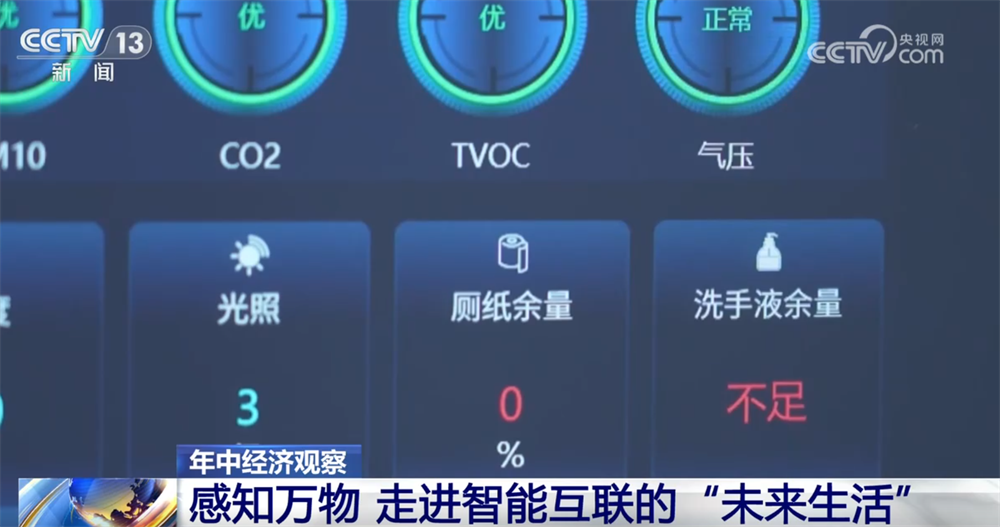
“小小”传感器成为万物互联“神经末梢” “中国制造”正向“中国智造”迈进
Yang Shi Wang· 2025-07-25 02:55
Group 1 - The core concept of the article revolves around the development and application of sensors, referred to as the "electronic five senses" of machines, enabling them to perceive the environment more accurately than humans [1][5][9] - The article highlights the significance of MEMS (Micro-Electro-Mechanical Systems) sensors in the advancement of artificial intelligence and robotics, emphasizing their small size, light weight, and high sensitivity [5][10][18] - The "Sensor Valley" in Bengbu, Anhui, is presented as a hub for smart sensor technology, showcasing various intelligent devices that respond to environmental changes, thus reshaping daily life [1][7][18] Group 2 - The production of MEMS sensors is centered around silicon wafers, with a fully automated production line capable of producing 10,000 8-inch smart sensor wafers monthly [10][12] - The establishment of a pilot production line allows for customized design and low-cost small-batch production, addressing previous limitations in the MEMS industry [12][14] - The Sensor Valley has attracted over 200 related enterprises, forming a complete industrial chain that encompasses design, manufacturing, and application, with an economic scale exceeding 20 billion yuan [18][24] Group 3 - The article discusses the challenges in the sensor industry, such as the complexity and small scale of products, and presents the "solid foundation and extended chain" strategy to integrate the entire production process [20][22] - Local government initiatives, including a 70 billion yuan investment fund, aim to support the development of the smart sensor industry and facilitate technology transfer [22][26] - The Sensor Valley has seen significant growth, with a reported output exceeding 3 billion yuan in the first half of the year, marking a year-on-year increase of over 30% [24][26]