
木碗

Search documents
西藏山南 物交会不止于展会
Jing Ji Ri Bao· 2026-01-08 21:45
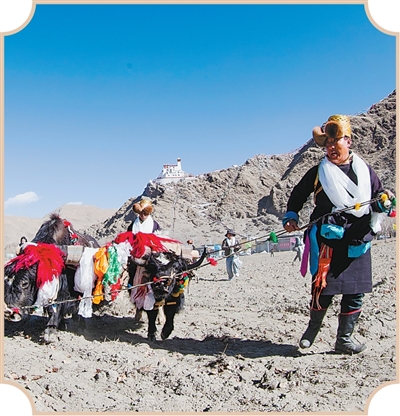
Core Insights - The 45th Yarlung Material Exchange Conference in Shannan City, Tibet, attracted 2,635 exhibitors and received over 166,100 visitors, achieving a total transaction volume of 782 million yuan, marking an 11.4% increase from the previous year, with all three metrics reaching historical highs [1][2]. Group 1: Event Overview - The event has become the most significant winter consumption fair in Shannan and Tibet, serving as a vital platform for showcasing local industries and increasing farmers' incomes [1][2]. - The conference has evolved from informal barter exchanges in the 1960s and 1970s to a well-organized event, with the first official conference held in 1981 [2]. Group 2: Consumer Engagement - Popular products at the conference included local beef and lamb, with attendees like Tsering Deji spending over 10,000 yuan on high-quality meat, reflecting a long-standing tradition of purchasing at the event [2]. - The conference has seen increasing participation from merchants and consumers from surrounding cities and even foreign buyers, enhancing its market potential [3]. Group 3: Industry Development - The conference featured a dedicated e-commerce live streaming area, with over 436 live broadcasts and an online exposure of over 35.24 million times, showcasing local products to a national audience [4]. - The tea industry in Cuona City has seen significant growth, with a planting area of 693 acres and an annual production of approximately 5 tons, supported by local government policies [4][5]. Group 4: Economic Impact - The conference serves as a crucial income source for local farmers, with participants from Zhegu Town reporting income increases from 2,000 to 80,000 yuan over the years [6][7]. - The event facilitates the sale of local products, with Shannan's farmers bringing 2,600 yaks and 22,600 sheep, generating significant sales on the opening day [6][7]. Group 5: Community and Cultural Significance - The conference not only boosts local economies but also enhances cultural exchange, as seen with the introduction of traditional instruments like the "Zamunian" [7]. - The event has become a platform for the convergence of people, goods, information, and capital, aligning with policies aimed at promoting commerce and regional economic development [7].
千刀方成器 玲珑显匠心(传承)
Ren Min Ri Bao· 2025-10-04 21:50
Core Viewpoint - The article highlights the efforts to preserve the traditional wood-turning craft in Shawo Village, Hebei, which has faced decline due to modernization and changing consumer preferences [1][2][3] Group 1: Traditional Craft and Its Significance - The wood-turning craft, known for creating beautiful wooden products, has been passed down for approximately 500 years in Shawo Village, with its peak during the late Qing Dynasty when over a hundred workshops existed [1] - The unique properties of willow wood used in the craft, such as being non-toxic and heat-resistant, contribute to its cultural significance, symbolizing good wishes when gifted [1] Group 2: Challenges Faced - The traditional wooden bowls are being replaced by cheaper plastic and ceramic alternatives, leading to a decline in the number of artisans skilled in the craft [1] - By 2012, only six elderly craftsmen remained in the village who could perform the wood-turning technique, indicating a significant loss of knowledge and skills [1] Group 3: Revival Efforts - Li Xueming, a representative inheritor of the craft, initiated efforts to revive the wood-turning technique by restoring old equipment and encouraging older artisans to return and share their skills [2] - Li has successfully trained over 20 apprentices, and the craft was recognized as a provincial intangible cultural heritage in Hebei in 2019, marking a significant step in its revival [3] Group 4: Educational and Cultural Promotion - Li has transformed his home into a micro-museum and created educational materials to engage students and tourists, fostering a deeper appreciation for the craft [3] - Recent initiatives have included integrating the wood-turning craft into school curricula, inspiring a new generation to value and preserve traditional cultural practices [3]
寻访“藏源”山南的文化交融基因(边城见闻)
Ren Min Ri Bao· 2025-06-04 05:40
Core Viewpoint - The article highlights the rich cultural exchange and historical significance of the Shannan region in Tibet, emphasizing its role as a cradle of Tibetan culture and its connections with various civilizations throughout history [8][9][10]. Group 1: Cultural Significance - Shannan is recognized as the birthplace of Tibetan culture, housing the first palace, temple, and scripture in Tibet, which underscores its historical importance [9]. - The region's museum showcases artifacts that reflect the cultural exchanges between Tibet and other civilizations, such as the Dionysian gold and silver plate from ancient Greece and Sasanian silver coins, indicating trade along the "Highland Silk Road" [9][10]. Group 2: Economic and Trade Activities - The annual Yalong Commodity Exchange Fair serves as a significant platform for trade and cultural exchange, with a total transaction volume of approximately 700 million RMB last year [14]. - The fair facilitates the entry of products from neighboring countries into the Tibetan market, enhancing economic ties and cultural interactions [14]. Group 3: Non-Material Cultural Heritage - Shannan is home to a diverse array of non-material cultural heritage, with 310 representative inheritors and 394 projects, showcasing the region's rich cultural traditions [17]. - The local arts, such as Tibetan opera and traditional crafts, are gaining international recognition, with performances and products reaching foreign markets [17].

让木头唱歌的人
Ren Min Ri Bao· 2025-05-25 22:13
Core Viewpoint - The article highlights the craftsmanship of Midalihan Aihiken, a woodworker from Haba River, who has dedicated his life to creating intricate wooden utensils and furniture, reflecting the rich cultural heritage of the region and attracting tourism. Group 1: Craftsmanship and Artistry - Midalihan Aihiken has created a complex wooden dining table featuring a central shallow plate with a carved fish, symbolizing the local cold-water black-spotted salmon [2][3] - The table is designed for convenience in a nomadic lifestyle, allowing for easy disassembly and serving various foods [2][3] - The craftsmanship involves a lengthy process, including selecting suitable wood, soaking it, and meticulously shaping it without sketches, relying on his imagination and experience [3][4] Group 2: Cultural Significance - Wooden utensils play a vital role in the lives of nomadic people, with Aihiken learning the craft from his grandfather and father, emphasizing the importance of tradition [3][5] - The designs often incorporate natural elements and local wildlife, showcasing the connection between the artisan and the environment [4] Group 3: Legacy and Tourism - Aihiken has been passing down his skills to younger generations, including his grandson, who is beginning to learn the craft [5] - The popularity of the Haba River area has surged due to the TV series "My Aletai," drawing tourists to experience the local culture and purchase handcrafted wooden items [5]