机电装备

Search documents
搭平台拓通道 扩大开放合作
Ren Min Ri Bao· 2025-09-28 21:58
Core Points - Liaoning's high-level opening-up is essential for its revitalization and development, with significant progress in expanding trade partnerships and logistics capabilities [1][2] - In the first eight months of this year, Liaoning's total import and export value reached 501.94 billion yuan, continuing a growth trend [1] - The launch of new shipping routes, such as the direct Mediterranean container line and the "China-Europe Arctic Route," highlights Liaoning's efforts to enhance its logistics network [1][2] Group 1 - Liaoning has been approved as a national China-Europe Railway Express gathering center, with Shenyang and Dalian recognized as key cities for this initiative [2] - The province plans to operate 892 China-Europe Railway Express trains in 2024, marking a 14.4% increase year-on-year [2] - Liaoning is creating a favorable international business environment for foreign enterprises, enhancing their confidence and expectations for development [2] Group 2 - The establishment of the Sino-German (Shenyang) high-end equipment manufacturing industrial park has attracted over 120 foreign enterprises, showcasing the region's investment appeal [2] - Dandong has been approved as a national comprehensive pilot zone for cross-border e-commerce, further promoting trade facilitation [2] - Liaoning's free trade zone has introduced innovative practices, such as a new inspection model for import and export of electromechanical products, recognized as a best practice [2]
“土地盛宴+产业狂飙!皖南小城青阳2025年‘出圈’密码全解析”!
Sou Hu Cai Jing· 2025-08-13 06:09
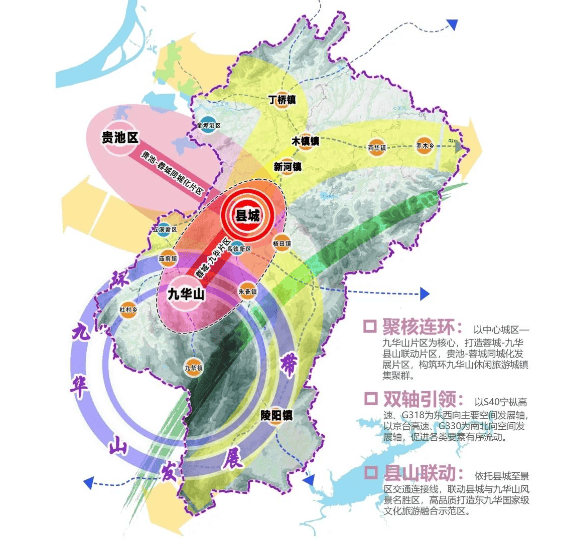
Core Viewpoint - The land supply plan of Qingyang for 2025 signals a strong commitment to high-quality development, focusing on industrial land to drive economic growth through a dual approach of "industry + cultural tourism" [1][15]. Group 1: Land Supply Plan - Qingyang's 2025 land supply plan features a high proportion of industrial land, accounting for 72.5% (151.82 hectares), indicating a strong determination to become a "manufacturing strong county" [2]. - The eight land parcels available for sale are all classified as secondary industrial land, with a floor area ratio controlled between 1.0-1.4 and a building density of 40%, emphasizing the pursuit of intensive land use [2][6]. - All land parcels require a contract to be signed with local towns within seven days post-transaction, ensuring that land development is closely tied to tax revenue and employment benefits [6]. Group 2: Industrial Development - The Baomei light alloy project is set to launch its first 100,000-ton production line in 2025, which is expected to boost the magnesium-aluminum industry chain's output value to over 1 billion yuan, attracting upstream and downstream enterprises [7]. - The expansion of the Shian Park is accelerating, targeting high-end manufacturing sectors such as prefabricated buildings and new energy vehicle components, resonating with the "Qingyang Intelligent Manufacturing" corridor [7]. Group 3: Population and Infrastructure - The opening of the Chi-Huang High-speed Railway has led to an average daily passenger flow of over 4,000 at Jiuhua Mountain Station, significantly boosting the local hospitality economy [10]. - Qingyang has introduced a "Youth Party Member Return Entrepreneurship Plan," offering land incentives and tax reductions to attract young entrepreneurs, fostering a positive cycle between cultural tourism and agriculture [10]. - Infrastructure improvements, including the completion of major highways and the addition of 600 parking spaces, are enhancing the livability and connectivity of Qingyang, creating a "15-minute living circle" [13]. Group 4: Strategic Logic Behind Land Supply - Qingyang's land supply strategy integrates land use planning, industrial policy, and public needs, emphasizing both bottom-line thinking and flexible development [14]. - The strategy aims to maintain a balance between agricultural land protection and industrial land efficiency, ensuring sustainable growth [14]. - The development model promotes a gradient development pattern, leveraging the tourism resources of Jiuhua Mountain while avoiding homogeneous competition among towns [14].