杰我睿小程序

Search documents
187亿黄金暴雷、4万人无法提现,深圳珠宝大佬仅愿两折兜底?
Sou Hu Cai Jing· 2026-02-03 11:22
Core Viewpoint - The article discusses the rise and fall of Jie Wo Rui Jewelry Company, highlighting its founder Zhang Zhiteng's strategies to leverage the internet for business growth and the subsequent financial troubles faced by the company due to its complex gold storage and trading model [3][4][6][8]. Company Overview - Jie Wo Rui Jewelry, founded by Zhang Zhiteng, is located in the Shui Bei gold market, a significant hub for jewelry manufacturing and trading in China, with over 5,000 enterprises involved [3]. - The company aimed to differentiate itself in a competitive market by utilizing social media platforms like Xiaohongshu to attract customers and showcase its transactions [4][6]. Business Model - The company's business model involved a mix of gold storage, futures trading, and pawn services, allowing customers to deposit gold for cash while retaining ownership [8]. - Customers were promised returns based on the gold price at the time of deposit, with 80% of the funds returned to them and 20% retained by the company as a deposit [8]. Financial Troubles - Despite the rising gold prices, Jie Wo Rui faced significant financial issues, including withdrawal difficulties and customer service failures, leading to the closure of physical stores [6][11]. - Approximately 40,000 customers are currently waiting to withdraw a total of 18.7 billion yuan, indicating a severe liquidity crisis [11]. Proposed Solutions - In response to the crisis, Zhang Zhiteng proposed a "two-fold guarantee" solution, offering customers either 20% of their principal or 40% in installments, contingent on signing agreements that waive criminal prosecution rights [11][12]. Industry Context - The article notes that rising gold prices do not necessarily benefit gold retailers, as their profits primarily come from processing fees and brand premiums rather than price increases [14]. - High gold prices increase the financial burden on franchisees, who must purchase inventory at escalating costs, leading to potential insolvency if sales do not keep pace [16]. - The article warns that some gold storage and investment services may operate like Ponzi schemes, where funds from new customers are used to pay returns to earlier investors, making them vulnerable to market fluctuations [16].


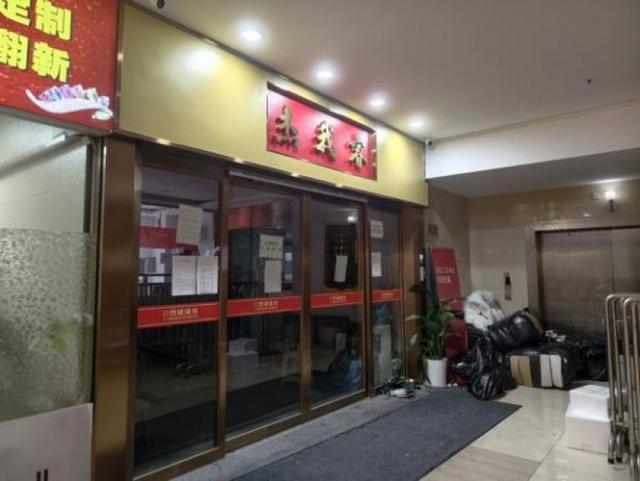
记者直击深圳杰我睿跑路现场:大门紧闭、锦旗高悬,平台兑付异常,涉资或达187亿元
Hua Xia Shi Bao· 2026-01-30 06:57
Core Viewpoint - The crisis surrounding Shenzhen-based Jie Wo Rui Jewelry Co., Ltd. has led to a significant financial impact, with reported victim losses reaching 18.7 billion yuan, highlighting the risks associated with unregulated gold trading platforms [1][15]. Company Overview - Jie Wo Rui is known for its gold recovery and low-fee gold sales, operating multiple mini-programs for online transactions, including gold buying and selling [4][7]. - The company has been popular among individual consumers looking to liquidate physical gold for cash, often attracted by promotional offers such as fee waivers [4][8]. Crisis Development - As of January 29, 2023, the company faced a liquidity crisis, with investors unable to withdraw their funds, leading to a tense atmosphere at its physical location [1][5]. - The company had previously engaged in aggressive marketing, promoting fee waivers for gold purchases just before the crisis emerged [8][9]. Financial Operations - Funds deposited by users were reportedly funneled into private accounts rather than the company's official accounts, raising concerns about financial transparency and accountability [8][15]. - The platform's operations included a mechanism for users to convert gold into cash, but the lack of third-party oversight has been identified as a critical vulnerability [15]. Legal and Regulatory Issues - Following the crisis, Jie Wo Rui proposed repayment plans that required customers to sign agreements waiving their rights to pursue legal action, raising ethical and legal concerns [9][11]. - The company's structure changed from a sole proprietorship to a limited liability company shortly before the crisis, leading to speculation about premeditated actions to limit liability [14]. Industry Implications - The Jie Wo Rui incident underscores broader issues within the gold trading sector, particularly regarding the regulation of non-licensed entities operating in financial markets [15][16]. - The case raises significant questions about trust, compliance, and accountability in the financial services industry, emphasizing the need for stricter regulatory oversight [16].
爆雷了,事关黄金,投资者取不出钱
盐财经· 2026-01-29 10:30
Core Viewpoint - The article discusses the recent collapse of the "Jie Wo Rui" platform, which was involved in gold trading and recovery, leading to significant financial losses for investors amid a booming gold market [4][12][41]. Group 1: Company Background - Jie Wo Rui was established in 2014 as a jewelry company specializing in gold recovery and trading, initially operating as a physical store before launching an online platform [13][15]. - The platform allowed users to buy and recover gold, gaining popularity through promotional activities and a user-friendly interface [16][19]. Group 2: Investor Experience - Many investors, including young individuals and stay-at-home parents, were drawn to the platform due to its perceived reliability and attractive promotional offers [6][12]. - The platform's operations included a "zero processing fee" promotion, which attracted a significant number of users, particularly women, who found the offers appealing [19][20]. Group 3: Risky Practices - Jie Wo Rui introduced high-risk investment options, such as "empty order pricing," allowing users to speculate on gold prices with minimal initial deposits, leading to a leverage ratio of up to 40 times [24][28]. - The platform's lack of physical gold delivery and reliance on speculative trading created a high-risk environment, ultimately resulting in a liquidity crisis when many users attempted to withdraw funds simultaneously [34][36]. Group 4: Regulatory Response - Following the platform's collapse, local authorities initiated investigations and established communication with affected investors, with reported losses exceeding 130 billion yuan across multiple provinces [6][39]. - The company proposed two repayment options to investors, but these did not include any compensation for gold sent to the platform, raising concerns about the legality of their operations [35][36].