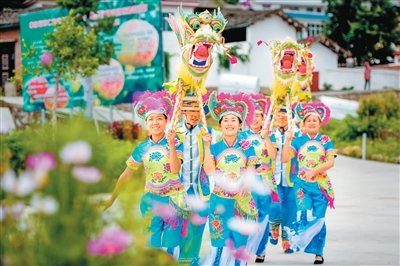
板凳龙

Search documents
浙江:非遗板凳龙翻腾起舞 红红火火迎新春
Yang Shi Wang· 2026-02-13 20:17
Core Viewpoint - The article highlights the cultural significance and craftsmanship of the "Bench Dragon," a traditional folk art that has been passed down for over 400 years in Taizhou, recognized as an intangible cultural heritage project [1] Group 1: Cultural Significance - The "Bench Dragon" is composed of hundreds of long benches connected to form a dragon, symbolizing local traditions and community [1] - The craftsmanship involved in creating the dragon includes various art forms such as painting, calligraphy, carving, paper crafting, and woodworking, showcasing the rich cultural heritage of the region [1] Group 2: Craftsmanship and Design - Each segment of the dragon, including the head, body, and tail, is intricately designed, featuring beautiful lanterns and auspicious patterns, reflecting the artistic skills of local artisans [1] - The use of bamboo and wood as the structural framework emphasizes the traditional materials and techniques employed in the creation of the "Bench Dragon" [1]
板凳龙舞起来、年货置起来、年宵花迎供应高峰 新年氛围愈发浓厚
Yang Shi Wang· 2026-02-13 07:50
Group 1: Cultural Heritage and Local Traditions - The "Bench Dragon" performance in Anshan Village, Taizhou, Zhejiang, showcases a traditional folk art that has been passed down for over 400 years and is recognized as a non-material cultural heritage project [3][7] - The Bench Dragon is constructed from hundreds of long benches, intricately designed with bamboo and wood, featuring colorful lanterns and auspicious patterns, combining various crafts such as painting, carving, and woodworking [3][4] - The local "needle-pierced" lanterns, a first batch national-level intangible cultural heritage, are made from paper and feature intricate designs created by artisans using fine needles [5] Group 2: Local Cuisine and Festivities - Traditional food stalls at the event include "mashi" (a type of glutinous rice cake) and steamed buns, symbolizing sweetness and prosperity for the new year [6][7] - The festive atmosphere is enhanced by the community's anticipation for a prosperous year, as reflected in the cultural performances and culinary traditions [7] Group 3: Regional Celebrations and Market Activities - In Qinhuangdao, Hebei, the local New Year market features a vibrant atmosphere with various traditional foods and cultural activities, emphasizing the region's unique "mountain-sea flavor" [9][11] - The market includes 120 stalls offering a wide range of local products, from fresh meats to traditional pastries, catering to the community's festive needs [13] - Interactive game zones and non-material cultural heritage displays, such as paper-cutting and traditional dance performances, attract visitors and enhance the celebratory spirit [14][15] Group 4: Flower Market Dynamics - In Kunming, Yunnan, the flower market is experiencing a peak supply of New Year flowers, with logistics strategies in place to ensure rapid delivery across the country [17][19] - The main flower varieties for the New Year include roses, lilies, and carnations, while niche flowers are gaining popularity among younger consumers [19]

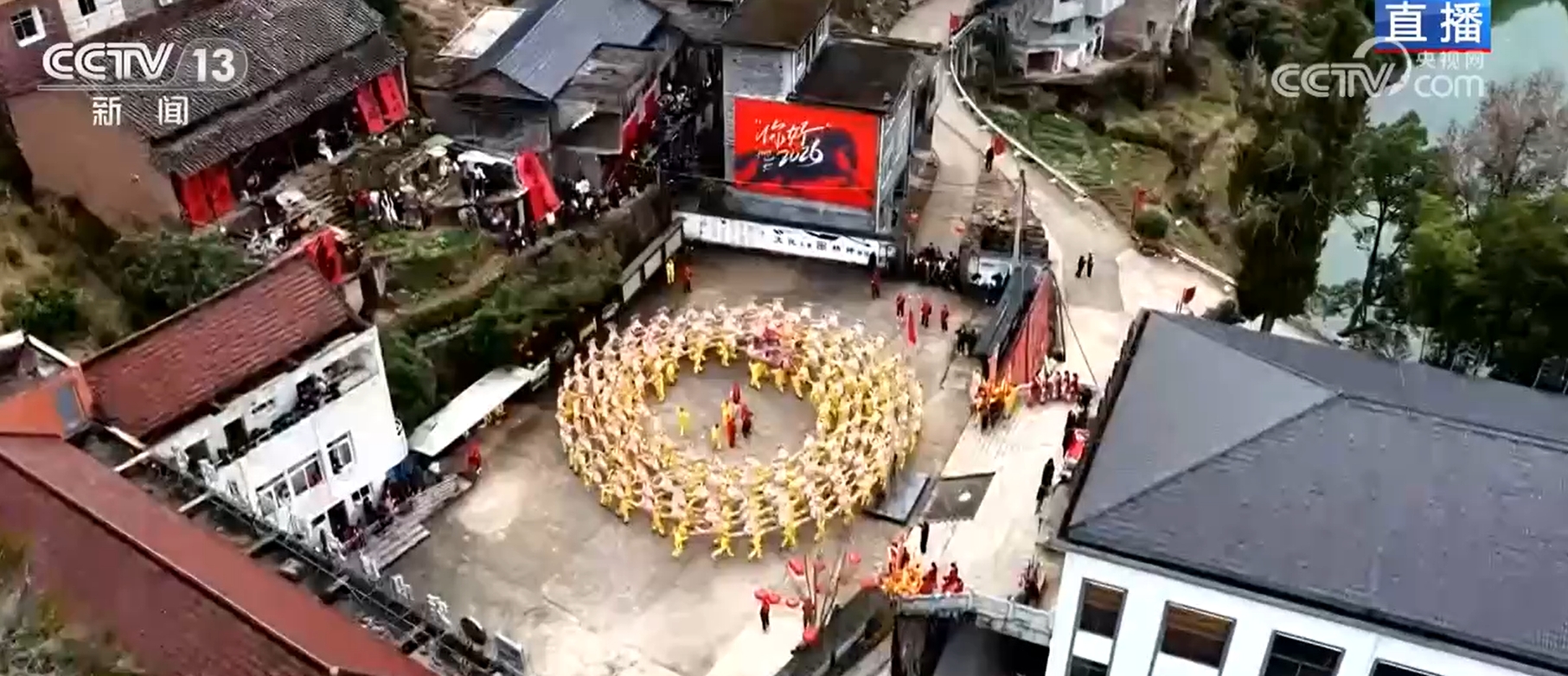
(新春见闻)浙江杭州:河上龙灯胜会紧密筹备中
Xin Lang Cai Jing· 2026-02-06 04:33
Core Viewpoint - The article highlights the preparation activities by artisans in Xiaoshan District, Hangzhou, for the upcoming He Shang Dragon Lantern Festival, which has cultural significance and historical roots dating back to the Southern Song Dynasty [2][4][7]. Group 1: Cultural Significance - The He Shang Dragon Lantern Festival is a traditional event that has been passed down in the He Shang Town area of Xiaoshan District, with origins traceable to the Southern Song Dynasty during the Shaoxing period [2][4][7]. - The festival is associated with a local folklore story about the punishment of the Jinghe Old Dragon for causing rain, which adds to its cultural richness [2][4][7]. Group 2: Artisan Activities - Artisans are engaged in preparing materials for the festival, including constructing the "dragon head" framework for the "bench dragon" performance [2][5][7]. - The preparation includes creating various decorative lanterns, such as the "horse" lanterns, which are integral to the festival's visual display [8][10]. - Local intangible cultural heritage representative Fu Hongbo is actively involved in educating children about the craftsmanship and the significance of the dragon head being completed [5][12].
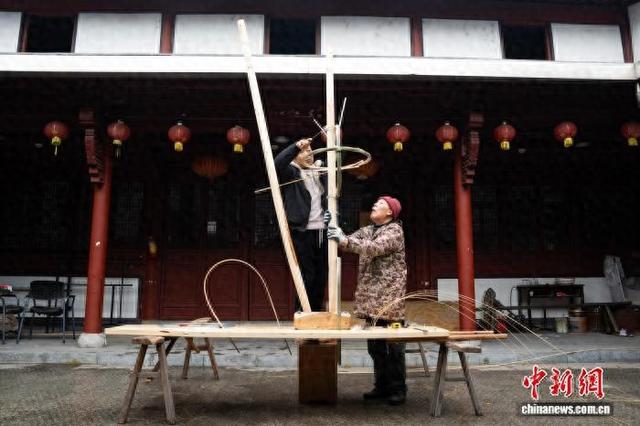
马年春节临近 浙江仙居制作400余年民俗板凳龙
Xin Lang Cai Jing· 2026-02-01 10:01
Group 1 - The article highlights the preparation activities of villagers in Anshan Village, Xigang Township, Xianju County, Taizhou City, Zhejiang Province, for the upcoming Spring Festival dragon dance [2][4][5] - The production of the "bench dragon" has a history of over 400 years, indicating its cultural significance in the region [2][4][5] - Villagers are engaged in various tasks such as painting the dragon's body and adding decorative elements, showcasing traditional craftsmanship [5][7] Group 2 - The article features images of villagers actively working on the bench dragon, emphasizing community involvement in preserving cultural heritage [2][6][7] - The preparation for the dragon dance is a communal effort, reflecting the social fabric and traditions of the village [4][5][6] - The upcoming Spring Festival serves as a catalyst for these cultural activities, highlighting the importance of festivals in maintaining local traditions [2][4][5]
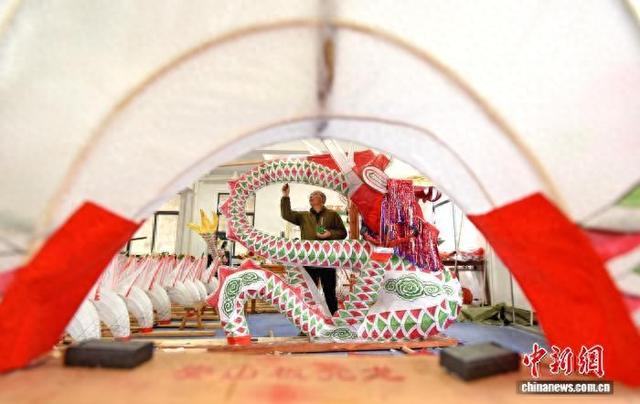
“板凳龙”舞出好愿景(文化中国行·新国潮)
Ren Min Ri Bao Hai Wai Ban· 2025-07-30 01:30
Core Viewpoint - The "Bench Dragon" dance, a cultural heritage of over a hundred years, is a significant part of the local customs in Yinlu Village, Sichuan Province, and represents the community's joy and cultural identity [2][6][8]. Cultural Significance - The "Bench Dragon" dance is performed by a trio consisting of two women and one man, symbolizing a local legend about a dragon that brought rain to the drought-stricken village [3][4]. - The dance has evolved from a simple form of entertainment to a cultural emblem for the region, showcasing the community's values and aspirations for prosperity and harmony [7][8]. Performance Details - The dance involves specific movements and coordination among the performers, with a focus on maintaining balance and rhythm [5][6]. - The props used include a wooden bench and a dragon figure made from bamboo and straw, with precise measurements for both [4][5]. Transmission and Education - The seventh-generation inheritor, Liao Guoliang, emphasizes the importance of passing down the "Bench Dragon" culture to younger generations, with over 50% of the village now participating in the dance [7][8]. - Local schools are integrating the "Bench Dragon" into their curriculum, promoting cultural heritage among students [7][8]. Recognition and Awards - The "Bench Dragon" has gained recognition at various cultural events, including the Sichuan Provincial Minority Sports Games, and was designated as a provincial-level intangible cultural heritage representative project in 2023 [7][8].