极低硫燃料油(VLSFO)

Search documents
跌懵了!~欧美原油追随SC原油步伐,暴跌近3%完成破位下跌
Xin Lang Cai Jing· 2025-12-16 23:36
Core Viewpoint - The oil market is experiencing significant downward pressure due to increasing supply surplus, overshadowing geopolitical factors and leading to a decline in oil prices, with Brent crude falling below $60 for the first time in seven months [3][4][21]. Market Dynamics - Brent crude oil futures closed at $58.92, down 2.71%, while WTI crude oil futures closed at $55.27, down 2.73% [6][18]. - The American Petroleum Institute (API) reported a significant decrease in U.S. crude oil inventories by 9.322 million barrels for the week ending December 12, exceeding market expectations of a 2.197 million barrel drop, but this did not significantly impact market sentiment [3][4][16]. - The Energy Information Administration (EIA) revised its monthly report, indicating an average daily supply surplus of over 4 million barrels per day for the past two months, confirming the accumulation of crude oil inventories [4][16]. Geopolitical Factors - Geopolitical tensions, particularly regarding Venezuela, have not significantly influenced the market, as evidenced by the muted market reaction to the U.S. seizure of a Venezuelan oil tanker [5][19]. - The impact of geopolitical events is diminishing, with the market focusing more on supply-demand dynamics rather than geopolitical disruptions [5][17]. Supply and Demand Outlook - The market is expected to face concentrated supply surplus pressures in the fourth quarter, with OPEC+ and other regions increasing production, contributing to a bearish outlook for oil prices [4][21]. - Analysts predict that oil prices may continue to decline throughout the year due to the anticipated supply surplus and weak demand, with a 20% drop in benchmark oil prices observed this year [21][21].


NCE平台:印度西海岸燃料需求稳健
Xin Lang Cai Jing· 2025-12-15 11:03
Core Insights - The demand for marine fuel on India's west coast remained robust in November, supported by falling prices and improved domestic refinery supply, while the east coast faced challenges despite sufficient product availability [1][6]. Group 1: West Coast Demand - Major ports like Mumbai, Kandla, and Kochi maintained stable consumption due to competitive pricing and supply assurance post-monsoon [1][6]. - In Kandla, fuel demand remained stable with suppliers reporting inquiry volumes exceeding available supply, processing approximately 46,000 tons of very low sulfur fuel oil (VLSFO) in November [2][7]. - The price of marine fuel oil (0.5%) delivered in Mumbai was reported at $465 per ton on December 9, a decrease of $10 per ton from earlier in the week [2][7]. Group 2: East Coast Demand - The east coast ports, including Chennai, New Mangalore, and Tuticorin, showed relatively moderate demand, although Visakhapatnam experienced strong demand for high sulfur fuel oil (HSFO) [3][8]. - Local traders indicated that IOCL supplied 11,000 tons of VLSFO to the Hudaliya port in November, ensuring adequate product availability [3][8]. Group 3: Sri Lanka's Fuel Demand - Sri Lanka's fuel demand significantly declined due to operational disruptions caused by the "Dithwa" cyclone, with a month-on-month decrease of 15%-20%, totaling 65,000 tons across Colombo, Hambantota, and Trincomalee [4][9]. - Market participants expect HSFO demand to continue supporting overall shipment volumes, with a recovery anticipated as the cyclone's impact diminishes [4][9].
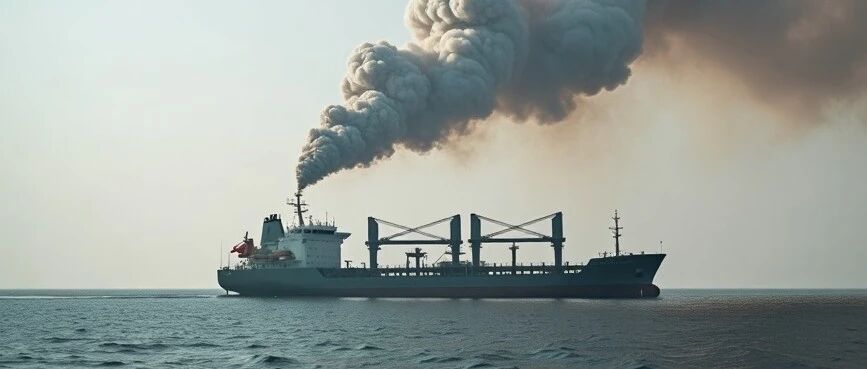
监管“盯上”船舶“冒黑烟”
中国能源报· 2025-10-15 00:07
Core Viewpoint - The Ministry of Ecology and Environment has released the draft "Emission Smoke Density Limits and Measurement Methods for Ships," which aims to enhance the regulation of visible pollutants from existing ships, marking a shift from source control to lifecycle management [1][3]. Regulatory Framework - The draft expands its scope from diesel engines to all ships, changing the measurement method from engine testing to direct exhaust measurement, and sets a compliance line at Ringelmann blackness level 2, significantly improving regulatory precision [3]. - The new regulations address the issue of black smoke emissions from existing ships due to improper maintenance and poor engine-propeller matching, filling a long-standing regulatory gap [3][5]. Emission Statistics - In 2023, ship emissions accounted for 27.4% of hydrocarbons (HC), 35.7% of nitrogen oxides (NOx), and 28.6% of particulate matter (PM) from non-road mobile sources, highlighting the urgent need to control ship black smoke emissions for better air quality in port cities [4]. Challenges with Current Standards - The existing standards for ship diesel engine emissions are outdated, lacking effective regulatory measures for black smoke from existing ships, necessitating a more scientific and enforceable new standard [5]. - The new standard is expected to reduce particulate matter emissions by approximately 13,800 tons [5]. Market Dynamics - Although the draft does not outright ban traditional oil fuels, the established regulatory framework will drive the shipping fuel market towards cleaner and more diverse options [7]. - The market share of traditional heavy fuel oil is expected to gradually decline due to tightening regulations and the rise of alternative fuels, with low-sulfur fuel oil (VLSFO) becoming increasingly mainstream [8]. Future Fuel Trends - In the short term, the shipping industry will likely rely on commercially viable liquefied natural gas (LNG) and methanol, while long-term goals will necessitate a shift to zero-carbon fuels like green methanol and ammonia [8][10]. - Traditional oil companies are encouraged to transition towards renewable energy and develop electric liquid fuels, leveraging their existing advantages in the chemical sector [10][11]. Opportunities for New Energy Companies - The draft creates opportunities for new energy companies to enter the shipping fuel market by focusing on technological breakthroughs and participating in infrastructure development [11][12].