
柠条

Search documents
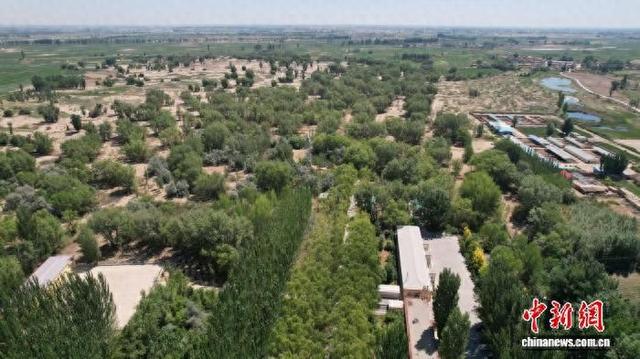
(新春走基层)三代人接续奋斗 塞北“沙窝子”变“绿海洋”
Zhong Guo Xin Wen Wang· 2026-02-06 08:09
Core Viewpoint - The article highlights the transformation of the XinHua Forest Farm in Inner Mongolia from a desertified area to a thriving green ecosystem through over 60 years of continuous efforts in afforestation and ecological restoration [1][3]. Group 1: Historical Context - The XinHua Forest Farm was established in the 1960s to combat severe desertification, with initial conditions characterized by sand dunes and saline-alkali soil [3]. - The area faced significant challenges, including frequent sandstorms that obstructed daily life, necessitating the establishment of a dedicated workforce for afforestation [3]. Group 2: Ecological Achievements - Over the past 60 years, the forest farm has planted 7.55 million trees across 46,600 acres, achieving a forest coverage rate of 88% [3]. - The farm has successfully fixed 6.36 million tons of sand and sequestered 146,300 tons of carbon, while the surrounding lakes have expanded from 500 acres to 700 acres [5]. - The number of sandstorm days has drastically reduced from 136 in 1960 to just 19 in 2023, and the diversity of wildlife has increased to over 80 species [5]. Group 3: Technological Innovations - The introduction of mechanized equipment has significantly improved the efficiency of afforestation efforts, with new machines outperforming manual labor by several times [7]. - Collaboration with research institutions has led to the establishment of expert workstations focused on ecological restoration and the development of resilient tree species [7]. Group 4: Economic Development - The forest farm has implemented models that integrate local communities into its operations, resulting in an average annual income increase of approximately 5,000 yuan per person for over 2,000 villagers involved in various projects [9]. - The integration of photovoltaic systems with afforestation efforts has created a dual benefit of ecological restoration and economic gain, covering 24,000 acres [9].

宁夏平罗县毛乌素沙地生态修复成效显著
Zhong Guo Xin Wen Wang· 2025-08-21 00:23
Group 1 - The core viewpoint of the articles highlights the successful ecological restoration efforts in Ningxia Pingluo County, focusing on desertification control and the promotion of biodiversity through various innovative techniques and local plant species [1][2] - The implementation of a scientific desertification control strategy using drought-resistant plants such as Caragana, Haloxylon, and others has led to the comprehensive management of 76,300 acres of desertified land [1] - Technological innovations, including the "grass grid + sand crust" technique and the use of water drilling for shrub planting, have significantly improved survival rates of planted vegetation to over 80% [1] Group 2 - The ecological restoration efforts have resulted in substantial benefits, such as the Tianhe Bay wetland's annual water conservation of several million cubic meters and the enhancement of biodiversity, making it a crucial habitat for migratory birds [2] - The investment of 188 million yuan in six key projects aims to further improve desertification control and wetland restoration, targeting the management of an additional 50,300 acres of desertified land and 48,000 acres of wetland [2] - The overall goal is to strengthen the ecological security barrier in Northwest China by enhancing functions related to wind and sand prevention, soil conservation, carbon sequestration, and biodiversity protection [2]
内蒙古21亿株苗木保障“三北”工程种苗供应
Zhong Guo Chan Ye Jing Ji Xin Xi Wang· 2025-07-17 22:25
Core Insights - Inner Mongolia focuses on ensuring seedling supply for the "Three North" project through a comprehensive strategy involving "protection, cultivation, breeding, promotion, and management" [1] - The region has established 40 seedling bases covering an area of 400,000 acres, producing over 2.1 billion seedlings, which not only meet local needs but also supply surrounding provinces [1] - By early 2025, Inner Mongolia aims to complete over 20 million acres of desertification control, necessitating robust seedling supply and management [1] Seedling Production and Quality Control - The region is strategically planning seedling breeding bases based on ecological zoning and tree species characteristics, focusing on valuable tree species in the eastern region and ecological species in the central and western regions [2] - A "Green Sword 2025" action has been initiated to monitor seedling quality, involving a seven-month inspection period with a completion of 291 seedling batches and 61 seed batches, achieving a pass rate of over 98% [2] - A price monitoring and early warning mechanism for seedlings has been established to ensure stable market order and quality supply, supporting the success of the "Three North" project [2]