
标普500指数ETF(SPY)

Search documents
聚焦ETF市场 | 投资者逢低买入屡试不爽,已成牛市引擎?
彭博Bloomberg· 2025-11-28 06:05
Core Viewpoint - The "buying the dip" strategy remains prevalent and has become institutionalized, with increased investor confidence leading to significant inflows into ETFs following market downturns, surpassing the enthusiasm seen in 2021 [4][9]. Group 1: ETF Investor Behavior - ETF investors are increasingly viewing market pullbacks as opportunities rather than risks, leading to accelerated inflows during declines, similar to the frenzy of 2021 but more disciplined [7][9]. - The S&P 500 index experienced a record of 354 consecutive trading days without a drop exceeding 2%, contributing to a reduced number of buying opportunities [9][10]. Group 2: Effectiveness of the "Buying the Dip" Strategy - Historically, the effectiveness of the "buying the dip" strategy is attributed to the long-term upward trend of the stock market, with the S&P 500 ETF (SPY) averaging a 0.56% increase in the week following a decline, with over half of the time resulting in a rebound [9]. - The intensity of the "buying the dip" behavior is influenced by the frequency of market pullbacks, with fewer opportunities observed in 2024 compared to the frequent declines of 2020-2021 [9].


全球股市屡创新高之际宏观对冲基金谨慎观望 小摩:资金仍有入场空间 涨势有望延续
智通财经网· 2025-10-09 12:26
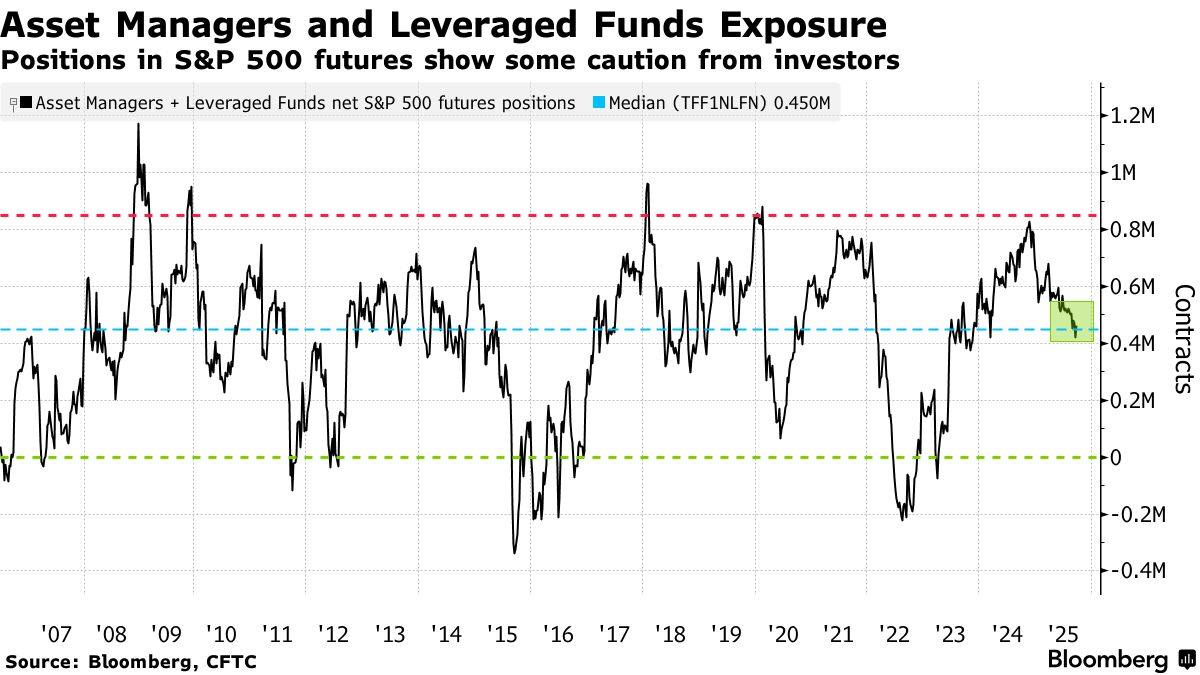
Group 1 - Despite global stock markets reaching historical highs, investors, including some hedge funds, remain cautious according to Morgan Stanley's holdings data [1] - Macro hedge funds have a slightly negative stock beta, indicating their exposure to the stock market, although there has been some improvement in recent months [1][3] Group 2 - Since the low in April, global stock markets have surged, driven by strong economic data, reduced recession fears, and a more dovish stance from the Federal Reserve [3] - Demand for stocks related to the artificial intelligence boom remains strong, with major U.S. tech stocks pushing indices to record highs [3] - Speculative positions in U.S. stock index futures are close to their long-term median levels, suggesting that overall exposure is near historical averages rather than in an overextended range [3] - The short positions in the Nasdaq 100 ETF (QQQ) are relatively low, while the short positions in the S&P 500 ETF (SPY) have only partially retraced from significant increases earlier in the year, indicating ongoing cautious sentiment in the market [3] - This suggests that speculative investors' exposure in the U.S. stock market is not particularly high, indicating potential for further upward movement [3]

美股Q2 机构持仓大动作:科技股分歧加剧,巨头策略各有侧重
智通财经网· 2025-08-15 14:38
Core Viewpoint - The article highlights the divergent strategies of major financial institutions regarding technology stocks amid the AI boom and market volatility, indicating a potential shift in investment themes for the upcoming period [1]. Group 1: UBS - UBS reduced its holdings in major tech stocks, including a 10.86% cut in Apple, 5.16% in Nvidia, and 3.95% in Microsoft, while increasing its position in Nasdaq 100 put options by 84.21% [2]. - The strategy reflects a defensive posture, aiming to hedge against potential declines in tech stocks while maintaining a neutral stance on the broader market [2]. Group 2: Wells Fargo - Wells Fargo showed strong confidence in the overall market, increasing its total holdings by 9.77% to $483 billion, with a 47.29% increase in the S&P 500 ETF [3]. - The bank exhibited a "structural increase" in tech stocks, notably boosting its position in Google by 30.89% and adding Broadcom to its top holdings, indicating a focus on the AI supply chain [3]. - Wells Fargo also adopted a dual strategy of increasing bond ETF holdings for volatility protection while aggressively increasing Nasdaq 100 put options by 92.25% [3]. Group 3: Nomura - Nomura's holdings grew by 13% to $60.5 billion, with a significant focus on AI applications and individual stock volatility [4]. - The firm increased its position in Meta call options by 10.98% and Microsoft call options by 110%, reflecting a strong bet on AI application leaders [4]. - Notably, Nomura employed a unique strategy with Tesla, increasing both put and call options, indicating a bet on volatility amid uncertainties surrounding the company [4]. Group 4: Hedge Fund Strategies - Hedge fund strategies varied significantly, with some, like Ackman, focusing on consumer stocks, while others, like Soros, adopted a defensive approach by increasing put options on the S&P 500 and Russell 2000 [6]. - Michael Burry's shift from shorting tech stocks to buying call options on healthcare and tech companies illustrates a dramatic change in sentiment, aligning with the broader market rebound [6]. Group 5: Market Signals - The analysis of institutional holdings reveals three key market signals: the definitive split in tech stocks, the standardization of hedging tools, and a balance between defensive and offensive strategies [7]. - The divergence in tech stock performance suggests a preference for hard tech and AI applications over consumer electronics, indicating a shift in investor focus [7]. - The use of derivatives for risk management highlights a transition from a bullish market to a more volatile environment, where institutions are seeking structural opportunities [7].


