
科技股分化

Search documents
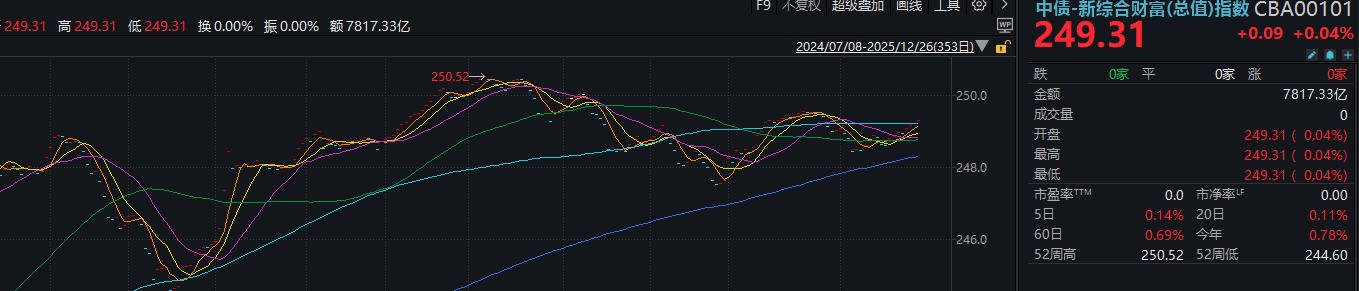
资管机构2026年展望:债市分歧加大、对股市更乐观
2 1 Shi Ji Jing Ji Bao Dao· 2025-12-30 01:36
Group 1: Market Outlook for 2026 - Asset management institutions have mixed views on the bond market for 2026, with many being more optimistic about the stock market [1][2] - The A-share market structure may change slightly in 2026, with technology stocks likely to continue leading, but differentiation is expected [1][8] - The domestic capital market is anticipated to show a pattern of stock and bond resonance upward in 2026 [8] Group 2: Bond Market Insights - There is significant divergence in opinions regarding the bond market, with some institutions believing that the space for bonds in 2026 is limited [2] - The 30-year government bond futures have dropped by 7.39% since July 2025, raising concerns about risks associated with long-term bonds [4] - The bond market is expected to experience low volatility with a slight upward trend in the 10-year bond yield to around 1.8% [4] Group 3: Stock Market Insights - The external environment for the stock market is favorable, with the U.S. Federal Reserve restarting its rate-cutting cycle, potentially providing additional liquidity to the Chinese stock market [7] - The continued low interest rates may drive a shift in wealth allocation from real estate to equities among residents [7] - The financial regulatory authority has eased restrictions on insurance capital entering the stock market, which may enhance investment activity [7] Group 4: Investment Strategies - Investment strategies for 2026 are still being defined, with a focus on stable products and dividend stocks, while higher-risk products may target technology stocks [8] - There is a potential for consumer blue-chip stocks to gain attention as their valuations have become attractive amid a recovering consumption growth [8] - The market is expected to benefit from a combination of U.S. rate cuts and domestic policy support, with bonds likely to return to a focus on fundamental recovery [8]

半导体板块逆势走高 科技股“强势归来”?
Xin Lang Cai Jing· 2025-09-03 06:58
Core Viewpoint - The semiconductor sector is experiencing a strong upward trend, which may lead to a breakthrough of historical highs in the market [1] Group 1: Analyst Insights - Jiufeng Investment's chief investment advisor, Zhang Cuixia, believes that the semiconductor sector's momentum is favorable for achieving new historical highs [1] - Jinyuan Securities' chief investment advisor, Xu Chuanbao, suggests that there may be short-term differentiation among technology stocks, but the semiconductor sector is expected to continue its strength [1] - Guojin Securities' Huang Cendong indicates that there is internal rotation within the technology sector, with semiconductor equipment and materials showing potential for catch-up growth [1]
美股Q2 机构持仓大动作:科技股分歧加剧,巨头策略各有侧重
智通财经网· 2025-08-15 14:38
Core Viewpoint - The article highlights the divergent strategies of major financial institutions regarding technology stocks amid the AI boom and market volatility, indicating a potential shift in investment themes for the upcoming period [1]. Group 1: UBS - UBS reduced its holdings in major tech stocks, including a 10.86% cut in Apple, 5.16% in Nvidia, and 3.95% in Microsoft, while increasing its position in Nasdaq 100 put options by 84.21% [2]. - The strategy reflects a defensive posture, aiming to hedge against potential declines in tech stocks while maintaining a neutral stance on the broader market [2]. Group 2: Wells Fargo - Wells Fargo showed strong confidence in the overall market, increasing its total holdings by 9.77% to $483 billion, with a 47.29% increase in the S&P 500 ETF [3]. - The bank exhibited a "structural increase" in tech stocks, notably boosting its position in Google by 30.89% and adding Broadcom to its top holdings, indicating a focus on the AI supply chain [3]. - Wells Fargo also adopted a dual strategy of increasing bond ETF holdings for volatility protection while aggressively increasing Nasdaq 100 put options by 92.25% [3]. Group 3: Nomura - Nomura's holdings grew by 13% to $60.5 billion, with a significant focus on AI applications and individual stock volatility [4]. - The firm increased its position in Meta call options by 10.98% and Microsoft call options by 110%, reflecting a strong bet on AI application leaders [4]. - Notably, Nomura employed a unique strategy with Tesla, increasing both put and call options, indicating a bet on volatility amid uncertainties surrounding the company [4]. Group 4: Hedge Fund Strategies - Hedge fund strategies varied significantly, with some, like Ackman, focusing on consumer stocks, while others, like Soros, adopted a defensive approach by increasing put options on the S&P 500 and Russell 2000 [6]. - Michael Burry's shift from shorting tech stocks to buying call options on healthcare and tech companies illustrates a dramatic change in sentiment, aligning with the broader market rebound [6]. Group 5: Market Signals - The analysis of institutional holdings reveals three key market signals: the definitive split in tech stocks, the standardization of hedging tools, and a balance between defensive and offensive strategies [7]. - The divergence in tech stock performance suggests a preference for hard tech and AI applications over consumer electronics, indicating a shift in investor focus [7]. - The use of derivatives for risk management highlights a transition from a bullish market to a more volatile environment, where institutions are seeking structural opportunities [7].


