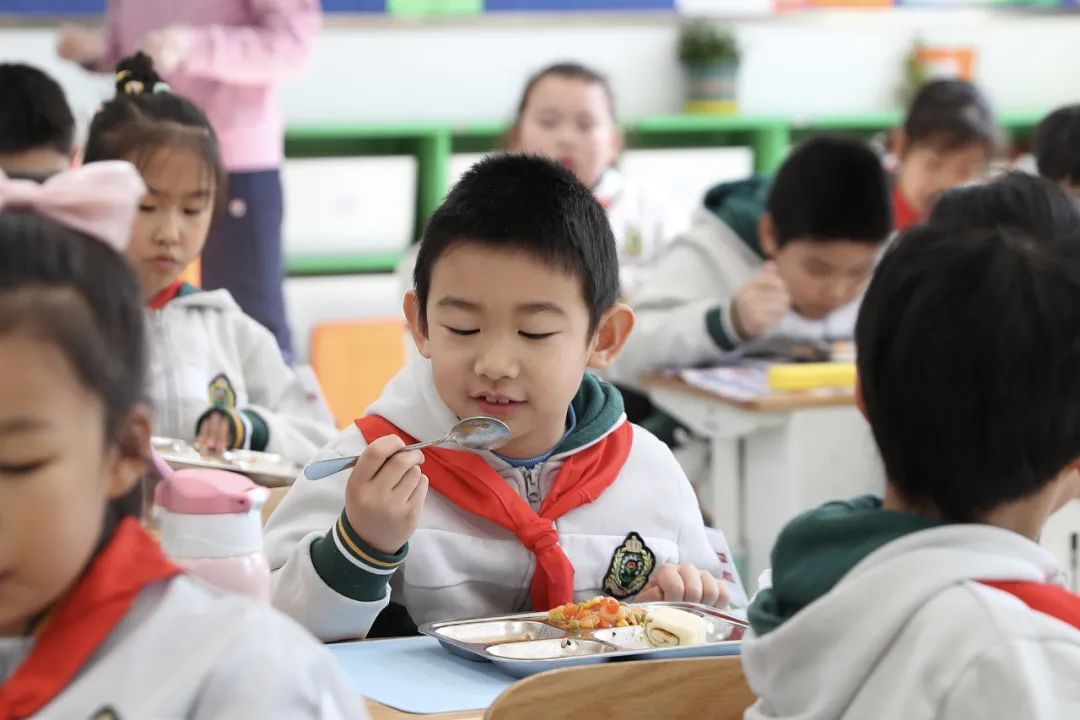
校园配餐

Search documents
12月起,这些民生新规将影响你我生活
Xin Hua She· 2025-11-30 13:05
Core Viewpoint - A series of new regulations affecting public welfare will take effect from December 1, including updates to food safety laws, regulations for chain restaurants, and standards for campus meal services, as well as the cessation of old standards for electric bicycles. Group 1: Food Safety Regulations - The revised Food Safety Law will enhance supervision over the transportation of liquid foods and infant formula, introducing a licensing system for key liquid food transport and strict legal responsibilities for violations [1] - Infant formula liquid milk will be subject to registration management, prohibiting production under different brands using the same formula, ensuring quality and safety [1] Group 2: Chain Restaurant Regulations - New regulations will clarify the responsibilities of chain restaurant headquarters regarding food safety management, requiring them to allocate a portion of their revenue for food safety measures [2] - The regulations will define the roles of headquarters, branches, and stores in food safety, aiming to eliminate the issue of mutual blame when problems arise [2][3] Group 3: Campus Meal Standards - The first national standard for campus meal services will be implemented, providing guidelines for meal preparation, ingredient management, and emergency handling for service providers catering to schools [4] Group 4: Electric Bicycle Regulations - The new mandatory safety standards for electric bicycles will lead to the cancellation of certifications based on outdated standards, prohibiting the sale of non-compliant bicycles [4][5] - The updated standards will improve fire safety and prevent illegal modifications, while consumers are advised to look for CCC certification when purchasing electric bicycles [5]
实采上海某小学:孩子们的午餐,不应是利益与惰性的“角力场”
Guan Cha Zhe Wang· 2025-09-20 12:18
Core Viewpoint - The incident involving the "smelly shrimp and egg" dish in Shanghai schools has raised significant concerns about food safety and quality provided by the supplier, Shanghai Lujie Industrial Development Co., Ltd. [1][3] Group 1: Incident Overview - On a day in mid-September, students at a Shanghai primary school reported an unpleasant odor from a dish of "shrimp and egg," leading to complaints from parents on social media [1][3]. - Multiple schools in Shanghai experienced similar issues with the same dish, causing widespread panic among parents [1][3]. Group 2: Supplier Background - Shanghai Lujie was established in September 2014 and has become one of the largest student nutrition meal suppliers in Shanghai, serving over 500 schools and kindergartens with a daily meal supply exceeding 500,000 portions by 2024 [4]. - The company has received various accolades, including being recognized as a "leading enterprise" and "famous brand enterprise" in Shanghai, contributing to its image as a trustworthy supplier [4]. Group 3: Quality Concerns - Despite its reputation, numerous complaints have surfaced on social media regarding the quality of meals provided by Shanghai Lujie, with issues such as poor taste, lack of freshness, and excessive use of frozen ingredients [5][8]. - Parents have reported that the meals often lack nutritional balance, with a high frequency of fried foods and insufficient fresh vegetables, leading to an imbalanced diet for students [8]. Group 4: Response to Complaints - The company's response to complaints has been perceived as inadequate, with minimal improvements noted after feedback from parents [8]. - Following the "smelly shrimp" incident, the company offered bread as a substitute, which was criticized for its complex ingredient list and perceived lack of quality [8][9].


校园配餐领域首个国家标准发布!
Jing Ji Wang· 2025-07-21 08:40
Core Points - The first national standard specifically for campus meal services, titled "Guidelines for Management of Campus Meal Service Enterprises," has been released and will be implemented on December 1 of this year [1][3] - The campus meal service industry has become a regulatory focus due to its extensive coverage, involving over 2.37 billion students across more than 460,000 primary and secondary schools and kindergartens in China [1][3] - The campus meal service industry accounts for nearly half of the entire catering industry's scale, making standardization crucial for promoting high-quality development in this sector [1][3] Summary by Sections Management Guidelines - The guidelines apply to enterprises providing meal preparation and delivery services for students in primary and secondary schools and kindergartens [3] - Enterprises must appoint a food safety director and dedicated personnel for food safety management and inspection [3] - A dynamic risk prevention mechanism must be established, including daily safety checks, weekly hazard assessments, and monthly analysis [3] Raw Material Procurement - A centralized procurement system for staple foods such as rice, flour, and oil must be implemented, ensuring retention of inspection reports for each batch of raw materials [3] - Each type of staple food must undergo comprehensive testing at least once a year, particularly for safety indicators like pesticide residues [3] Food Preparation and Transportation - The food processing must be integrated with an "Internet + Open Kitchen" system, allowing schools, parents, and students to view key food processing operations [3] - Samples of each food variety delivered must be retained for at least 48 hours [3] - Delivery vehicles must be closed, registered with authorities, and equipped with tracking systems [3] - In case of food safety risks, a recall procedure must be initiated immediately, and local market regulatory authorities must be informed [3]