食品安全监管

Search documents
国务院食安办、市场监管总局约谈相关地方市级人民政府负责人 督办“3・15”晚会曝光问题整改
证券时报· 2026-03-28 13:58
Group 1 - The State Council's Food Safety Office has conducted interviews with government officials from Chengdu and Chongqing regarding food safety issues exposed during the 2026 CCTV "3.15" Gala, urging local authorities to enforce laws and rectify problems to ensure food safety for consumers [1] - The interviews highlighted that the root cause of the issues lies in the ineffective implementation of responsibilities by some producers and operators, as well as inadequate local management and supervision capabilities [1][2] - The market regulatory authority has also interviewed officials from Hangzhou, Wenzhou, Suzhou, Zhengzhou, and Shenyang concerning related issues exposed during the gala [1] Group 2 - Local governments are required to recognize the extreme importance of food safety and market order, enhancing their sense of responsibility and urgency, and strictly implementing the "four strictest" requirements [2] - Authorities must ensure accountability by investigating and holding responsible units and individuals accountable, while also conducting thorough inspections and rectifications to prevent similar issues from recurring [2] - There is a call for comprehensive supervision across the entire supply chain and the establishment of risk prevention and resolution mechanisms to protect consumer rights and create a safe consumption environment [2]


山西省运城市新绛县市场监管局春节假期食品安全保障不停歇
Xin Lang Cai Jing· 2026-02-28 02:44
Core Viewpoint - The article emphasizes the efforts of the Shanxi Province's Yuncheng City Xinjiang County Market Supervision Bureau to ensure food safety during the 2026 "Jiangzhou Ancient City Chinese New Year" cultural activities, particularly focusing on the temple fair events [1] Group 1: Food Safety Measures - The Xinjiang County Market Supervision Bureau has developed an emergency response plan and formed a working group to coordinate with temple fair organizers for food safety [1] - Prior to the festival, a survey of food vendors in scenic areas was conducted, and staff were assigned to monitor compliance and emergency response procedures [1] Group 2: Inspection and Compliance - During the festival, law enforcement personnel conducted comprehensive inspections of food establishments in key areas, focusing on health certifications, supply verification, ingredient storage, hygiene, and processing operations [1] - Issues identified during inspections were addressed on-site, with immediate guidance provided to rectify problems and eliminate hazards [1] Group 3: Public Awareness and Future Actions - The bureau distributed educational materials on food safety laws and consumer rights to both food operators and the public to enhance awareness [1] - Moving forward, the Xinjiang County Market Supervision Bureau plans to strengthen food safety oversight and regulate restaurant operations more rigorously to create a safe consumption environment for the public during the holiday [1]
兰州市榆中县市场监管局精准护航食品生产单位节后复工
Xin Lang Cai Jing· 2026-02-28 02:44
Core Viewpoint - The article emphasizes the proactive measures taken by the Yuzhong County Market Supervision Administration to ensure food safety during the post-holiday resumption of food production, focusing on comprehensive regulation and support for enterprises to mitigate potential risks [1][2][3] Group 1: Regulatory Measures - The administration is implementing a full-chain supervision approach to strengthen food production safety, focusing on five key areas: responsibility, personnel, raw materials, equipment, and processes [1] - Enterprises are urged to ensure that their main responsible persons fulfill their duties and conduct specialized deployments for food safety before resuming operations [1][2] Group 2: Personnel Management - A health management system is established for returning and newly hired employees, requiring valid health certificates for those handling food [1][2] - Employees with health issues that could compromise food safety are to be reassigned to different positions [1] Group 3: Raw Material Control - Companies are instructed to conduct comprehensive inventory checks of raw materials, semi-finished products, and finished products, focusing on identifying expired, moldy, or improperly stored items [2] - Strict adherence to sourcing verification and documentation is mandated to ensure traceability and quality control of raw materials [2] Group 4: Equipment Maintenance - Enterprises must perform thorough inspections and maintenance of production equipment, ensuring no equipment operates in a compromised state [2] - Cleaning and disinfection of production facilities are emphasized to prevent microbial growth and cross-contamination [2] Group 5: Process Standardization - The article highlights the importance of adhering to food production hygiene standards and regulations, ensuring that production processes are compliant and that products undergo proper inspection before market release [2] - Key control points in production are to be reinforced to prevent violations of food additive usage standards [2] Group 6: Current Status and Future Actions - As of now, the resumption of food production in the county is proceeding smoothly, with 39 food production enterprises and 78 small workshops receiving guidance for safety checks [3] - The administration plans to increase inspection efforts and follow-up reviews to enhance food production quality and ensure ongoing food safety stability in the region [3]
新闻1+1丨新规“亮剑”,如何守护“舌尖上的安全”?
Yang Shi Wang· 2026-02-27 22:25
Core Viewpoint - The National Market Supervision Administration of China has introduced two significant new regulations targeting online food delivery and sales, aiming to enhance food safety and consumer protection in the digital marketplace [1] Group 1: Highlights of the New Regulations - The new regulations further specify platform responsibilities, mandating the appointment of food safety directors and supervisors, and prohibiting the outsourcing of food safety responsibilities [3] - They strengthen the responsibilities of online operators, requiring them to have a physical store and to disclose operational information in real-time [3] - The regulations aim to improve regulatory efficiency by enhancing cross-regional collaboration and increasing administrative penalties for violations [3] Group 2: Addressing "Ghost Merchants" - The new regulations are expected to effectively curb the phenomenon of "ghost merchants" by emphasizing the platform's obligation to conduct substantive reviews during merchant onboarding [4] - Platforms are required to demand more information disclosure regarding businesses that do not offer dine-in services, providing consumers with better information [6] - The regulations clarify the cooperation between regulatory bodies in the merchant's registered location and the location of the violation, addressing previous regulatory gaps [6][9] Group 3: Cross-Regional Regulatory Challenges - The regulations address the conflict between the regional nature of business registration and the nationwide nature of business operations, emphasizing the responsibilities of both the registration and operational locations [7] - By separating the regulatory responsibilities, the regulations leverage the strengths of both localities to enhance overall regulatory effectiveness [9] Group 4: Addressing Misleading Practices in Live Streaming - The regulations specify that exaggerated claims made during live streaming must be monitored in real-time using techniques like screen recording and semantic analysis [12] - Depending on the severity of the misleading behavior, penalties may range from warnings and point deductions to civil, administrative, or even criminal liabilities for serious consequences [12] Group 5: Responsibilities of Platforms Post-Regulation - Platforms must recognize the critical nature of food safety and make necessary investments to ensure compliance with the new regulations [15] - Investing in food safety can enhance consumer trust, potentially offsetting costs and improving business efficiency [15]
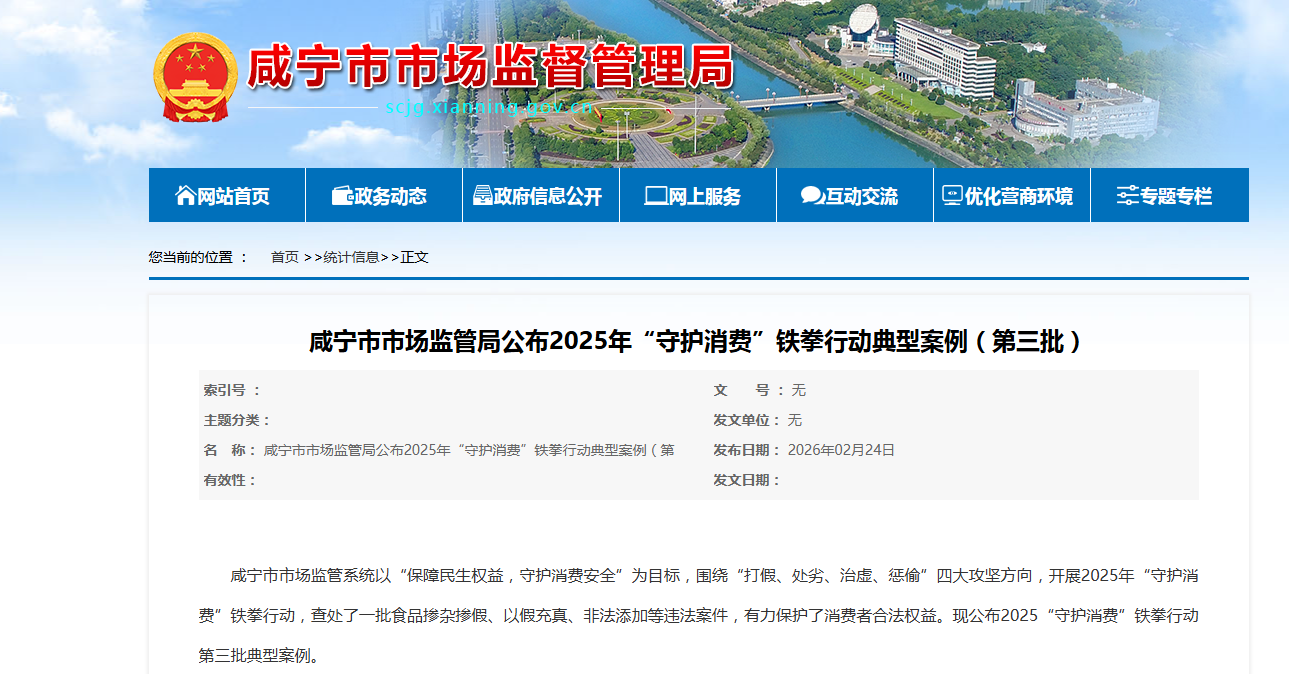
湖北省咸宁市市场监管局公布2025年“守护消费”铁拳行动典型案例(第三批)
Zhong Guo Zhi Liang Xin Wen Wang· 2026-02-27 07:57
Core Viewpoint - The Xianning market supervision system aims to protect consumer rights and ensure safety through the "Iron Fist Action" for 2025, focusing on combating counterfeiting, substandard products, fraud, and theft [2] Group 1: Enforcement Actions - The Xianning market supervision bureau investigated a food company for labeling products with false production dates, resulting in the confiscation of 640 boxes of cakes and fines totaling 43,000 yuan [3] - The Chibi market supervision bureau penalized a food store for selling products with forged barcodes, imposing a fine of 2,000 yuan [4] - The Chongyang market supervision bureau found a seller using excessive food additives in agricultural products, leading to fines and confiscation of illegal gains totaling 5,240 yuan [5] - The Tongcheng market supervision bureau penalized a water factory for selling non-compliant bottled water, resulting in fines of 10,600 yuan [6] - The Tongshan market supervision bureau referred a case of suspected production and sale of inferior products to the police, involving illegal practices in beef processing [7]
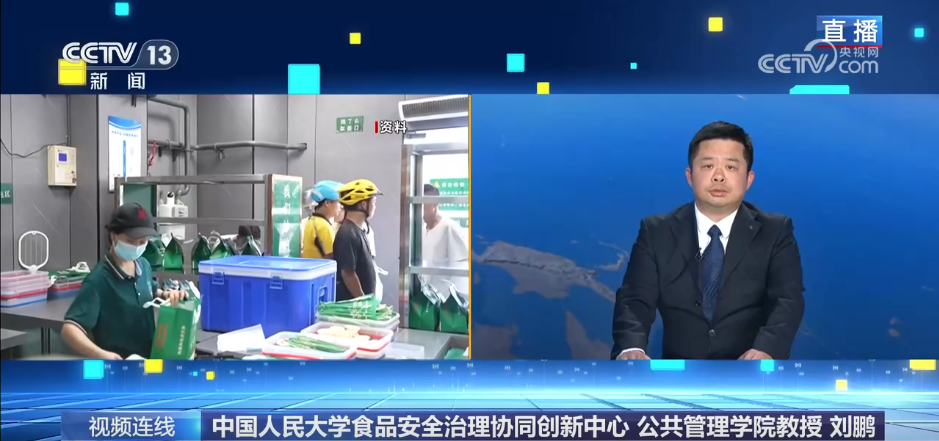
市场监管总局:畅通外卖维权渠道,倡导“外卖小哥”参与社会监督
2 1 Shi Ji Jing Ji Bao Dao· 2026-02-27 01:02
Core Viewpoint - The National Market Supervision Administration has released two regulations aimed at enhancing food safety responsibilities for online food service providers and sellers, ensuring consumer protection and informed decision-making [2][3]. Group 1: Consumer Rights Protection - The regulations emphasize the importance of consumer rights by requiring online food service providers and sellers to prominently display their business qualifications and ensure the accuracy of this information [3][4]. - These measures are designed to enhance consumer confidence in online food purchases, allowing consumers to make informed choices [3]. Group 2: Food Safety Risk Management - Both regulations mandate platform providers to establish mechanisms for "intelligent monitoring, risk assessment, and rapid response" to better manage food safety risks in online operations [4]. - The regulations outline specific prohibitions for food service providers, such as using spoiled or contaminated food, processing food outside designated areas, and outsourcing food preparation [4]. Group 3: Complaint and Reporting Mechanisms - The regulations require platform providers to include complaint and reporting links on the main pages of online food sellers, facilitating consumer reporting of food safety issues [4]. - Upon receiving complaints, platform providers are obligated to address them promptly, and food sellers must include complaint handling in their food safety risk management [4]. Group 4: Role of Delivery Personnel - The regulations encourage delivery personnel to participate in social supervision by reporting any observed food safety violations by online food service providers to platform providers and regulatory authorities [5].
紧盯百姓“舌尖事”,当好群众“代言人”
Xin Lang Cai Jing· 2026-02-26 19:41
Group 1 - Wang Ya, a representative of the National People's Congress and director of the Zhangjiajie Quality Measurement and Inspection Center, actively engages in food safety testing and quality analysis [2] - Wang Ya emphasizes the importance of understanding farmers' concerns and consumer anxieties regarding food safety, particularly in the context of online sales of agricultural chemicals [2] - He has proposed suggestions for strengthening the regulation of online pesticide sales, advocating for regular inspections and stricter qualification checks on e-commerce platforms [2] Group 2 - During the first session of the 14th National People's Congress, Wang Ya focused on the regulation of high-salt, high-sugar, and high-fat foods, proposing the acceleration of relevant national standard revisions [3] - His suggestions have been recognized and included in the revision plan, reflecting a response to public health needs [3] - Wang Ya stresses the importance of grassroots engagement and thorough research to identify issues and propose effective solutions for food safety [3]

严打网售食品假冒伪劣 市场监管总局出台新规压实三方责任
Bei Jing Shang Bao· 2026-02-26 12:53
Core Viewpoint - The newly introduced regulations aim to enhance food safety responsibilities among online food sellers, addressing issues like counterfeit products and false marketing in the rapidly growing platform economy [1] Group 1: Responsibilities - The regulations clarify the responsibilities of three parties: platform providers, online food sellers, and regulatory authorities, emphasizing that platform providers bear overall responsibility for food sales on their platforms [2] - Online food sellers must ensure food safety, obtain necessary licenses, and establish risk control mechanisms, while regulatory authorities are tasked with effective oversight [2] Group 2: Collaboration - The regulations promote two types of collaboration: enforcement collaboration among regulatory bodies across regions for better coordination and a communication mechanism between platform providers and online sellers for risk alerts and reporting [2] - Platform providers are required to monitor risks and promptly inform online sellers of any identified risks, while sellers must report any potential risks back to the platform [2] Group 3: Enforcement - The regulations strengthen enforcement by establishing clear jurisdictional rules to address the challenges of platform operations and local oversight [3] - There are increased penalties for platform providers who fail to comply with food safety management requirements, including not appointing safety personnel or not managing food safety risks appropriately [3]
剑指“幽灵外卖”、虚假宣传等顽疾 两项新规守护“舌尖安全”
Yang Shi Xin Wen Ke Hu Duan· 2026-02-26 12:19
Core Viewpoint - The article discusses new regulations issued by the State Administration for Market Regulation aimed at enhancing the accountability of online food service operators and food sales platforms regarding food safety [1] Group 1: Regulations for Online Food Service Operators - The new regulation mandates that online food service providers, specifically those offering delivery services without dine-in options, must prominently display a "No Dine-In" sign on their main page [1] - It requires food delivery platforms to verify the business licenses and operational qualifications of food service providers against data held by provincial market regulation departments, prohibiting services to those whose information does not match [1] Group 2: Regulations for Online Food Sales Operators - The regulation stipulates that platform companies must conduct real-name registration of sellers and perform substantive reviews of their operational qualifications, with a requirement to update this information every six months [1] - It holds online sellers responsible for the safety of the food they sell, prohibiting the sale of foods that are illegal to produce or operate, as well as any misleading or false commercial promotions regarding disease prevention or treatment [1]
摸清底数除隐患精准监管护食安 塔城市新城市场监管所扎实推进三项重点 排查统计工作
Zhong Guo Shi Pin Wang· 2026-02-26 08:06
Group 1 - The core focus of the news is the initiation of a special inspection and statistical work by the Xinjiang Tashkent New City Market Supervision Bureau, targeting online catering, food sales chain enterprises, and catering chain enterprises to enhance food safety regulation [1][2] - The inspection aims to tighten the safety measures for online catering, addressing issues such as non-compliance in license display and operating beyond permitted scopes, thereby establishing a risk management foundation for future targeted governance [1] - The bureau is conducting a comprehensive survey of food sales chain enterprises and catering chain enterprises to ensure accurate data collection on business names, addresses, and operational types, which will support risk classification and precise regulation [1] Group 2 - The three key inspection and statistical tasks are part of efforts to enhance the standardization and precision of food business regulation, with plans to focus on critical areas and strengthen responsibility implementation [2] - The bureau will dynamically update the regulatory ledger based on the results of the inspections and increase the frequency and guidance of supervision for key enterprises to ensure early detection and resolution of risks [2] - The overarching goal is to safeguard the food safety of the local community, ensuring the safety of what is referred to as "the food on the people's plates" [2]