
款冬花

Search documents
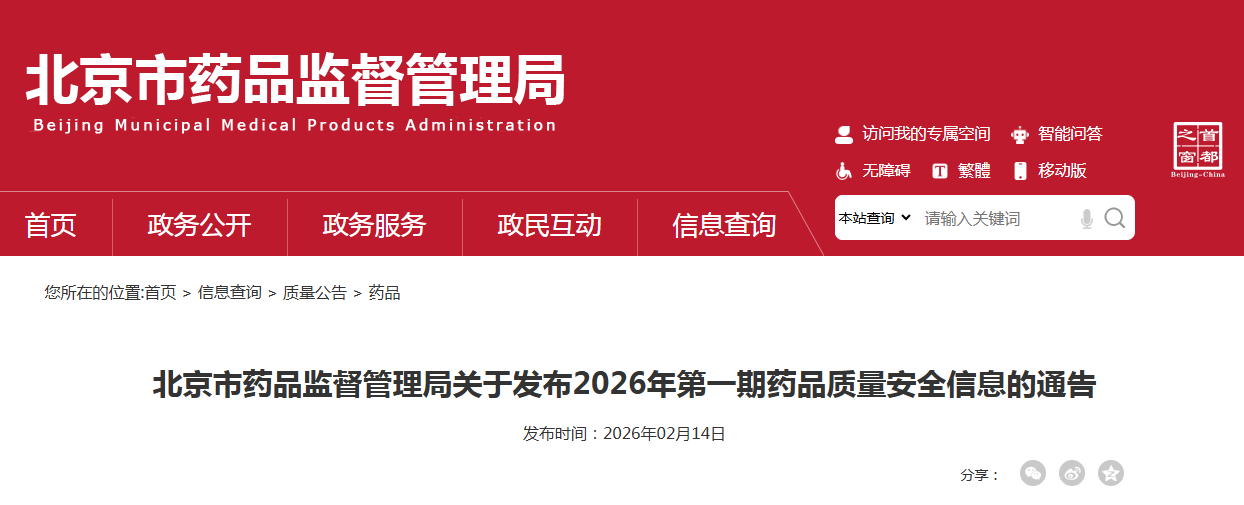
北京市药品监督管理局关于发布2026年第一期药品质量安全信息的通告
Xin Lang Cai Jing· 2026-02-25 06:37
Core Viewpoint - The Beijing Municipal Drug Administration has announced the results of its first drug quality safety information release for 2026, highlighting non-compliant drugs identified during supervision and inspection [3]. Group 1: Non-compliant Drugs - A list of non-compliant drugs has been published, detailing the names, production companies, batch numbers, specifications, and inspection results [3]. - Specific drugs mentioned include "Kuan Dong Hua" from Hubei Daodi Medicinal Materials, which failed to meet standards regarding appearance and content [3]. - "Jin Sang Kai Yin" from Xi'an Beilin Pharmaceutical also showed non-compliance related to microbial limits [3]. Group 2: Regulatory Actions - Relevant units have taken necessary control measures against the non-compliant products and are pursuing legal actions against violations [3]. - The announcement emphasizes the importance of adhering to the standards set forth in the 2020 edition of the Chinese Pharmacopoeia [3].

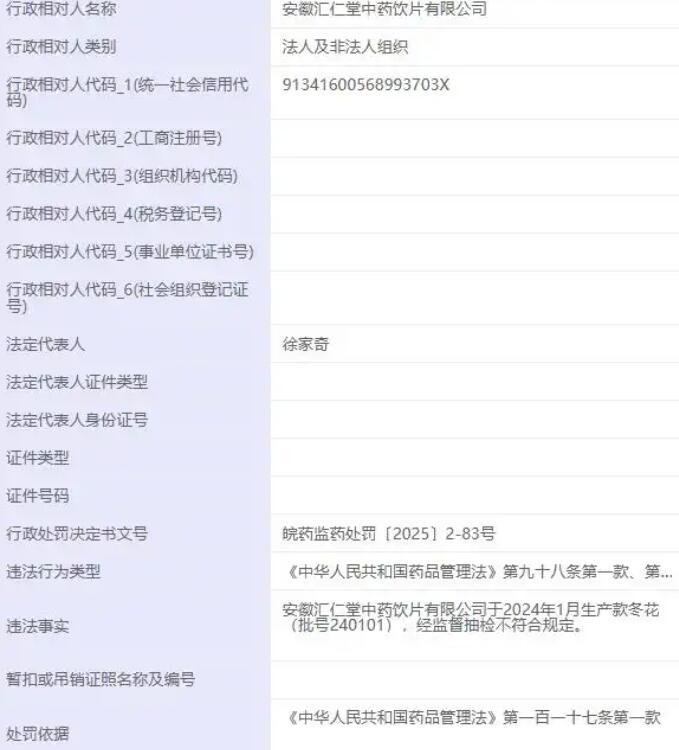
生产销售劣药款冬花,安徽一企业被罚没超62万元
Qi Lu Wan Bao· 2026-01-30 07:22
Core Viewpoint - Anhui Huiren Tang Traditional Chinese Medicine Co., Ltd. was fined 610,000 yuan and had illegal gains of 14,421.8 yuan confiscated due to the production and sale of substandard Kuan Dong Hua [1][3] Group 1: Administrative Penalties - The company was penalized for producing Kuan Dong Hua (batch number 240101) that did not meet regulatory standards, violating Article 98 of the Drug Administration Law of the People's Republic of China [3] - The total amount of fines and confiscated assets reached 624,420 yuan [4] Group 2: Company Background - Anhui Huiren Tang Traditional Chinese Medicine Co., Ltd. was established in 2011 and is located in Bozhou, Anhui Province, primarily engaged in the pharmaceutical manufacturing industry [4] - The company has one litigation record, three court announcements, and three case filings [4]
烟瘾缠身?老祖宗教你戒烟
Bei Jing Qing Nian Bao· 2025-07-21 01:06
Core Viewpoint - Traditional Chinese medicine offers various methods to help individuals quit smoking by addressing both the symptoms and underlying issues related to smoking addiction [1][6]. Group 1: Methods for Quitting Smoking - **Tea Replacement**: Drinking herbal teas such as green tea, mint, or licorice can help clear lung energy and reduce cravings. For those with weak stomachs, red tea can be used instead [1]. - **Herbal Decoction**: A combination of herbs like purple aster, winter flower, and loquat leaves can be used to alleviate symptoms such as cough and phlegm associated with smoking [2][3]. - **Herbal Patches**: Applying a patch made from herbs like cinnamon and clove can help reduce cravings and anxiety when used consistently over time [4]. - **Aromatherapy**: Carrying mugwort sticks and inhaling their aroma can create an aversion to the smell of cigarettes, aiding in the quitting process [5]. - **Acupuncture**: Stimulating specific ear points related to lung and bronchial health can help decrease the desire to smoke [5]. Group 2: Health Risks of Smoking - **Chemical Exposure**: Smoking releases over 7,000 chemicals, with nicotine acting as a highly addictive substance that affects the brain's reward system [6]. - **Cancer Risk**: Smokers are 23 times more likely to develop lung cancer compared to non-smokers, and the incidence of coronary heart disease increases by 2-4 times [6]. - **Secondhand Smoke Effects**: Children exposed to secondhand smoke face a 6-fold increase in respiratory infections and a 3-fold increase in asthma rates [6].
中药饮片质量问题频出,11项国家炮制规范草案细化质量标准
Xin Jing Bao· 2025-06-19 14:19
Core Viewpoint - The National Pharmacopoeia Commission has published 11 draft standards for the processing of traditional Chinese medicine (TCM) decoction pieces, addressing quality issues that have arisen this year due to frequent non-compliance in drug inspections [1][2]. Group 1: Draft Standards for TCM Decoction Pieces - The 11 draft standards cover various TCM decoction pieces including Banbianlian, Zisuye, Beishashen, Guanghuoxiang, Yimucao, Gaoliangjiang, Shudihuang, Shichangpu, Jingjie, Qicaotan, and Qicaoshan, specifying guidelines for processing, characteristics, and storage [2]. - For example, the processing standard for Banbianlian includes removing impurities, washing, cutting, drying, and sieving, while its characteristics and storage requirements are also detailed [2]. Group 2: Quality Inspection Reports - Multiple regions have reported non-compliance in TCM decoction pieces during drug quality inspections, with notable failures in Shanxi Province where 6 batches of decoction pieces were found non-compliant, involving well-known companies [3]. - In Jiangxi Province, 18 products were reported as non-compliant, including 11 batches of TCM materials and decoction pieces, with issues related to characteristics, identification, and microbial limits [4]. Group 3: Regulatory Actions and Expert Insights - Regulatory bodies are intensifying scrutiny on TCM decoction pieces, as evidenced by significant fines imposed on companies for producing substandard products, such as Anhui Baicui Jinfang Pharmaceutical Co., which faced penalties totaling 3.11 million yuan [4]. - Experts attribute the prevalence of substandard TCM decoction pieces to various factors, including the complexity of sourcing raw materials, lack of professional knowledge among suppliers, and the challenges of standardizing production practices [5][6].