比亚迪仰望U9X

Search documents
电动车不能再胖下去了
3 6 Ke· 2026-02-10 02:26
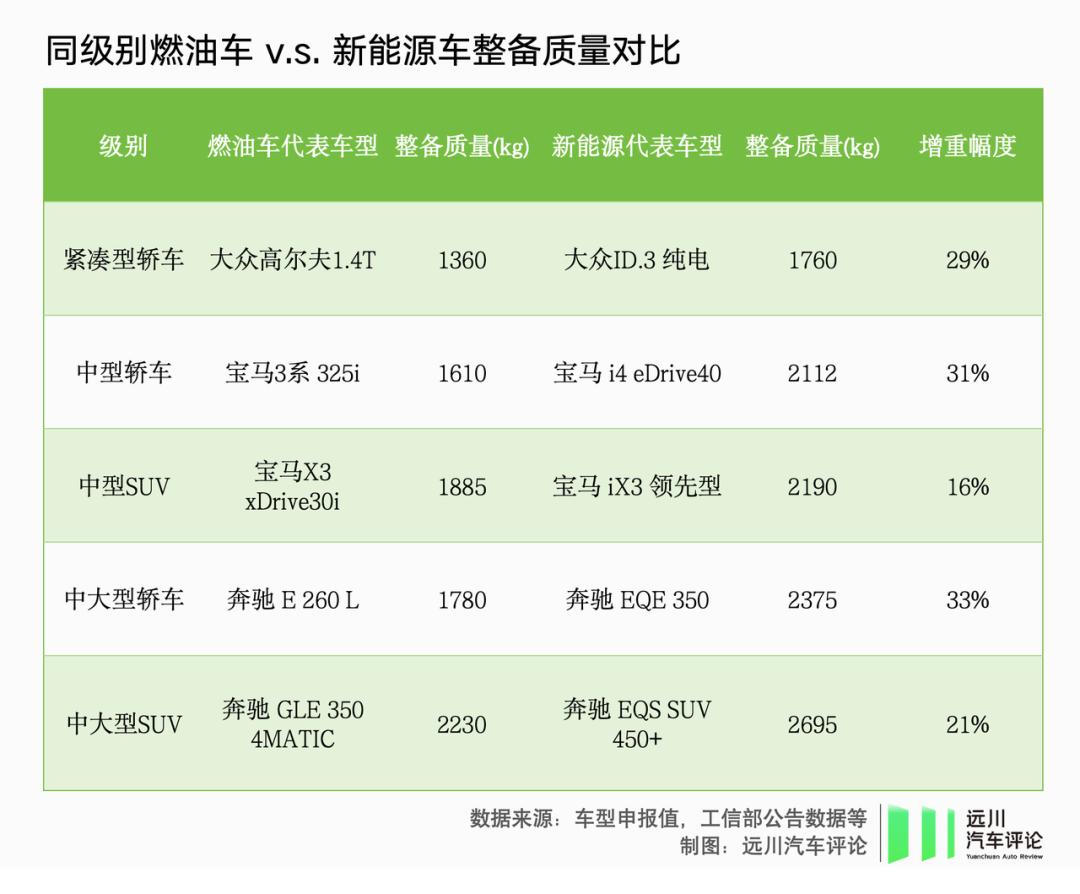
Core Viewpoint - The automotive industry is facing a significant challenge with the increasing weight of electric vehicles (EVs), which contradicts the industry's goal of lightweight design for better efficiency and performance. Group 1: Weight Increase in Electric Vehicles - The average weight of new energy vehicles in China has increased by over 300 kilograms in recent years, with some models weighing as much as traditional fuel SUVs [2][12] - Electric vehicles are becoming heavier due to consumer demand for longer range, which requires larger and heavier battery packs [2][5] - For instance, the BYD Yangwang U7 requires a 135 kWh battery pack weighing 900 kilograms to achieve a range of 700 kilometers, while a comparable fuel vehicle only needs a 50-kilogram fuel tank [5][7] Group 2: Implications of Increased Weight - The increase in vehicle weight leads to higher energy consumption; for every 100 kilograms added, the average energy consumption increases by 0.6 kWh per 100 kilometers [8][22] - Heavier vehicles require longer braking distances, which can increase accident risks, especially in emergency situations [20][22] - The perception that heavier vehicles are safer is outdated; modern safety relies more on structural integrity and design rather than just weight [16][20] Group 3: Market Trends and Consumer Preferences - Consumers in China prefer larger vehicles, prompting manufacturers to increase the size and features of electric vehicles, which adds weight [12][14] - The trend of adding luxury features to lower-priced models has further contributed to the weight increase, with some models gaining over 100 kilograms from added configurations [12][14] Group 4: Challenges in Weight Reduction - Reducing vehicle weight while maintaining cost and features is a significant challenge for manufacturers, as seen in the case of BMW's i3, which used expensive materials to achieve a lightweight design [26] - The introduction of new technologies, such as solid-state batteries, could potentially reduce weight by 50%, but cost and lifespan issues remain unresolved [29][30] - Recent regulations in China are pushing for stricter energy consumption limits based on vehicle weight, indicating a shift towards prioritizing lightweight designs [32]


Waymo无人驾驶汽车违规掉头被拦停,警察却无法开罚单;孟晚舟当值华为轮值董事长;王腾多平台账号注销或私密,此前因泄密被小米开除
雷峰网· 2025-10-02 00:36
Key Points - Waymo's self-driving car was stopped for illegal U-turn but could not be fined due to lack of legal provisions for autonomous vehicles [3] - Meng Wanzhou has taken over as Huawei's rotating chairman, marking her third term in this role [6] - BYD reported September sales of 396,300 units, maintaining its position as the top seller in the automotive market [8][9] - Xiaomi's sales reached a historical high in September, surpassing 40,000 units for the first time [8] - The Respect S800 is projected to outsell luxury brands like Maybach and Mercedes-Benz, with significant pre-orders [11] - Xiaomi clarified its marketing practices regarding "super strong steel," stating it follows industry norms and does not affect material performance [12] - Yushun Technology addressed security vulnerabilities in its robots, stating most issues have been resolved [14][15] - Panasonic is reportedly implementing a voluntary retirement program, but it does not affect its Chinese operations [16][17] - BYD's U9X model sold out quickly in the Middle East, indicating strong demand from high-net-worth individuals [18] - Nio's sales in September reached 34,700 units, showing a 10.86% increase from the previous month [9] - Ford's CEO highlighted China's dominance in the electric vehicle market, comparing it to a "700-pound gorilla" [28] - Apple responded to a lawsuit from Musk's xAI, defending its partnership with OpenAI as a legitimate business decision [30][31] - Amazon and Google are reportedly notifying NVIDIA about their AI chip developments to avoid supply chain disruptions [32] - Tesla plans to launch its third-generation Optimus humanoid robot by the end of 2025, with mass production expected in 2026 [33] - Samsung has begun mass production of its first 2nm chip, the Exynos 2600, set to debut in the Galaxy S26 series [35][36] - Microsoft will end support for Windows 10 on October 14, urging users to upgrade to Windows 11 [38]