比亚迪海豹07

Search documents
403批新车公告 | 比亚迪车型升级,均可选装激光雷达
数说新能源· 2026-01-09 08:35
Group 1 - The article discusses the specifications and upgrades of various electric vehicles (EVs) and plug-in hybrid electric vehicles (PHEVs) from different manufacturers, highlighting significant improvements in motor power and battery capacity [2][3][4]. - BYD's models, such as the Song Ultra and Dolphin, showcase competitive dimensions and motor power, with the Song Ultra featuring a motor power of 270 kW and a top speed of 210 km/h [1]. - The article notes that many models are now offering optional features like laser radar, indicating a trend towards enhanced safety and automation in the EV market [2][3]. Group 2 - The Tengshi Z9 GT EV has introduced a new single motor version with a power increase from 240 kW to 310 kW, along with a new PHEV version that includes a 63.8 kWh battery and a pure electric range of 301 km [2]. - The article mentions the increase in motor power for the Fangcheng Leopard Titanium 3 from 110 kW to 135 kW for the front motor and from 160 kW to 240 kW for the rear motor [2]. - The Haima 06 EV has upgraded its motor power from 170/180 kW to 240 kW, reflecting the industry's push for higher performance [2]. Group 3 - The article provides a comparison of various models, including the Zhijie V9 and Lantu Dreamer, with specifications such as length, wheelbase, battery capacity, and pure electric range [3]. - The Geely Automotive section highlights a model with a battery capacity of 55.1 kWh and a pure electric range of 257 km, showcasing the competitive landscape in battery technology [3]. - The article also mentions the introduction of new versions of existing models, such as the Xingyao 7 EMI and Galaxy A7 EMI, which have increased battery capacities and electric ranges [3]. Group 4 - Leap Motor's D19 model features dimensions of 5252*1995*1800 mm and a battery capacity of 80.3 kWh, with a pure electric range of 370 km [4]. - The article notes that the Leap A10 BEV has a maximum speed of 160 km/h, indicating the performance capabilities of newer models [4]. - The article also discusses the introduction of new models from various manufacturers, emphasizing the ongoing innovation in the EV sector [4]. Group 5 - The article mentions the introduction of the Xiaomi SU7, which has a maximum speed of 265 km/h, showcasing advancements in performance among electric vehicles [5]. - GAC Group's HA800 model features a 1.5T engine with a power output of 118 kW and a top speed of 185 km/h, indicating the integration of traditional and electric powertrains [5]. - The article highlights the trend of manufacturers offering laser radar options in their vehicles, reflecting a growing focus on safety and advanced driver-assistance systems [5].



“特斯拉中国员工4年反馈了3次,美国总部都没当回事”
Guan Cha Zhe Wang· 2025-07-08 08:00
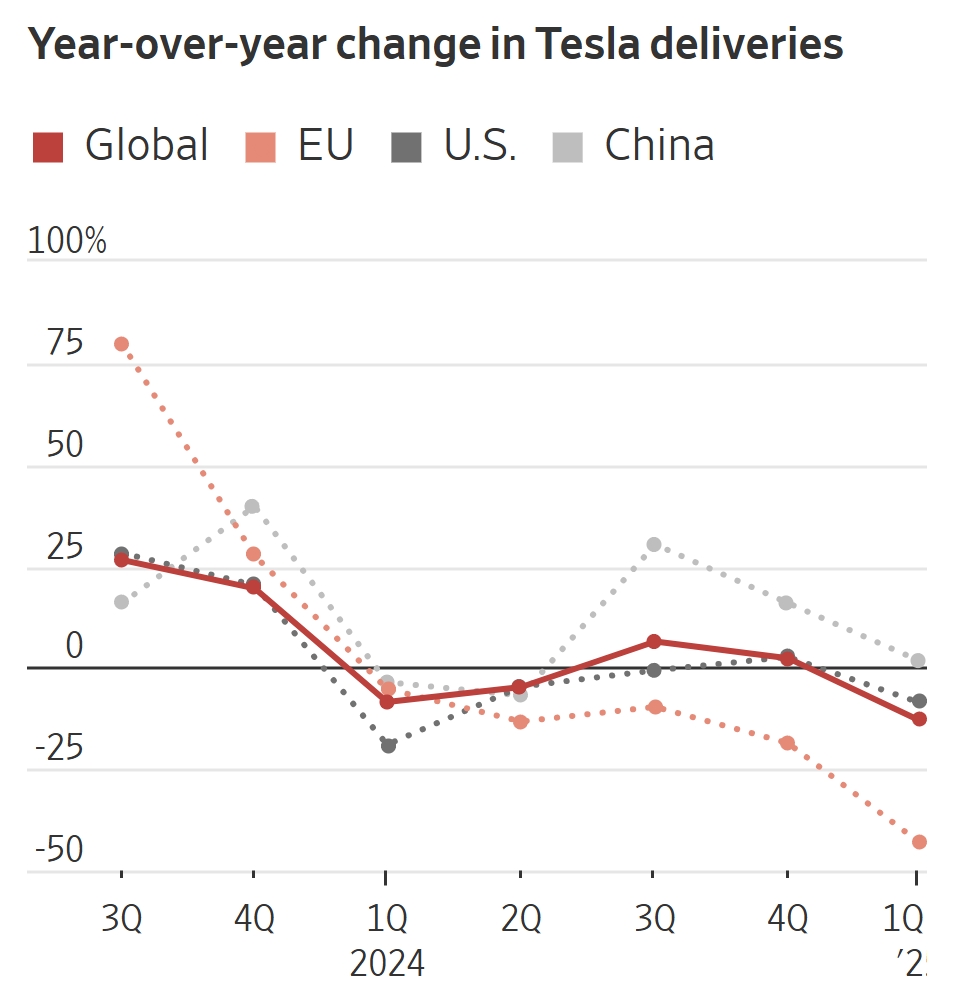
Core Viewpoint - Tesla is facing significant challenges in the Chinese market, with its market share declining as local electric vehicle brands gain popularity due to better alignment with consumer needs [1][5][6]. Group 1: Market Performance - Tesla's sales in China fell to just under 40,000 units in May, representing a 30% year-over-year decline, while the overall Chinese new energy vehicle market grew by 28% during the same period [5][6]. - Tesla's market share in the Chinese new energy vehicle sector has dropped from 11% in early 2021 to 4% as of May [6]. - Competitors like BYD have captured approximately 29% of the market, while even new entrants like Xiaomi have secured a 3% share [6]. Group 2: Product Strategy and Consumer Preferences - Tesla's products are increasingly seen as outdated compared to local competitors, which offer features such as multiple entertainment screens and advanced charging technologies [6][9]. - Tesla's Chinese team has repeatedly communicated the need for products that better integrate with smartphones and include more entertainment applications, but these suggestions have not been prioritized by the U.S. headquarters [9][10]. - The company's strategy has shifted towards cost-cutting measures, leading to simplified models that may struggle to compete unless significantly discounted [10]. Group 3: Regulatory and Operational Challenges - Tesla has faced difficulties in launching its Full Self-Driving (FSD) service in China due to safety compliance issues and restrictions on data transmission [13][15]. - The company attempted to push software updates that included FSD features but faced regulatory pushback, highlighting the challenges of operating in a tightly regulated environment [14][15]. - Despite these setbacks, Tesla continues to leverage its brand recognition and government support in China, which views the company as a model for foreign investment [16][17]. Group 4: Future Outlook - Tesla's ability to maintain its competitive edge in China is increasingly uncertain as local companies advance in technology and pricing [17][18]. - The company is exploring new avenues, such as expanding its operations in energy storage and robotics, while relying on Chinese suppliers for cost-effective components [17][18][19].