氨基酸类成分

Search documents
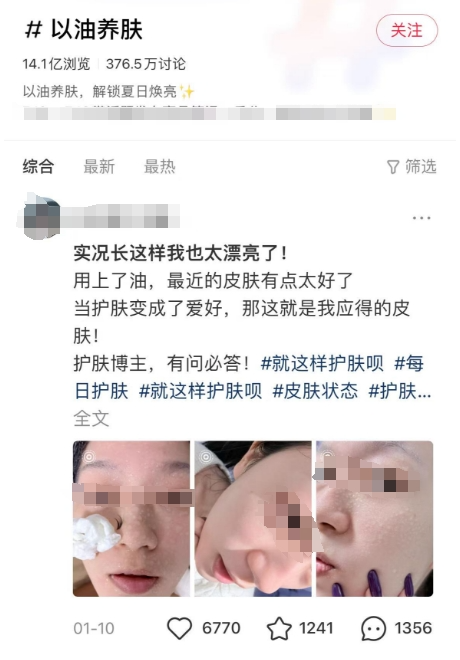
网上爆火的“以油养肤” 真的有用吗
Xin Lang Cai Jing· 2025-12-30 13:56
Core Viewpoint - The article discusses the concept of "oil-based skincare" and its effectiveness, emphasizing the importance of understanding the types of oils suitable for skin care and the need for a comprehensive moisturizing strategy rather than relying solely on oils [1][8]. Group 1: Understanding "Oil" in Skincare - The term "oil" in skincare refers to specific types of oils, not cooking oils like lard or canola oil, which are unsuitable for skin application [1]. - Common skincare oils include plant oils (e.g., coconut oil, jojoba oil) that are rich in fatty acids and help moisturize the skin [4]. - Mineral oils, such as dimethicone, provide moisturizing and skin conditioning effects by forming a protective barrier on the skin [5]. Group 2: Mechanism of "Oil-Based Skincare" - The principle behind "oil-based skincare" is that human skin contains natural lipids, and applying additional oils can help restore the lipid layer, preventing moisture loss and dryness [7][8]. - However, relying solely on oils for hydration is insufficient; a balanced approach considering skin type and environmental factors is necessary [8]. Group 3: Selecting Moisturizing Products - A good moisturizing product should not only contain oils but also effectively provide hydration and maintain skin softness and health [8]. - Key tips for selecting moisturizing products include understanding skin type, checking ingredient lists, considering seasonal changes, evaluating brand reputation, and assessing personal experience with the product [9][10][11][12][13]. Group 4: Key Ingredients for Moisturization - Effective moisturizing ingredients include hyaluronic acid, glycerin, ceramides, and plant oils, which help retain moisture and restore the skin barrier [15]. - Ingredients to avoid, especially for sensitive skin, include excessive fragrances, alcohol, and irritating chemicals [10].

网上爆火的“以油养肤”,真有用还是“智商税”?
Xin Lang Cai Jing· 2025-12-30 10:51
Core Viewpoint - The article discusses the concept of "oil-based skincare" and its effectiveness, emphasizing that while certain oils can be beneficial, they should not be relied upon solely for hydration and must be used in conjunction with other moisturizing ingredients [1][12]. Group 1: Understanding "Oil" in Skincare - The term "oil" in skincare refers to specific types of oils, primarily plant oils (like coconut oil and jojoba oil) and mineral oils (like dimethicone), which can help moisturize and protect the skin [3][5]. - Some oils, such as olive oil, may actually harm the skin barrier due to their fatty acid structure [3]. Group 2: Mechanism of "Oil-Based Skincare" - The skin naturally contains lipid substances that help maintain its barrier; using additional oils can help restore this lipid layer, preventing moisture loss and dryness [7]. - However, oils alone do not provide hydration as they do not contain water, and relying solely on them can lead to continued dryness, especially in arid conditions [9]. Group 3: Limitations of Using Oils - Excessive use of oils can exacerbate acne and other skin issues, as they may promote the growth of acne-causing bacteria [10]. - Some oils may not be easily absorbed by the skin, leading to a greasy feeling without providing adequate moisture [11]. - Oils primarily create a barrier to prevent moisture loss but do not offer additional benefits like hydration or repair [11]. Group 4: Selecting Moisturizing Products - Effective moisturizing products should focus on providing sufficient hydration and preventing moisture loss, rather than just containing oils [14]. - Key ingredients to look for in moisturizers include hyaluronic acid, glycerin, ceramides, and plant oils, which can enhance hydration and skin barrier function [18][20][21][22]. Group 5: Tailoring Moisturizers to Skin Type - Different skin types require specific formulations: dry skin benefits from rich, hydrating products; oily skin should opt for lighter formulations; and sensitive skin needs gentle, low-irritant products [14][15][16]. - Seasonal and climatic conditions should also influence product choice, with heavier creams preferred in dry seasons and lighter lotions in humid conditions [24]. Group 6: Importance of Brand and User Experience - Choosing reputable brands with clinical validation can provide assurance of product efficacy [26]. - Personal experience and feedback from similar skin types are crucial in determining the effectiveness of a moisturizer [27].