洗发产品

Search documents
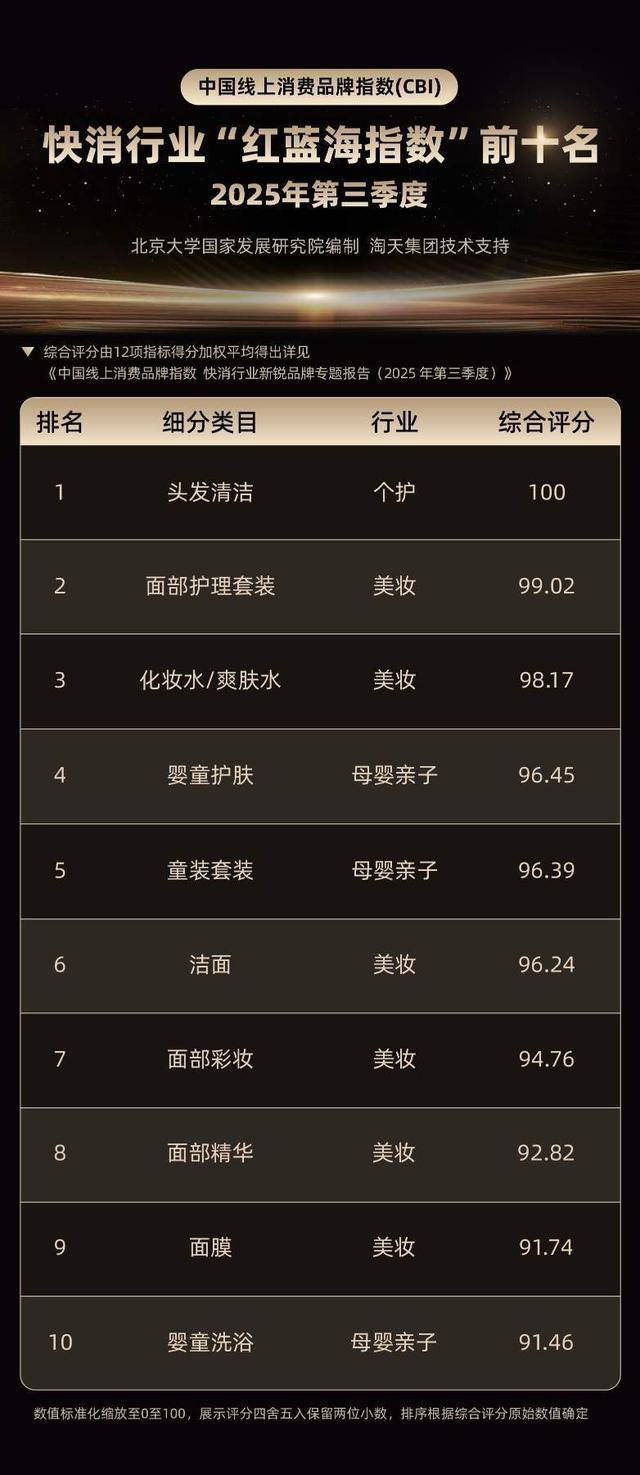
北大国发院最新“快消新锐品牌榜单”:蓝海赛道涌现,花知晓、HBN、至本名列前三
Sou Hu Cai Jing· 2026-02-10 02:05
Core Insights - The report titled "Emerging Brands in the Fast-Moving Consumer Goods (FMCG) Industry" was released by Peking University's National School of Development, focusing on new brands in four sub-sectors: personal care, household cleaning, beauty, and maternal and child products [1][9] - The top three brands in the ranking are Huazhi Xiao, HBN, and Zhiben, with BeBeBus leading in the maternal and child sector, Hope Tree in household cleaning, and Off&Relax in personal care [1][9] - The report introduces a quantifiable "Red and Blue Ocean Index" for the FMCG industry, assessing nearly 200 sub-categories based on barriers to entry, transaction growth rates, and the proportion of new brands [1][4] Sub-sector Analysis - The top five sub-categories with the highest "Red and Blue Ocean" scores in Q3 2025 are: hair cleaning, facial care sets, toner, baby skincare, and children's clothing [2][3] - The hair cleaning category leads the industry rankings, driven by a shift in consumer demand towards diverse functionalities such as anti-hair loss and oil control [4][5] - The beauty sector shows high scores for facial care sets, reflecting a blend of rational and emotional consumer demands for "scientific skincare" and "emotional aesthetics" [4][5] Brand Dynamics - The report indicates that 91 out of the top 100 emerging brands are domestic, highlighting the vast potential for new brand creation and growth in China [7] - Emotional value has become a core competitive advantage for some new brands, with Huazhi Xiao leveraging unique packaging and thematic series to appeal to younger consumers [7] - Brands focusing on functionality are increasingly professional and high-end, with Hope Tree emerging as a strong player in the household cleaning segment [7] Market Opportunities - The report identifies significant growth potential in the baby skincare segment, driven by parents' increasing demand for product safety and efficacy [6][9] - The research utilizes a new indicator, "search transaction growth difference," to uncover unmet consumer needs within the FMCG sector, indicating areas of potential growth [6][9] - The continuous activity of new brand supply has created a scale effect on platforms like Tmall, with over 150,000 new quality merchants established in the past year [9]

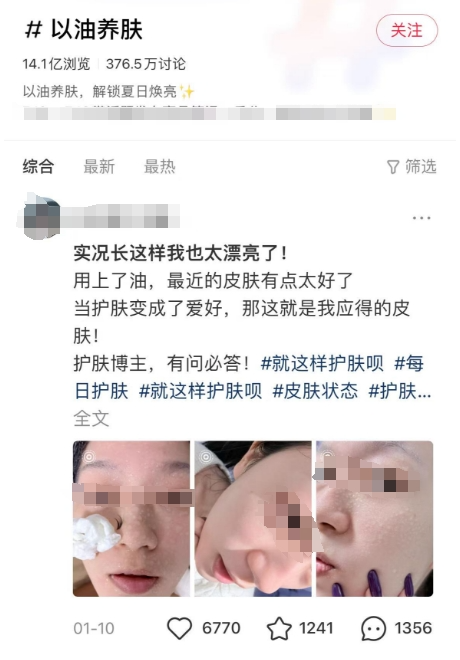
网上爆火的“以油养肤” 真的有用吗
Xin Lang Cai Jing· 2025-12-30 13:56
Core Viewpoint - The article discusses the concept of "oil-based skincare" and its effectiveness, emphasizing the importance of understanding the types of oils suitable for skin care and the need for a comprehensive moisturizing strategy rather than relying solely on oils [1][8]. Group 1: Understanding "Oil" in Skincare - The term "oil" in skincare refers to specific types of oils, not cooking oils like lard or canola oil, which are unsuitable for skin application [1]. - Common skincare oils include plant oils (e.g., coconut oil, jojoba oil) that are rich in fatty acids and help moisturize the skin [4]. - Mineral oils, such as dimethicone, provide moisturizing and skin conditioning effects by forming a protective barrier on the skin [5]. Group 2: Mechanism of "Oil-Based Skincare" - The principle behind "oil-based skincare" is that human skin contains natural lipids, and applying additional oils can help restore the lipid layer, preventing moisture loss and dryness [7][8]. - However, relying solely on oils for hydration is insufficient; a balanced approach considering skin type and environmental factors is necessary [8]. Group 3: Selecting Moisturizing Products - A good moisturizing product should not only contain oils but also effectively provide hydration and maintain skin softness and health [8]. - Key tips for selecting moisturizing products include understanding skin type, checking ingredient lists, considering seasonal changes, evaluating brand reputation, and assessing personal experience with the product [9][10][11][12][13]. Group 4: Key Ingredients for Moisturization - Effective moisturizing ingredients include hyaluronic acid, glycerin, ceramides, and plant oils, which help retain moisture and restore the skin barrier [15]. - Ingredients to avoid, especially for sensitive skin, include excessive fragrances, alcohol, and irritating chemicals [10].
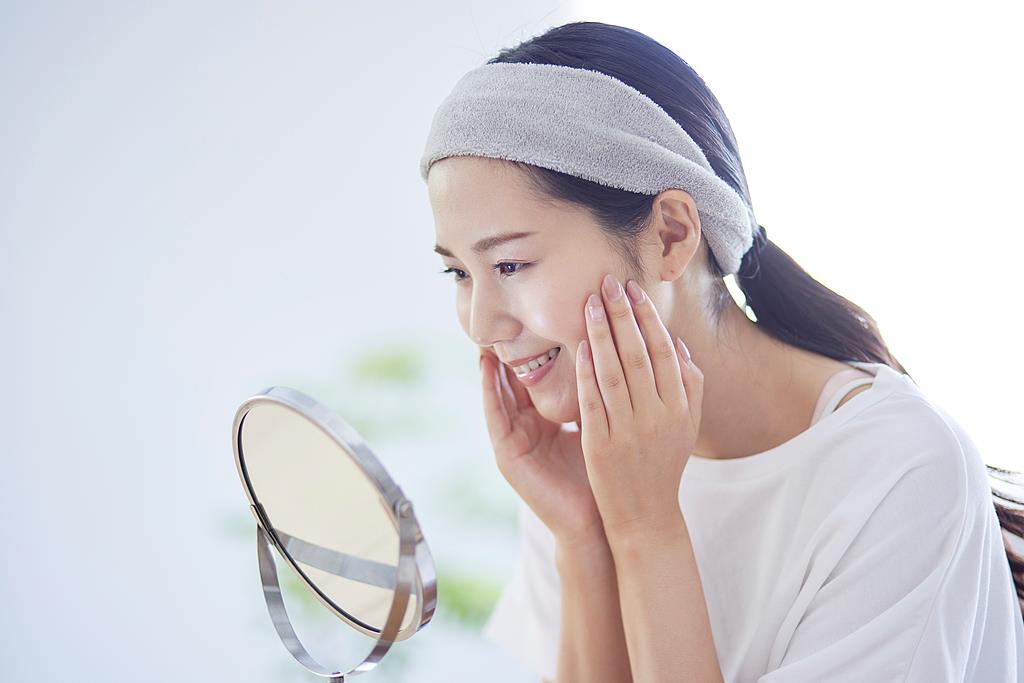
网上爆火的“以油养肤”,真有用还是“智商税”?
Xin Lang Cai Jing· 2025-12-30 10:51
Core Viewpoint - The article discusses the concept of "oil-based skincare" and its effectiveness, emphasizing that while certain oils can be beneficial, they should not be relied upon solely for hydration and must be used in conjunction with other moisturizing ingredients [1][12]. Group 1: Understanding "Oil" in Skincare - The term "oil" in skincare refers to specific types of oils, primarily plant oils (like coconut oil and jojoba oil) and mineral oils (like dimethicone), which can help moisturize and protect the skin [3][5]. - Some oils, such as olive oil, may actually harm the skin barrier due to their fatty acid structure [3]. Group 2: Mechanism of "Oil-Based Skincare" - The skin naturally contains lipid substances that help maintain its barrier; using additional oils can help restore this lipid layer, preventing moisture loss and dryness [7]. - However, oils alone do not provide hydration as they do not contain water, and relying solely on them can lead to continued dryness, especially in arid conditions [9]. Group 3: Limitations of Using Oils - Excessive use of oils can exacerbate acne and other skin issues, as they may promote the growth of acne-causing bacteria [10]. - Some oils may not be easily absorbed by the skin, leading to a greasy feeling without providing adequate moisture [11]. - Oils primarily create a barrier to prevent moisture loss but do not offer additional benefits like hydration or repair [11]. Group 4: Selecting Moisturizing Products - Effective moisturizing products should focus on providing sufficient hydration and preventing moisture loss, rather than just containing oils [14]. - Key ingredients to look for in moisturizers include hyaluronic acid, glycerin, ceramides, and plant oils, which can enhance hydration and skin barrier function [18][20][21][22]. Group 5: Tailoring Moisturizers to Skin Type - Different skin types require specific formulations: dry skin benefits from rich, hydrating products; oily skin should opt for lighter formulations; and sensitive skin needs gentle, low-irritant products [14][15][16]. - Seasonal and climatic conditions should also influence product choice, with heavier creams preferred in dry seasons and lighter lotions in humid conditions [24]. Group 6: Importance of Brand and User Experience - Choosing reputable brands with clinical validation can provide assurance of product efficacy [26]. - Personal experience and feedback from similar skin types are crucial in determining the effectiveness of a moisturizer [27].
在这里,我看见向上的中国
Ren Min Ri Bao Hai Wai Ban· 2025-12-15 23:04
Core Insights - Multinational companies are increasingly choosing to invest in China, with 53,782 new foreign-invested enterprises established from January to October this year, representing a 14.7% year-on-year increase [12] - The investment strategies of these companies include opening new stores, building factories, and establishing R&D centers, reflecting their expanding footprint in the Chinese market [12] Group 1: L'Oréal - L'Oréal's China R&D and Innovation Center recently celebrated its 20th anniversary, highlighting the foresight of establishing beauty research in China [13] - The rapid changes in the Chinese market are driven by increasingly sophisticated consumers and a vibrant tech innovation ecosystem, which challenges and motivates L'Oréal to develop better products [13][14] - L'Oréal creates approximately 300 new formulas annually in China, aiming to leverage local consumer insights for global product innovation [14] Group 2: Blue Star Adisseo - Blue Star Adisseo's internationalization is evident in its management team, which now includes more Chinese members compared to when it was entirely French [15] - The company views China as a core market for growth in the animal nutrition sector, benefiting from a strong demand for animal protein [15][16] - Adisseo collaborates with local universities and businesses to develop customized solutions for the Chinese market, showcasing a successful integration of local expertise [16] Group 3: Ningbo Weinan - Ningbo Weinan specializes in the development and export of electrical products, with a focus on innovative socket designs led by Spanish expert Martínez [17] - The company has established a strong R&D presence in China, resulting in over 40 patents and a significant contribution to product innovation [17][18] - The Chinese market provides a wealth of inspiration for product development, with increasing consumer demand for environmentally friendly solutions [18] Group 4: Bosch Home Appliances - Bosch's market observations indicate a rising demand for "upgrading" home appliances, with consumers shifting from standalone products to integrated home solutions [19][20] - The company plans to upgrade its China R&D center to a global hub, reflecting China's central role in the home appliance industry and its capacity for innovation [20] - Bosch aims to respond to consumer demands for aesthetically pleasing and health-oriented home solutions, with a focus on smart technology [20] Group 5: Kärcher - Kärcher's new experience store in Shanghai exemplifies its commitment to engaging with the Chinese market, emphasizing the importance of product experience [21] - The company recognizes the dynamic nature of Chinese consumers, who prioritize product functionality and are open to new technologies [21][22] - Kärcher has invested in a global R&D center in Suzhou, focusing on cutting-edge technologies, which underscores its confidence in China's long-term growth potential [22]


头发越洗越少?脱发的锅该谁背
Qi Lu Wan Bao· 2025-08-11 01:03
Group 1 - The article addresses common health misconceptions, particularly regarding hair washing and its relation to hair loss, emphasizing that frequent washing does not cause hair loss but rather helps maintain scalp health [4][5]. - It highlights the importance of using antihistamines correctly for allergy management, clarifying that these medications do not lead to dependency [3]. - The article discusses the potential risks of excessive sun protection, warning against overuse of high-SPF products that can damage the skin barrier and lead to other health issues [6][7]. Group 2 - The article explains that using stainless steel water bottles is safe, as long as they meet food safety standards, and debunks the myth that they release harmful levels of manganese [8][9]. - It clarifies that drinking water with mineral deposits (water scale) does not cause kidney stones, attributing such health issues to dietary habits and metabolic factors instead [12]. - The article warns against consuming fruit with mold by simply cutting away the affected parts, as this can still lead to exposure to harmful mycotoxins [13].