
皮肤保湿

Search documents
冬季皮肤瘙痒 热水澡不是救星
Xin Lang Cai Jing· 2026-02-07 07:22
Core Viewpoint - The article emphasizes the importance of proper skincare during winter to combat skin dryness and itchiness, particularly for the elderly, due to environmental factors and reduced skin oil production. Group 1: Skincare Practices - After each shower, it is crucial to moisturize immediately to lock in moisture, with recommended water temperature below 40°C and shower duration limited to 10-15 minutes [1] - Moisturizing is essential, with products containing ceramides, petroleum jelly, glycerin, and hyaluronic acid being preferred to form a protective barrier on the skin [2] - Maintaining indoor humidity levels between 40%-60% and using cotton, loose-fitting clothing is advised to prevent skin irritation [3] Group 2: Dietary and Lifestyle Recommendations - Adults should aim for a daily water intake of 1500-2000 milliliters, with a diet rich in vitamins A, E, and Omega-3 fatty acids to support skin health [4] - Moderate exercise is beneficial for blood circulation, while avoiding intense activities close to bedtime is recommended [4] - Sun exposure should be balanced with sun protection to avoid skin damage from UV rays and cold winds [4] Group 3: Medical Guidance - For severe itching affecting sleep and daily life, short-term use of antihistamines or topical corticosteroids may be necessary under medical supervision [5] - Immediate medical attention is advised for persistent or worsening symptoms, especially if accompanied by other concerning signs [5] Conclusion - Proper skincare and timely intervention can help alleviate winter skin issues, ensuring comfort and health [6]
冬季干性湿疹高发,保湿是良“药”
Xin Lang Cai Jing· 2026-01-18 17:24
Core Viewpoint - The article discusses the increase in eczema cases among children during winter, emphasizing the importance of scientific and standardized daily care to control the condition and reduce recurrence [1][2]. Group 1: Causes and Symptoms - Winter's low temperatures lead to decreased air humidity, causing skin moisture to be "pulled away," resulting in dry and fragile skin, which can trigger eczema due to immune system overreaction [2]. - Eczema can be exacerbated by various factors, including external factors like dry climate and skin barrier damage, as well as internal factors such as immune dysregulation and genetic susceptibility [2]. - Different age groups exhibit eczema in various locations: infants often have it on the face, while older children may have it on limbs and adults typically on hands and feet [2]. Group 2: Treatment and Management - The primary principle for managing eczema is consistent moisturizing, especially in winter, using safe creams or ointments immediately after bathing to lock in moisture [3]. - It is crucial for patients to adhere to prescribed topical medications, such as steroid creams, to avoid a cycle of recurrence due to improper use [3]. - Traditional Chinese medicine approaches eczema treatment by focusing on removing dampness and wind, with a combination of internal and external treatments tailored to the characteristics of the rash [3].
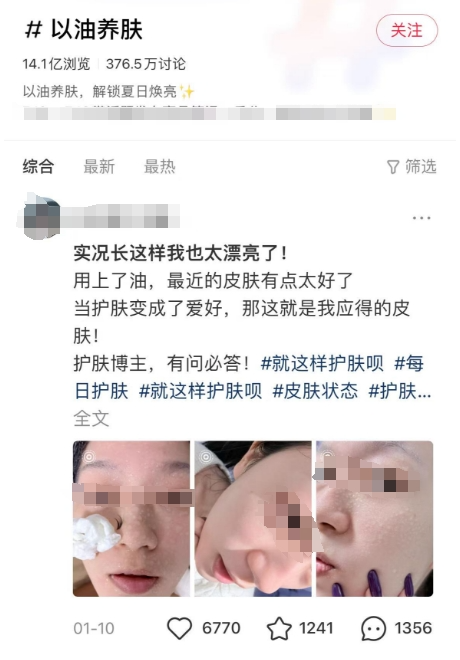
网上爆火的“以油养肤”,真有用还是“智商税”?
Xin Lang Cai Jing· 2025-12-30 10:51
Core Viewpoint - The article discusses the concept of "oil-based skincare" and its effectiveness, emphasizing that while certain oils can be beneficial, they should not be relied upon solely for hydration and must be used in conjunction with other moisturizing ingredients [1][12]. Group 1: Understanding "Oil" in Skincare - The term "oil" in skincare refers to specific types of oils, primarily plant oils (like coconut oil and jojoba oil) and mineral oils (like dimethicone), which can help moisturize and protect the skin [3][5]. - Some oils, such as olive oil, may actually harm the skin barrier due to their fatty acid structure [3]. Group 2: Mechanism of "Oil-Based Skincare" - The skin naturally contains lipid substances that help maintain its barrier; using additional oils can help restore this lipid layer, preventing moisture loss and dryness [7]. - However, oils alone do not provide hydration as they do not contain water, and relying solely on them can lead to continued dryness, especially in arid conditions [9]. Group 3: Limitations of Using Oils - Excessive use of oils can exacerbate acne and other skin issues, as they may promote the growth of acne-causing bacteria [10]. - Some oils may not be easily absorbed by the skin, leading to a greasy feeling without providing adequate moisture [11]. - Oils primarily create a barrier to prevent moisture loss but do not offer additional benefits like hydration or repair [11]. Group 4: Selecting Moisturizing Products - Effective moisturizing products should focus on providing sufficient hydration and preventing moisture loss, rather than just containing oils [14]. - Key ingredients to look for in moisturizers include hyaluronic acid, glycerin, ceramides, and plant oils, which can enhance hydration and skin barrier function [18][20][21][22]. Group 5: Tailoring Moisturizers to Skin Type - Different skin types require specific formulations: dry skin benefits from rich, hydrating products; oily skin should opt for lighter formulations; and sensitive skin needs gentle, low-irritant products [14][15][16]. - Seasonal and climatic conditions should also influence product choice, with heavier creams preferred in dry seasons and lighter lotions in humid conditions [24]. Group 6: Importance of Brand and User Experience - Choosing reputable brands with clinical validation can provide assurance of product efficacy [26]. - Personal experience and feedback from similar skin types are crucial in determining the effectiveness of a moisturizer [27].

告别冬日干痒!百融钱小乐的肌肤保湿攻略
Xin Lang Cai Jing· 2025-12-25 04:05
Core Insights - The article discusses the common issue of skin dryness and irritation during winter, attributing it to both external and internal factors. It provides a comprehensive moisturizing guide to help individuals combat these skin issues. Group 1: External Factors - Winter temperatures drop significantly, and humidity levels often fall below 40%, leading to rapid moisture evaporation from the skin [1] - Indoor heating and air conditioning further deplete moisture in the air, exacerbating skin dryness [1] - Cold winds physically irritate the skin's surface, damaging the lipid barrier and reducing moisture retention [1] Group 2: Internal Factors - Metabolism slows down in winter, leading to decreased secretion from sebaceous and sweat glands, which weakens the skin's natural moisture barrier [1] - Poor diet and irregular sleep patterns can result in dehydration and vitamin deficiencies, worsening skin dryness [1] Group 3: Moisturizing Techniques - Gentle cleansing is essential; individuals should limit bathing to every 2-3 days and use mild, amino acid-based cleansers to avoid stripping natural oils [2] - Moisturizing should focus on both hydration and moisture retention, using lightweight serums in the morning and heavier creams at night to repair the skin barrier [2] - For extremely dry areas like hands and feet, applying a thick layer of petroleum jelly before bed can enhance absorption [2] Group 4: Environmental and Lifestyle Adjustments - Using a humidifier indoors can help reduce moisture loss from the skin [3] - When outdoors, protective clothing such as scarves and masks should be worn to shield the skin from cold winds [3] - A diet rich in vitamins A and E, along with adequate hydration (1500-2000 milliliters daily), is recommended to support skin health from within [3] - Maintaining a regular sleep schedule is crucial for promoting skin metabolism and moisture retention [3]
“保湿≠补水”!秋冬季皮肤保湿的8大误区
Ren Min Wang· 2025-10-24 01:32
Core Points - The article discusses common misconceptions about skincare during the winter season, emphasizing the importance of proper hydration and moisture retention methods [1][4][6]. Misconceptions Summary - **Misconception 1: Applying toner multiple times for hydration** Toner only temporarily moistens the skin and does not lock in moisture. Overuse can strip the skin's natural oils, leading to increased dryness. The correct approach is to apply toner once and follow with serum and cream for effective hydration and moisture retention [4][6]. - **Misconception 2: Thicker cream equals better moisturization** The effectiveness of a cream is determined by its ingredients rather than its thickness. Heavy creams may not be absorbed properly and can lead to clogged pores. It is essential to choose creams based on skin type [6][8]. - **Misconception 3: Frequent mask application ensures hydration** Daily mask use can overhydrate the skin, damaging the skin barrier and leading to sensitivity. It is recommended to use masks 2-3 times a week during autumn and winter [8][10]. - **Misconception 4: "Oil-based skincare" is suitable for everyone** While oil-based products can help lock in moisture, they are not suitable for all skin types. Oily or acne-prone skin may experience clogged pores and breakouts from heavy oils [10][12]. - **Misconception 5: No need for sunscreen in autumn** UVA rays can penetrate deeper in autumn, damaging collagen and leading to dryness. It is crucial to use sunscreen with SPF 30+ and reapply every 4-6 hours [12][14]. - **Misconception 6: Switching to a full set of rich products during seasonal change** Abruptly changing to richer products can overwhelm the skin, leading to sensitivity. A gradual transition is recommended [14][16]. - **Misconception 7: Frequent exfoliation improves dryness** Over-exfoliating can damage the skin's protective barrier, making it drier and more sensitive. It is advised to reduce exfoliation frequency in winter [16][18]. - **Misconception 8: A universal moisturizer works for all skin types** Different skin types have unique hydration needs, and there is no one-size-fits-all moisturizer. Tailoring products to specific skin types is essential for effective hydration [18][21].
