汇丰晋信智造先锋A

Search documents
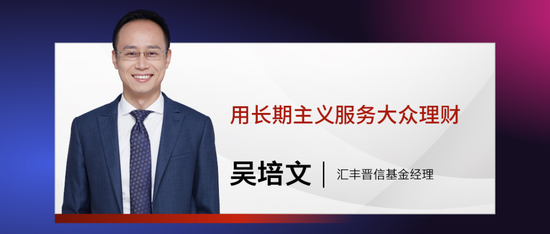
汇丰晋信基金2026年投资展望:用长期主义服务大众理财
Xin Lang Cai Jing· 2026-01-06 09:21
Group 1 - The article discusses the investment strategies and performance outlook of top fund managers for the year 2026, emphasizing the importance of understanding market dynamics and adapting investment approaches accordingly [1][15] - The company highlights its consistent performance over the past decade, successfully beating benchmarks across various product styles, including growth, low valuation, and high ROE strategies [3][17] - The article notes that the fund manager, Wu Peiwen, has been managing multiple products since September 30, 2015, with a track record of outperforming benchmarks in most years [4][17] Group 2 - The performance data of various funds managed by Wu Peiwen is presented, showing significant fluctuations in returns over the years, with notable highs and lows [4][5][19] - The company emphasizes the importance of a structured and transparent investment process, which has proven effective over a decade, allowing for repeatable investment capabilities [8][22] - The article discusses the changing landscape of the Chinese economy, highlighting the need for investors to adapt their strategies to align with emerging trends and technological advancements [9][24] Group 3 - The company expresses a cautious outlook on the current market, likening it to a pendulum that swings between optimism and pessimism, suggesting that investors should remain vigilant [10][25] - The article outlines the company's approach to serving retail investors, comparing it to operating a bus service, which requires a different strategy than high-risk investments [11][26] - The company focuses on risk management, aiming to minimize the probability of significant losses and ensuring that clients can see returns within a reasonable timeframe [12][27]

天雷滚滚,基金经理“金饭碗”告急!哪些“顶流”基金经理可能要被降薪?
市值风云· 2025-12-15 10:08
Core Viewpoint - The introduction of the new performance assessment guidelines for fund managers aims to tightly link their compensation to both relative and absolute performance, with a significant focus on ensuring that investors earn returns [3][4]. Group 1: New Regulations and Impact - The new guidelines stipulate that fund managers who underperform their benchmarks by more than 10% over three years and incur losses will face a salary reduction of at least 30% [3][4]. - Approximately 30% of active equity fund managers may hit the "30% salary reduction" threshold due to poor performance [5][10]. - The ultimate goal of the regulations is to align the interests of fund managers with those of investors, ensuring that investors genuinely profit from their investments [4]. Group 2: Performance Statistics - Data shows that nearly 60% of funds have failed to outperform their benchmarks over the past three years, with only 44% of the 3,794 funds analyzed achieving this [6]. - Among these, 1,394 funds have underperformed their benchmarks by over 10%, representing nearly 37% of the total sample [7]. - The analysis indicates that around 34% of funds not only underperformed but also had negative profit margins, failing to generate positive returns for investors [10]. Group 3: Notable Fund Managers and Cases - Several prominent fund managers, such as Lu Bin and Shi Cheng, have multiple funds that have triggered the salary reduction criteria, with all their managed products underperforming significantly [15][16]. - Lu Bin's funds have consistently underperformed, with all seven products managed by him failing to meet benchmarks over the past three years [16]. - Shi Cheng's strategy of heavily investing in a single sector (new energy) led to significant gains during a bull market but resulted in substantial losses as market conditions changed, highlighting the risks of concentrated investment strategies [21][22].