汇添富黄金及贵金属LOF

Search documents
多只资源品LOF出手降温:石油LOF限购2元,白银LOF停牌一天
Sou Hu Cai Jing· 2026-01-30 00:21
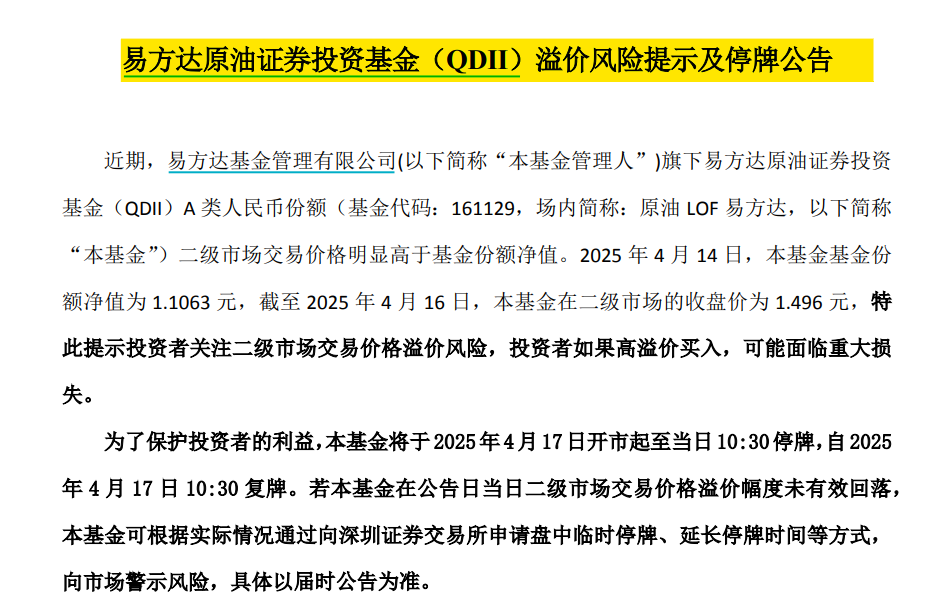
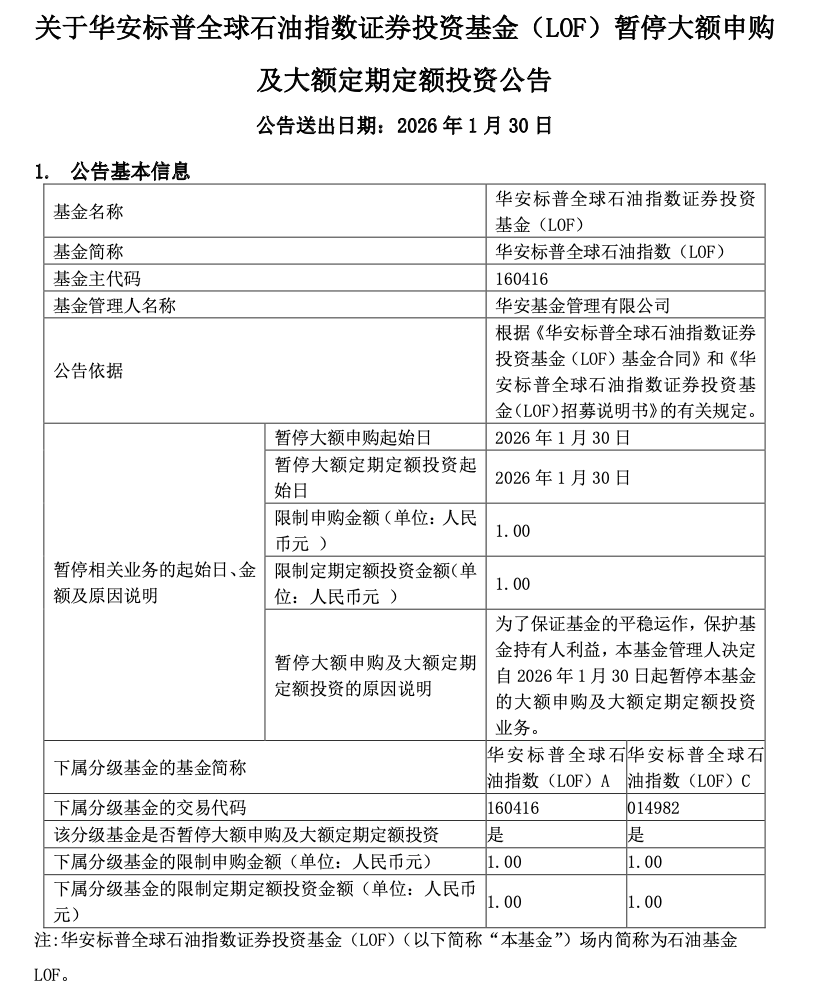
Group 1 - Major fund companies such as GF Fund, Harvest Fund, E Fund, and Huaan Fund announced adjustments to trading times and subscription amounts for their oil-related LOF funds due to rising geopolitical tensions and macroeconomic sentiments driving up commodity prices like oil, gold, and silver [1][5] - The trading prices of these LOF funds have significantly deviated from their net asset values, creating a substantial premium "bubble" [1][5] - Huaan Fund set a daily subscription limit of 1 RMB for its oil LOF funds, with a market price of 2.636 RMB and a premium rate of 49.69% as of January 29 [2][5] Group 2 - Multiple oil-themed LOF funds, including E Fund and Harvest Fund, experienced trading halts and issued premium risk warnings due to significant price premiums [5][6] - The premium phenomenon is closely linked to the unique trading mechanisms of LOF products, which can lead to price deviations from net asset values, especially when market activity is low [6] - The recent surge in oil prices is attributed to geopolitical factors, particularly increased risks related to the U.S. and Iran, alongside a general rise in macroeconomic sentiment [6][7] Group 3 - The gold LOF funds also implemented strict subscription limits, with E Fund halting subscriptions for its A-class shares and setting a limit of 100 RMB for the C-class shares [10][11] - The market for gold LOF funds has seen significant price fluctuations, with some investors facing potential short-term losses due to high entry prices during previous peaks [10][11] - Long-term optimism remains for gold, driven by expectations of U.S. monetary easing and increasing global uncertainties [14] Group 4 - The only major public fund investing in silver futures, Guotou Silver LOF, announced a trading halt due to high market demand and significant price premiums, with a premium rate of 64% as of January 29 [15][17] - The limited supply of silver public funds compared to more established gold ETFs has led to significant price deviations from net asset values during periods of high demand [17][18] - Analysts highlight the differences in investment characteristics between silver and gold, noting that silver lacks the same level of acceptance and clarity among investors, which affects its market dynamics [17][18]

两大金银主题LOF闭门谢客,配置贵金属还能怎么办?
2 1 Shi Ji Jing Ji Bao Dao· 2026-01-29 00:08
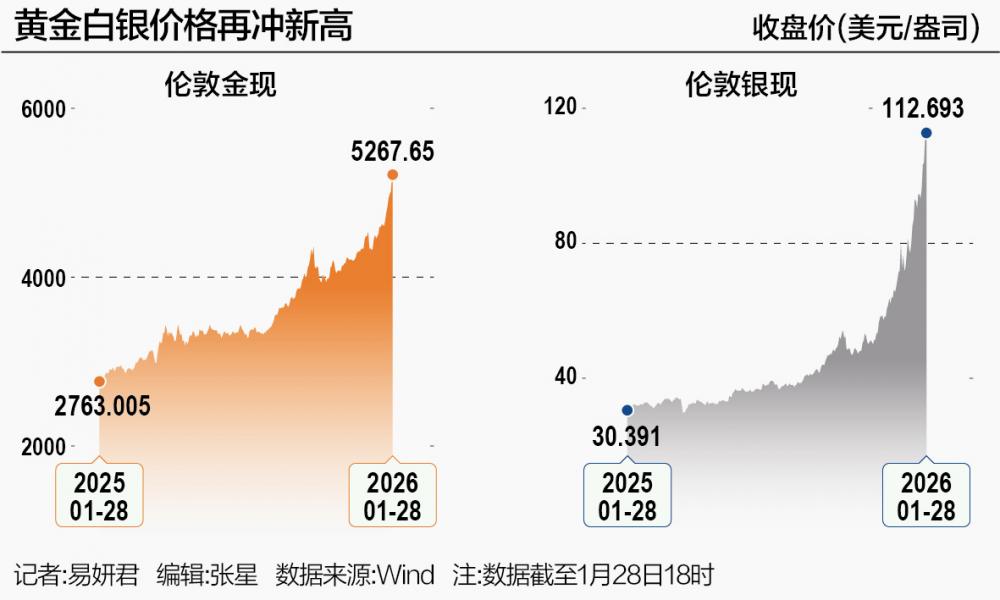
Core Viewpoint - Recent market risk aversion has driven international gold prices to new highs, with spot gold prices in London surpassing $5200 and $5300 per ounce before retreating [1][19]. Group 1: Gold Price and Market Dynamics - The rise in gold prices has led to increased interest in gold-themed funds, with premium risks emerging for gold LOFs, prompting fund managers to enhance risk control measures [20][21]. - As of January 27, 2026, the largest gold ETF in the domestic market has exceeded 120 billion yuan in scale, reflecting strong capital inflows since the beginning of the year [21][34]. - Institutions suggest that after rapid price increases, gold may experience high-level fluctuations or technical corrections, but geopolitical risks will continue to provide long-term support for gold prices [21][36]. Group 2: Fund Management and Premium Risks - Multiple gold-themed LOFs, including E Fund's gold LOF, have announced the suspension of subscription and regular investment services to ensure stable fund operations [24][25]. - E Fund's gold LOF reported a net asset value of 1.7633 yuan per share on January 19, 2026, while the market price was 2.069 yuan on January 21, indicating significant premium risks [25][26]. - Other fund companies, such as Huatai-PineBridge and Harvest Fund, have also issued premium risk warnings for their gold LOFs, highlighting the need for investor caution [26]. Group 3: ETF Performance and Investor Behavior - A total of 14 gold ETFs have seen a net inflow of 28.912 billion yuan since the beginning of the year, with their total scale increasing by over 30% to 314.141 billion yuan [30][33]. - The largest gold ETF, Huaan Gold ETF, has grown by nearly 26.6 billion yuan since December 31, 2025, reaching over 120 billion yuan in scale [34]. - Gold stock ETFs have also attracted attention, with six ETFs gaining a net inflow of 5.922 billion yuan and four of them achieving returns exceeding 37% [14][35]. Group 4: Long-term Investment Perspective - Analysts believe that while short-term price surges may lead to corrections, the long-term logic for gold as a safe-haven asset remains intact amid geopolitical uncertainties and dollar depreciation [36]. - Investors are advised to adopt a long-term perspective, utilizing gold ETFs as tools for hedging against inflation and systemic risks, while avoiding short-term speculative behaviors [37].
超20次!风险提示来了
Zhong Guo Ji Jin Bao· 2025-04-17 07:04
Core Viewpoint - Multiple commodity-themed LOFs have issued risk premium alerts, indicating significant premium risks in secondary market trading prices, with over 20 alerts issued in April alone [1][6]. Group 1: Risk Alerts and Market Reactions - On April 17, E Fund issued a premium risk alert for its gold-themed LOF, noting a premium rate exceeding 40% based on a net asset value of 1.293 CNY and a market price of 1.823 CNY [2]. - E Fund's crude oil LOF also reported a premium rate over 35%, with a net asset value of 1.1063 CNY and a market price of 1.496 CNY [2]. - Following the resumption of trading on April 17, both E Fund's gold and crude oil LOFs saw significant increases, rising over 6% and 7% respectively [6]. Group 2: Market Dynamics and Investor Guidance - Industry experts highlight that the rising demand for commodities like gold and crude oil is driven by inflationary pressures, which has led to increased prices and demand for related LOFs [8]. - A fund manager noted that the trading prices of LOFs are heavily influenced by supply and demand dynamics, warning that high premiums could lead to price corrections if not addressed promptly [8]. - Investors are advised to adhere to suitability guidelines and avoid unfamiliar products to mitigate potential losses from high premium purchases [5][8]. Group 3: Economic Factors and Future Outlook - The current economic landscape presents conflicting factors for commodities, including potential global economic recession due to U.S. tariff policies, which could reduce demand [8]. - However, trade protectionism and increased tariffs may exacerbate inflation risks, potentially elevating long-term commodity price levels [8]. - Experts suggest that while recent adjustments in commodity prices reflect pessimistic economic expectations, they may not fully account for future inflation risks, indicating potential investment opportunities beyond gold [9].