江海联运服务

Search documents
广州市市长:力争地铁运营里程突破800公里
Zhong Guo Xin Wen Wang· 2026-01-28 06:26
Group 1 - Guangzhou aims to expand its metro operation mileage to over 800 kilometers by advancing multiple ongoing projects, including 4 national railways, 7 intercity railways, and 8 metro lines [1] - The city plans to enhance its comprehensive transportation network by accelerating the construction of 11 highway projects, including the Shiziyang Tunnel [1] - Guangzhou is focused on developing a "multi-dimensional transportation network" that integrates air, rail, and maritime transport, enhancing its global resource aggregation and radiation capabilities [2] Group 2 - In the air economy sector, Guangzhou is actively seeking policy support for the expansion of Baiyun Airport's peak hour capacity and air rights allocation [2] - The city is fostering the development of key platforms like the Greater Bay Area (Nansha) port industrial cluster and is initiating major projects such as the Nansha Port International General Terminal and the 200,000-ton channel project [2] - Guangzhou aims to strengthen logistics hub functions at Baiyun Airport, Nansha Port, and Guangzhou International Port, creating an integrated platform for trade data and logistics [2] Group 3 - The city plans to implement a comprehensive development plan for Nansha, focusing on creating a modern city that is livable, workable, and touristic [3] - Guangzhou is enhancing cooperation with Hainan Free Trade Port and implementing a high-level strategy for the Free Trade Zone, aiming to support Chinese enterprises in international expansion [3] - The city is also working on improving investment and trade facilitation systems, expanding policies related to medical, financial, and professional services, and ensuring effective support for the upcoming 139th and 140th Canton Fairs [3]

黑龙江江海联运船舶运输能力实现突破性跃升
Zhong Guo Xin Wen Wang· 2025-09-27 13:04
Core Viewpoint - The successful arrival of the 5000-ton river-sea intermodal vessel "Xiangyue Suhang" at Fuyuan Port marks a significant breakthrough in the transportation capacity of river-sea intermodal shipping in Heilongjiang Province, aligning with the national "Belt and Road" initiative and enhancing northern opening-up efforts [1][2]. Group 1: Shipping and Transportation - The intermodal shipping route includes Taicang Port, Vanino Port (Russia), Nikolayevsk-on-Amur Port (Russia), Khabarovsk Port (Russia), and Fuyuan Port, demonstrating a comprehensive "river-sea-river" water transport model [1]. - The Heilongjiang Maritime Bureau has implemented a full-factor, whole-process, and all-dimensional maritime supervision and service guarantee system to ensure the safety and efficiency of river-sea intermodal shipping [1][2]. Group 2: Safety and Emergency Response - A 24-hour monitoring mechanism has been established for the vessel once it enters the Sino-Russian boundary river area, utilizing CCTV, radar monitoring, and VHF communication to ensure real-time tracking and emergency response capabilities [2]. - The Heilongjiang Maritime Department has organized joint inspections of intermodal vessels and implemented a "green channel" for expedited approval processes, significantly reducing customs clearance times [2]. Group 3: Regulatory Compliance and Support - Maritime enforcement personnel conduct thorough inspections of vessels' firefighting, navigation equipment, and pollution prevention measures, ensuring compliance with safety standards [2]. - The Heilongjiang Maritime Bureau plans to continue monitoring the loading and departure of the "Xiangyue Suhang" vessel, aiming to provide high-quality services and contribute to regional economic development [2].
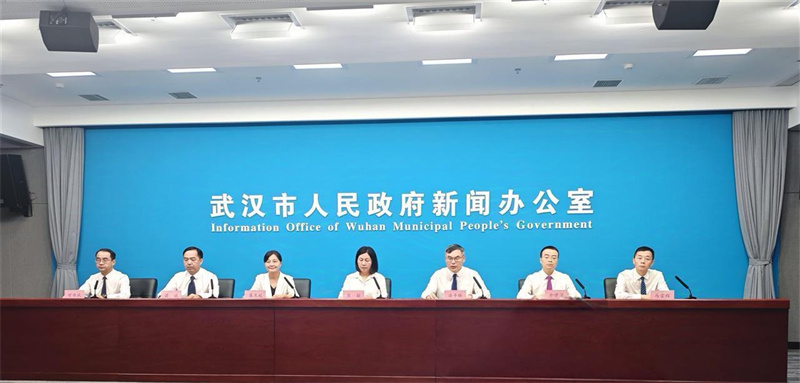
武汉港集装箱吞吐量突破187万标箱
Ren Min Wang· 2025-07-09 11:04
Core Insights - Wuhan's government has released a three-year action plan (2025-2027) to promote high-quality development of the Yangtze River middle reaches shipping center, highlighting the progress in construction and operational metrics [3] Group 1: Port Performance - In 2024, Wuhan Port achieved a container throughput of 1.8763 million TEUs, accounting for 76.7% of Hubei province's total and 33.7% of the total in the upper and middle Yangtze River region, maintaining its position as the "first port in the upper and middle Yangtze River" [3] - Wuhan Port has 150 productive berths and has formed a container port cluster centered around Yangluo Port, with an annual container handling capacity exceeding 4 million TEUs and an annual throughput capacity of 150 million tons [3] Group 2: Intermodal Transport Development - Wuhan has established the largest inland rail-water intermodal hub, with over 50 opened channels, achieving a rail-water intermodal volume of 231,600 TEUs in 2024, a year-on-year increase of 44%, leading the nation in both total volume and growth rate [3] Group 3: Economic Development Initiatives - The Yangtze New Area is designated as the core area for shipping center construction, with over 2,000 enterprises gathered in the Yangluo Port area, 80% of which are industrial companies, focusing on industries such as steel processing, equipment manufacturing, and health [3] - The area aims to develop three major industries: port logistics, port manufacturing, and shipping services, transitioning the port hub into an economic hub [3] Group 4: Strategic Goals and Innovations - The New Area aims for a target of 10 million TEUs, an international port, and a shipping center, implementing a development path of "port + channel + network + platform + industry" [4] - Innovations in customs procedures, such as "joint boarding inspections" and "direct loading and unloading," have significantly improved clearance efficiency, reducing waiting times and costs for local automotive exports [4]