
汽车膜

Search documents
IPO雷达|控制权稳定性?毛利率真实合理性?收入确认单据不完整?永超新材回复北交所二轮问询
Sou Hu Cai Jing· 2026-01-06 01:23
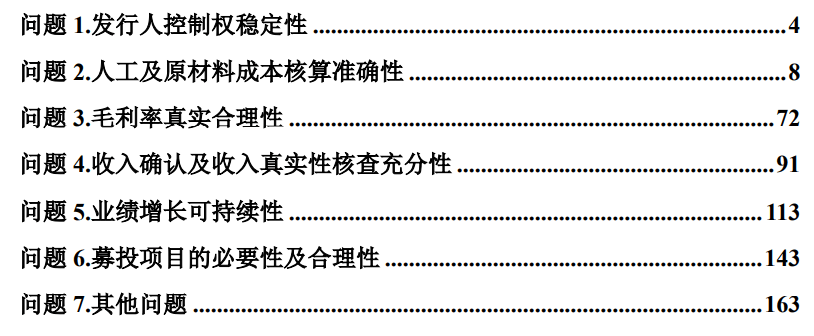
Core Viewpoint - Shanghai Yongchao New Materials Technology Co., Ltd. (Yongchao New Materials) has responded to the second round of inquiries from the Beijing Stock Exchange regarding issues such as control stability, gross margin authenticity, sustainable performance growth, and the necessity and rationality of fundraising projects [1][2]. Group 1: Control Stability - The top two shareholders, Hong Xiaodong and Hong Xiaosheng, hold 29% and 16.57% of the shares respectively, indicating no controlling shareholder [4]. - An action agreement was signed among Hong Xiaodong, Hong Xiaosheng, and Li Yumin, who holds 13.02% of the shares, ensuring control stability for at least 36 months post-listing [5]. Group 2: Gross Margin Authenticity - The company's gross margin for the reporting period was 34.24%, 34.64%, 33.86%, and 35.19%, significantly higher than the industry average [7]. - The higher gross margin of VCM functional films compared to similar products is attributed to differences in product types and customer structures, as well as more complex manufacturing processes [7][8]. Group 3: Revenue Recognition - The percentage of revenue recognition documents with signatures was 0.22%, 19.15%, 68.85%, and 72.00% over the reporting periods, indicating improvements in documentation practices [10]. - The company has taken steps to enhance internal controls to ensure the authenticity of revenue recognition, with a noticeable decline in issues related to incomplete documentation [10]. Group 4: Sustainable Performance Growth - Among the top five customers, three experienced a decline in sales amounts, with decreases of 6.49%, 4.06%, and 22.17% [12]. - The company maintains a stable relationship with major clients, with a significant portion of orders coming from clients with long-term partnerships, indicating low risk of being replaced by competitors [13]. Group 5: Necessity and Rationality of Fundraising Projects - Post-implementation of fundraising projects, the company's capacity will increase to 1.68 times for VCM functional films and 2 times for automotive films [15]. - The market penetration rate for VCM boards in China is expected to rise due to various consumer trends and policies, suggesting a growing demand for the company's products [17].

2025年中国汽车膜行业市场政策、产业链图谱、供需现状、市场规模、竞争格局及发展趋势分析:国产化替代进程日益加速[图]
Chan Ye Xin Xi Wang· 2025-12-05 01:53
Core Viewpoint - The automotive film market in China is experiencing significant growth driven by the booming automotive market, with increasing demand in both new and aftermarket segments. By 2024, the demand for automotive films is projected to reach 25,061.27 million square meters, with a market size of 49.992 billion yuan [1][9]. Market Overview - Automotive films are specialized materials applied to vehicle windows and surfaces, serving functions such as heat insulation, sun protection, explosion resistance, and privacy protection. They can also reduce UV damage to interior items and occupants, lower cabin temperatures, and decrease fuel consumption by reducing air conditioning use. The films are categorized into three main types: protective films, color-changing films, and heat-insulating films [2][4]. Market Policies - The Chinese government has implemented various policies to support the development of the automotive film industry, including guidelines for digital transformation, green manufacturing, and standardization. These policies aim to enhance compliance, upgrade production standards, and promote high-quality development in the industry [4][5]. Supply Chain Structure - The automotive film industry supply chain consists of upstream suppliers of raw materials (such as PET films and adhesives), midstream manufacturers involved in R&D and production, and downstream markets that include both OEM and aftermarket segments. The OEM market is focusing on new energy vehicles, while the aftermarket is driven by demand for film replacement and customization [6][7]. Competitive Landscape - The automotive film market in China features numerous participants, including international brands like 3M and domestic companies such as Wan Shun New Materials and Naer Co., Ltd. International brands dominate the high-end market, while domestic companies are rapidly improving their product offerings and gaining market share in the mid-range segment [10][11]. Company Analysis - Wan Shun New Materials focuses on new materials and reported a revenue of 2.692 billion yuan in the first half of 2025, with functional film business contributing 0.12 million yuan [11]. Naer Co., Ltd. specializes in precision coating and reported a revenue of 972 million yuan in the first half of 2025, with automotive functional films accounting for 29.55% of total revenue [11][12]. Development Trends - The automotive film industry is transitioning towards high-tech integration, with advancements in materials and processes driving the evolution of products. Innovations such as nano-ceramics and smart films are enhancing functionality, while a shift towards a service-oriented model is emerging, focusing on customer experience throughout the product lifecycle [12].


伊士曼大连工厂全面升级,产能与全球标准实现同步提升
Zhong Guo Qi Che Bao Wang· 2025-06-14 04:46
Core Insights - Eastman has officially launched two new production lines at its Dalian factory, marking a significant milestone in expanding capacity while committing to sustainable development and green manufacturing [1] - The expansion reflects Eastman's determination to invest in the Chinese market and enhance local R&D and manufacturing capabilities, providing higher quality automotive film products and services to customers in China and the Asia-Pacific region [1][3] Group 1: Local Market Commitment - Eastman is deepening its local presence and improving regional supply chains, aiming to serve local customers and contribute to regional economic development [3] - The expansion will enhance Eastman's ability to meet the growing demand for high-performance film products in China and the Asia-Pacific region, while also promoting innovation and product development [3] - The Dalian factory plays a crucial role in Eastman's global supply chain, with significant upgrades made since its acquisition in early 2023 to improve responsiveness to market demands [3] Group 2: Quality Assurance and Standards - Eastman has implemented an advanced industrial standards system at its Dalian factory to ensure global production consistency and excellence [2][4] - The quality control framework includes full-process management, adherence to international standards, and a commitment to sustainable production practices [4][6] - The company collaborates with the National Inspection Group to promote industry standardization and enhance consumer confidence [6] Group 3: Sustainable and Smart Manufacturing - The Dalian factory is a pilot for Eastman's "next-generation manufacturing" concept, featuring advanced equipment and high standards for cleanliness, precision, and environmental sustainability [7] - The factory boasts a green coverage rate of over 40% and utilizes a visual management system for intelligent oversight of safety, equipment status, and environmental metrics [7] Group 4: Future Outlook - Eastman employs a multi-brand strategy in China, with brands like V-KOOL, Dragon Film, and Saint-Gobain catering to diverse market segments [8] - The company plans to continue upgrading the Dalian factory's capacity in phases, reinforcing its commitment to providing high-value integrated solutions for Chinese consumers [8]

