油茶果

Search documents
云南祥云:“产研学用+北药南种+林地生金”促产业振兴
Xin Lang Cai Jing· 2026-01-23 09:39
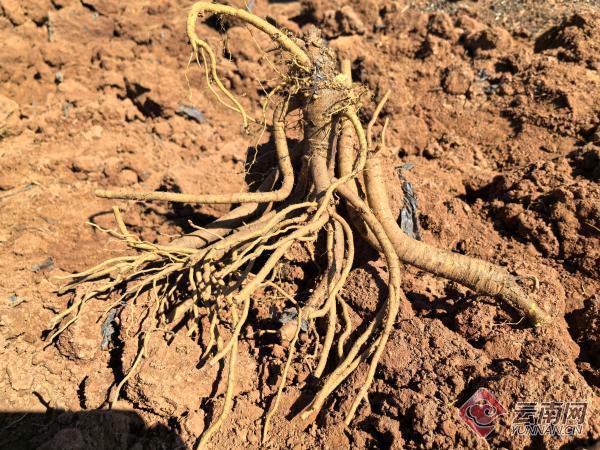
Core Insights - The article discusses the successful implementation of a production measurement event for traditional Chinese medicinal herbs, specifically focusing on the cultivation of Huangqin (Scutellaria baicalensis) and Danggui (Angelica sinensis) in Xiangyun County, Yunnan Province, showcasing the integration of research, education, and practical application in the industry [1][4]. Group 1: Industry Development - Xiangyun County is leveraging its ecological advantages to explore the potential of traditional medicinal herbs, particularly through the "North Medicine South Planting" strategy, which aims to enhance the cultivation of local medicinal resources [3][4]. - The county has established a complete innovation ecosystem involving policy guidance, technological research and development, talent cultivation, industrial transformation, and market application, thereby facilitating the application of agricultural technology [4][5]. Group 2: Agricultural Practices - The cultivation practices include the introduction of mechanized farming techniques for Huangqin and Danggui, addressing labor shortages and high costs associated with manual labor in mountainous regions [5][7]. - A total of 400 acres of Huangqin and 300 acres of Danggui have been introduced, with an investment of 15 million yuan for the cultivation of various other medicinal plants, creating a comprehensive industrial chain [7]. Group 3: Research and Collaboration - The event involved collaboration among various institutions, including Yunnan Agricultural University and the Yunnan Academy of Agricultural Sciences, to ensure effective measurement and assessment of the medicinal herb production [1][4]. - The expert group confirmed the successful large-scale introduction of Huangqin in Yunnan, indicating a positive demonstration effect that enhances the capabilities of local communities [7].

特色产业激活乡村振兴动能
Xin Hua Wang· 2025-12-19 01:49
Core Viewpoint - The article highlights the vibrant development of specialized industries under the rural revitalization strategy, showcasing various successful agricultural and cultural initiatives across different regions in China. Group 1: Economic Impact of Rural Industries - The Cangzhou Grand Canal top road has led to over 100,000 entrepreneurial and employment opportunities for local villagers, with an expected 4 million tourists in 2024, resulting in an annual income growth of over 10% for nearby villages [4] - The rose planting industry in Huan Cheng has achieved value growth despite winter challenges through facility upgrades and technical support, becoming a significant contributor to local income [9][13] - The ceramic industry in Yunnan's Liao Hu village has formed an industrial cluster with 83 enterprises, projecting a total output value of 480 million yuan in 2024 and approximately 260 million yuan in the first half of 2025 [16] Group 2: Agricultural Developments - In Wuzhishan, the oil tea harvest season has seen over 5,000 acres of oil tea cultivation, becoming a crucial income source for local villagers [7] - The fresh oil tea fruits are efficiently processed into oil, transforming the local ecological resources into significant economic benefits for the community [10] - The cultivation of custard apples in Yuanjiang has established a complete industry chain from seed breeding to marketing, contributing to local wealth generation [19] Group 3: Cultural and Tourism Integration - The integration of cultural heritage with rural tourism is exemplified by the scenic beauty of the Grand Canal and the development of the "most beautiful rural road," enhancing local cultural engagement [2] - The ancient ceramic craftsmanship in Liao Hu village, combined with modern production techniques, has revitalized the local tourism and cultural landscape [12]

三江口畔岁月长 花木葱茏布依村(寻找最美乡村·中寨村)
Ren Min Ri Bao· 2025-11-18 23:11
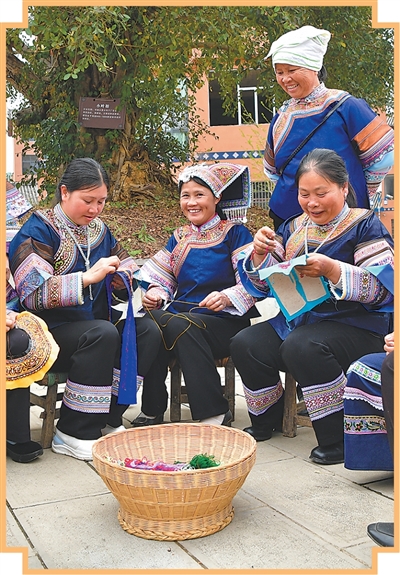
Core Insights - The article highlights the transformation of Zhongzhai Village in Yunnan Province, which has shifted from a fishing-based economy to one focused on specialty agriculture and tourism, leveraging its unique Buyei culture and natural scenery [4]. Group 1: Economic Development - Zhongzhai Village has transitioned from fishing to specialty crop cultivation, including oil tea fruit, Wogan oranges, and sugar oranges, contributing to local economic growth [4]. - The village has developed tourism-related industries such as leisure fishing and agritourism, allowing residents to benefit economically from tourism [4]. Group 2: Cultural Preservation - Zhongzhai Village retains a relatively complete set of Buyei cultural customs and was recognized as a third batch of Chinese ethnic minority characteristic villages in 2019 [4]. - The village's development strategy incorporates its rich cultural heritage, using it as a foundation for promoting tourism and enhancing the local economy [4].
沉陷区变“良田”、秋播“有备而种” 广袤田野绘就生机勃勃“丰”景图
Yang Shi Wang· 2025-10-16 08:51
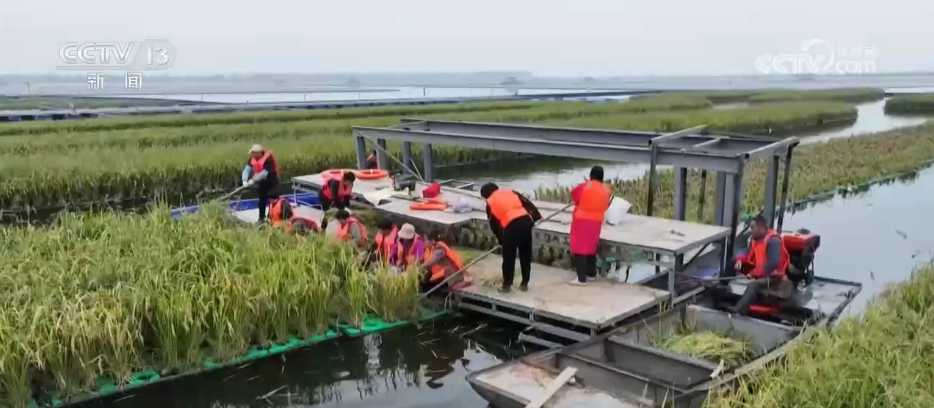
Group 1 - The article highlights the successful cultivation of floating rice in a former coal mining subsidence area in Huainan, Anhui, transforming it into productive farmland [1][3] - Innovative planting methods have been implemented to optimize the floating rice cultivation, addressing nutrient loss due to water dissolution by adjusting substrate composition [5] - The dual-use of water for rice and fish farming not only enhances rice yield and quality but also purifies the water, creating a conducive environment for fish growth, thus promoting ecological restoration and fishery development [7] Group 2 - In Anlu, Hubei, 570,000 acres of farmland are actively being prepared for autumn sowing, with farmers receiving sufficient seeds and fertilizers in advance [8] - The introduction of advanced agricultural machinery, such as hydraulic plows, is improving soil conditions for oilseed rape cultivation, making previously hard soil suitable for planting [10] - In Leiyang, Hunan, 1.25 million acres of oil tea are entering the harvest season, with the cold dew seed series oil tea varieties being harvested, marking the start of the oil tea production and sales peak [11] - The implementation of "water and fertilizer integration" technology has significantly increased oil tea yield from 200 pounds to a maximum of 800 pounds per acre, addressing traditional cultivation challenges [13]