
法棍面包

Search documents
国产粉与法国粉做法棍有什么区别?硬核对比实验来了!| 面包实验室
东京烘焙职业人· 2026-03-16 08:33
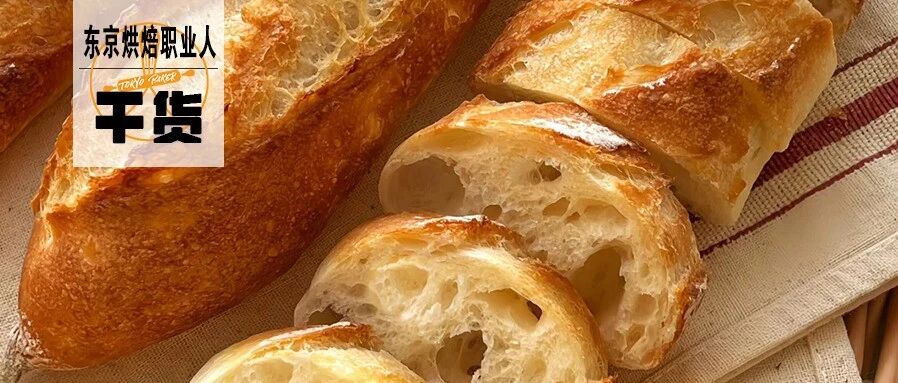
Core Viewpoint - The article compares the differences between French flour and domestic flour in the production of baguettes, highlighting that while French flour has unique characteristics, domestic flour can also meet the needs of most bakers [2][20]. Ingredient Comparison - The basic ingredients for making baguettes include flour, water, salt, and yeast, with a specific recipe using 700g of high-gluten flour, 300g of low-gluten flour, 20g of salt, 750g of water, and 10g of fresh yeast [2][6]. Dough Preparation - During the initial mixing phase, French flour shows a slower formation of dough due to its lower water absorption compared to domestic flour, resulting in a noticeable color difference where French flour appears yellower [4][9]. - After a 40-minute resting period, the dough made with French flour exhibits a finer gluten structure compared to the slightly torn structure of the domestic flour dough [5][9]. Fermentation and Shaping - Both types of flour show similar temperatures after the initial fermentation, but the surface smoothness differs, with French flour becoming slightly rougher due to gluten weakening [12][14]. - The final fermentation process requires careful monitoring, as domestic flour may lead to over-fermentation if not handled properly, affecting the final product's quality [21][20]. Baking Results - During baking, the differences in gluten strength between the two flours become apparent, affecting the bread's expansion and overall shape. Overly strong gluten can lead to a distorted appearance [13][14]. - The final baked baguettes show minimal color differences, although domestic flour typically results in a slightly less appealing color compared to French flour [14][18]. Conclusion - The article concludes that while there are notable differences between French and domestic flours in baguette production, domestic flour is sufficient for most bakers to achieve their desired results, emphasizing the importance of practice and technique in baking [20][21].

赵茜雅|舌尖上的理性与权力:饮食如何影响国家治理?
Xin Lang Cai Jing· 2026-01-06 05:03
Core Perspective - French cuisine is renowned globally for its exquisite cooking methods, delicious dishes, and elegant dining etiquette, which contribute to its image as high-end gastronomy. The resistance against American fast food and Coca-Cola in France highlights the deep connection between food and national identity, as well as the political implications of dietary choices [1]. Group 1: Historical Context - The evolution of French cuisine began in the early 16th century with the arrival of Italian chefs at the French court, establishing France as a culinary leader in Europe. Modern French cuisine took shape in the 19th century after the upheaval of the French Revolution [1]. - Emma C. Spary's research connects food science with social transformation during the Enlightenment and Revolution in France, as seen in her works "Eating the Enlightenment" and "Feeding France" [1][7]. Group 2: Scientific Influence on Cuisine - The field of food history has advanced significantly in the past thirty years, integrating food studies with environmental, colonial, and imperial histories, thus transitioning from popular history to more specialized research [7]. - Spary's approach includes chefs and winemakers as producers of scientific knowledge, linking science, food, and Enlightenment thought, which challenges traditional views of scientific history that focus solely on theoretical developments [7][10]. Group 3: Food and Society - The 18th century saw a critical examination of obesity among the wealthy, with a growing emphasis on moderation and health as societal ideals. This shift was influenced by scientific understandings of nutrition and the human body [12][16]. - The concept of "economy" in the 18th century encompassed not only frugality but also a systemic approach to resource management, reflecting societal crises and the need for effective governance [19][20]. Group 4: Role of State and Science - The state played a crucial role in the production and dissemination of scientific knowledge, establishing institutions like academies and medical schools that were funded by the government to support national governance [21][24]. - The government utilized scientific knowledge to guide public consumption and maintain social order, especially during food shortages, by promoting substitutes for traditional foods and encouraging rational consumption [22][24]. Group 5: Impact on Modern Food Practices - Spary's works illustrate how the scientific understanding of food has shaped dietary practices and societal norms, emphasizing the importance of moderation and health in the context of national stability [26]. - Despite the push for new food products and practices, traditional foods like wheat bread and sugar have retained their significance, indicating a complex relationship between innovation and established habits in French cuisine [26].

法媒:法国超市推0.29欧元低价法棍,引传统面包业从业者不满
Huan Qiu Shi Bao· 2025-09-02 22:39
Core Viewpoint - The introduction of low-priced baguettes at €0.29 by major supermarket chains in France has sparked outrage among traditional bakers, who argue that this practice undermines the artisanal baking industry and disrupts the pricing structure of baguettes [1][2]. Industry Impact - Major supermarket chains, such as Auchan and Lidl, have launched €0.29 baguettes, which has angered traditional bakers [1]. - The average price of a baguette in traditional bakeries is €1.09, highlighting a significant price disparity due to the artisanal production process [1]. - Traditional bakers claim that the labor costs associated with handmade baguettes account for over 40% of total costs, as the production process is time-consuming and labor-intensive [1]. Production Methods - Supermarkets utilize automated production methods, allowing them to produce baguettes at a much lower cost and higher volume, with the ability to create 10,000 baguettes per hour compared to 400-600 by a traditional baker [1][2]. - The use of pre-made semi-finished products and bulk purchasing helps supermarkets control costs and maintain lower prices [2]. Market Dynamics - Despite the rise of low-cost baguettes, traditional bakeries still dominate the market, with supermarket baguette sales accounting for only 9% of the total market [2]. - The annual production of baguettes in France reaches 6 billion, indicating the product's cultural significance and popularity among the French [2]. - Changes in consumer habits and rising raw material costs are influencing the traditional French baking industry [2].