波音B737Max

Search documents
关键一步!“欧洲派人来华试飞C919:安全可靠”
Guan Cha Zhe Wang· 2026-01-15 08:01
Core Insights - The C919 aircraft by COMAC has received positive domestic feedback and increasing international attention since its commercial operation began [1] - The European Union Aviation Safety Agency (EASA) has started flight evaluation tests for the C919 in Shanghai, indicating that the aircraft is "performing well and is safe and reliable" [2][5] Group 1: Certification Process - EASA's certification is crucial for the C919 to compete with Boeing and Airbus, as it serves as a "golden key" for entering the international aviation market [2] - The flight tests are part of EASA's four-stage certification process, focusing on extreme operational conditions and real-time assessments [5] - Recent evaluations revealed minor software issues related to crew and aircraft interaction, which require only "slight adjustments" [6] Group 2: Market Position and Competition - The C919 is designed to meet the demand for large and medium-capacity markets, directly competing with the Airbus A320Neo and Boeing B737Max, while being priced lower than its competitors [9] - As of the end of 2025, COMAC delivered approximately 15 C919 aircraft, marking an increase from 12 in 2024, although it fell short of initial expectations [11] - The domestic fleet's share of Chinese-made aircraft has risen from 1.3% in 2019 to 4.7% [11] Group 3: International Relations and Future Outlook - EASA's certification process has faced delays, with earlier estimates suggesting it could take three to six years [9] - Despite not prioritizing FAA certification, the C919 can still operate internationally if recognized by other countries' aviation authorities [7] - Industry leaders from Boeing and Airbus acknowledge the C919 as a competitor, emphasizing that competition benefits the entire industry [11][12]

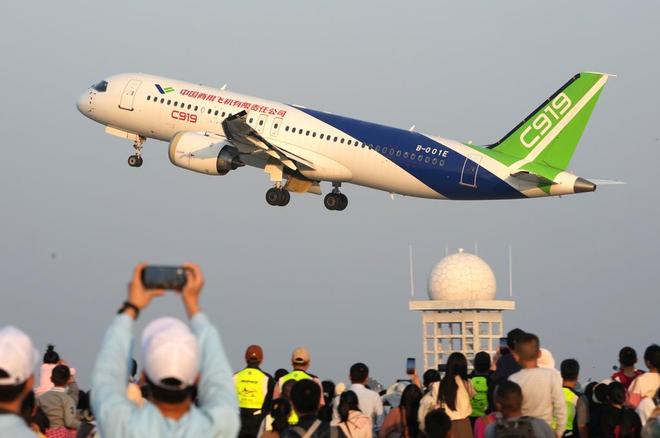
尼日利亚:正考虑为C919认证
Guan Cha Zhe Wang· 2025-09-30 00:17
Core Viewpoint - Nigeria's Civil Aviation Authority is considering the airworthiness certification for China's C919 aircraft, aiming to enhance its domestic aviation market and strengthen ties with China [1][3]. Group 1: Airworthiness Certification - Nigeria's Civil Aviation Authority is planning to initiate a months-long airworthiness certification process for the C919 to allow its operation on domestic routes [1][3]. - The C919 has not yet received certification from Western regulatory bodies, which is a critical step for broader market acceptance [1][4]. Group 2: Market Potential - Nigeria, with a population of 230 million, is viewed as a significant aviation market with substantial growth potential [3]. - The Nigerian government has expressed interest in becoming a base for Chinese aircraft manufacturer COMAC to enter the wider African market [1][3]. Group 3: Support and Collaboration - COMAC has proposed to provide maintenance and training support for Nigerian airlines operating its aircraft, as well as explore "dry leasing" arrangements [3][4]. - The CEO of Nigeria's NG Eagle airline indicated a willingness to expand its fleet if the C919 receives airworthiness certification along with support from COMAC [4]. Group 4: Competitive Landscape - The C919 is designed to compete with Western aircraft manufacturers Airbus and Boeing, specifically targeting the large and medium-capacity market [5][7]. - The C919's catalog price is lower than that of its competitors, which may enhance its attractiveness in the market [5]. Group 5: Regulatory Challenges - The C919 faces challenges in obtaining certification from Western regulatory bodies, which is essential for accessing foreign markets [7]. - Analysts suggest that achieving certification from either the European Union Aviation Safety Agency (EASA) or the Federal Aviation Administration (FAA) would be a significant milestone for the C919 [7]. Group 6: Production Capacity - The immediate focus for the C919 is to increase production capacity to meet growing domestic demand, rather than prioritizing overseas exports [7].