适航认证

Search documents
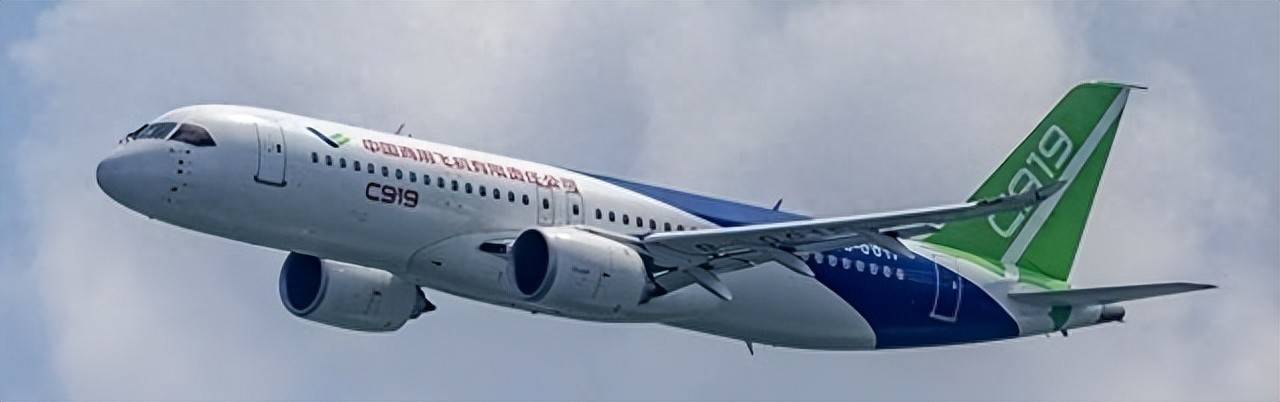
C919大飞机:万亿赛道,拐点到来
HUAXI Securities· 2026-01-30 11:20
Investment Rating - The industry rating for the defense and aerospace sector is "Recommended" [1] Core Insights - The domestic long-range engine, Changjiang series, has entered a critical certification phase, marking a significant turning point for the large aircraft sector [1] - The demand for civil aircraft remains strong, with Boeing recovering orders while Airbus faces delivery challenges due to engine supply shortages [4][5] - The C919 aircraft has made significant progress in obtaining European airworthiness certification, which is crucial for accessing global markets [6] - The operational performance of the C919 has been validated through extensive market testing, with increasing flight hours and passenger numbers [7][8] - The delivery of C919 aircraft is expected to rise, with supply chain obstacles gradually diminishing [9] Summary by Sections Manufacturing and Development - The Changjiang engine's development is a key focus, with the 2026 work conference emphasizing the importance of commercial power and advanced materials [1] - The C919 has successfully completed various certification processes, including the TC and PC certifications for multiple engine models [3] Demand and Market Dynamics - Airbus has a backlog of 8,665 aircraft orders, with a projected delivery of approximately 820 aircraft by the end of 2025, while Boeing's commercial aircraft orders have shown signs of recovery [4] - Engine supply shortages are a critical bottleneck, causing many new aircraft to be grounded due to the lack of engines [5] Certification and Regulatory Progress - The C919 has received positive evaluations from the European Union Aviation Safety Agency (EASA), indicating its performance and safety [6] Operational Performance - The C919 has successfully carried over 4 million passengers by the end of 2025, demonstrating its operational reliability and efficiency [7] - Airlines are expanding C919 flight routes, reflecting confidence in the aircraft's performance [8] Delivery and Supply Chain - In 2025, approximately 15 C919 aircraft were delivered, showing an increase from the previous year, although still below initial expectations [9] - The resolution of supply chain issues, particularly regarding engine availability, is crucial for future production increases [9]
为什么C919一定要拿到这张欧洲适航证?
Guan Cha Zhe Wang· 2026-01-21 05:40
Core Viewpoint - The C919 aircraft is undergoing EASA certification testing, which is crucial for its international market acceptance, despite domestic production challenges and skepticism from the public regarding its capacity to meet demand [1][3]. Group 1: Certification Importance - EASA's certification is essential for C919 to operate internationally, as it allows for broader market access beyond China [3][4]. - While C919 has received certification from the Civil Aviation Administration of China (CAAC), obtaining EASA certification is necessary for registration with foreign airlines [3][6]. - The certification process involves a thorough evaluation, and the C919 is currently in the critical assessment phase with EASA [6]. Group 2: Production and Supply Chain Challenges - The projected production capacity for 2025 is 75 aircraft, but this figure represents design capacity rather than actual delivery targets, with only 15 expected to be delivered [10][11]. - The supply chain for C919 includes many components from Western suppliers, particularly from the U.S., which complicates production due to regulatory scrutiny and potential delays [10][11]. - The geopolitical landscape affects the availability of critical components, as U.S. suppliers must comply with government regulations, impacting the production timeline [11][14]. Group 3: Market Dynamics and Political Factors - The certification process is not solely a technical issue; it also involves political considerations that can act as barriers to market entry for foreign aircraft [8][10]. - Historical examples show that regulatory changes can be influenced by market protectionism, affecting the competitiveness of foreign aircraft like the C919 [8][10]. - The reliance on foreign components for C919 is driven by the current state of China's aviation industry, which lacks the maturity and reliability of Western counterparts [14][15].

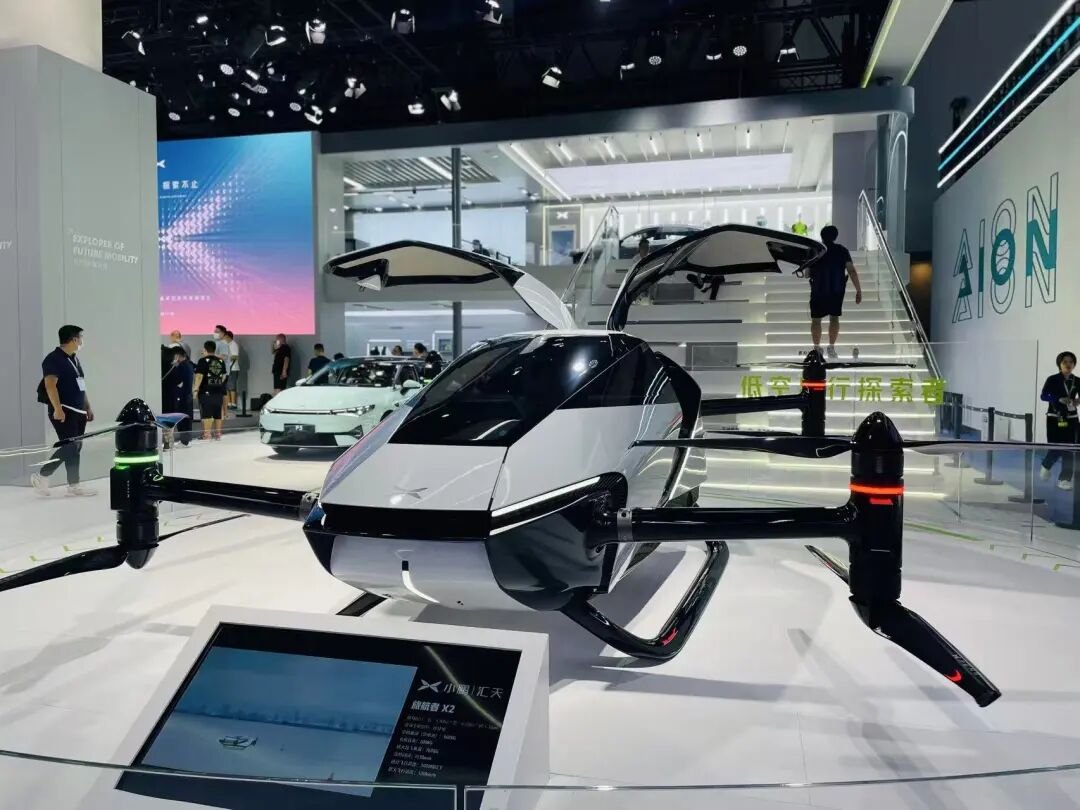
未拿“准行证”先闯资本市场,小鹏汇天被传秘密递表港股
Guo Ji Jin Rong Bao· 2026-01-15 10:45
Core Viewpoint - Xiaopeng Motors is accelerating its entry into the capital market with its flying car division, Xiaopeng Huitian, by preparing for an IPO in Hong Kong, reflecting a significant need for funding to support its high R&D costs [1][2][4]. Funding and Financial Needs - Xiaopeng Huitian has reportedly accumulated over $750 million (approximately 5.375 billion yuan) in financing since its rebranding in 2020, but this is insufficient compared to competitors like Joby Aviation and EHang, which have much higher annual R&D expenditures [5][6]. - The company has received loans totaling 6 billion yuan from banks to support its flying car development and manufacturing [6][7]. - The decision to go public is seen as a critical step for Xiaopeng Huitian to secure additional funding for its ambitious projects [8][10]. Market Response and Stock Performance - Following the IPO news, Xiaopeng's stock price in Hong Kong saw significant activity, with a 4.85% increase shortly after the announcement [2]. Regulatory Challenges - Xiaopeng Huitian is currently facing the challenge of obtaining airworthiness certification, which is essential for the production and commercial operation of its flying vehicles [12][13]. - The certification process is complex and lengthy, with no official announcement regarding the completion of the necessary certifications as of January 2026 [14][16]. Competitive Landscape - The flying car market is becoming increasingly competitive, with major players like EHang and Joby Aviation already making strides in commercial operations and regulatory approvals [19][20]. - Xiaopeng Huitian's positioning as a personal flying vehicle contrasts with EHang's focus on urban air mobility, indicating a different market strategy [19]. Future Outlook - The success of Xiaopeng Huitian's IPO and its ability to secure the necessary certifications will be crucial for its future development and market acceptance [21].
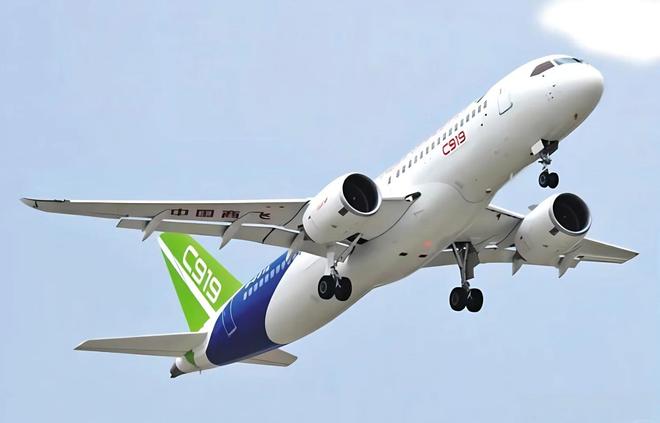
关键一步!“欧洲派人来华试飞C919:安全可靠”
Guan Cha Zhe Wang· 2026-01-15 08:01
Core Insights - The C919 aircraft by COMAC has received positive domestic feedback and increasing international attention since its commercial operation began [1] - The European Union Aviation Safety Agency (EASA) has started flight evaluation tests for the C919 in Shanghai, indicating that the aircraft is "performing well and is safe and reliable" [2][5] Group 1: Certification Process - EASA's certification is crucial for the C919 to compete with Boeing and Airbus, as it serves as a "golden key" for entering the international aviation market [2] - The flight tests are part of EASA's four-stage certification process, focusing on extreme operational conditions and real-time assessments [5] - Recent evaluations revealed minor software issues related to crew and aircraft interaction, which require only "slight adjustments" [6] Group 2: Market Position and Competition - The C919 is designed to meet the demand for large and medium-capacity markets, directly competing with the Airbus A320Neo and Boeing B737Max, while being priced lower than its competitors [9] - As of the end of 2025, COMAC delivered approximately 15 C919 aircraft, marking an increase from 12 in 2024, although it fell short of initial expectations [11] - The domestic fleet's share of Chinese-made aircraft has risen from 1.3% in 2019 to 4.7% [11] Group 3: International Relations and Future Outlook - EASA's certification process has faced delays, with earlier estimates suggesting it could take three to six years [9] - Despite not prioritizing FAA certification, the C919 can still operate internationally if recognized by other countries' aviation authorities [7] - Industry leaders from Boeing and Airbus acknowledge the C919 as a competitor, emphasizing that competition benefits the entire industry [11][12]
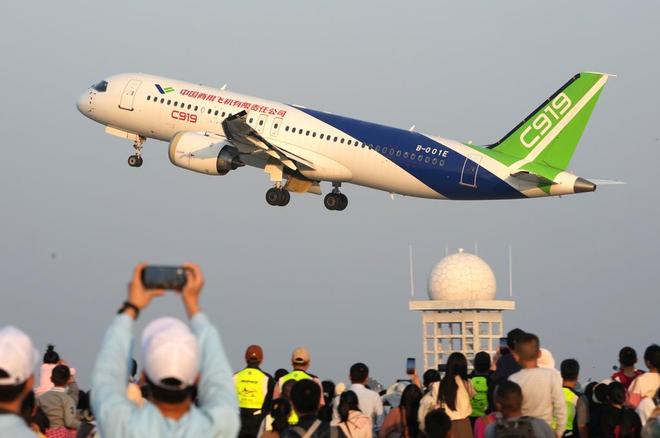
沃兰特在拼的,不只是飞起来
3 6 Ke· 2026-01-09 00:19
Core Insights - The eVTOL industry in China is at a critical juncture, where the ability to manufacture, deliver consistently, and operate compliantly will determine the future of companies like Volant [2][3] - Volant's approach involves a "hybrid supply chain" that integrates traditional aviation with new manufacturing technologies, aiming to create a sustainable ecosystem for low-cost delivery [3][5] Group 1: Supply Chain Dynamics - Volant's order numbers include both confirmed orders and expressions of interest, highlighting the pressure on the company to deliver despite not yet having type certification [3] - The hybrid supply chain connects traditional aviation and military systems with consumer electronics and drone technologies, but the real challenge lies in successfully integrating these diverse elements [3][4] - The conflict in operational rhythms between traditional aviation suppliers and consumer electronics creates a fundamental contradiction in development agility versus certification and mass production requirements [4] Group 2: Regulatory and Manufacturing Challenges - Achieving airworthiness certification is just the beginning; companies must also navigate airspace approvals and operational standards, which are constrained by limited regulatory personnel and a lack of mature standards for eVTOL [7] - The difference in manufacturing and regulatory paths between Volant and competitors like Joby Aviation highlights the importance of early alignment with certification processes to mitigate risks [8][10] Group 3: Cost Structure and Risks - The introduction of new manufacturing capabilities aims to reduce costs, but achieving aviation-grade reliability often necessitates expensive modifications and comprehensive oversight of suppliers [5] - Volant's reliance on traditional aviation suppliers, which constitutes about 70% of its supply chain, ensures safety but complicates efforts to reduce costs and integrate innovative solutions [5][11] Group 4: Industry Comparisons and Future Outlook - The "time debt" associated with Volant's hybrid supply chain reflects the need for future investments in system integration and quality assurance to meet market demands [11] - The collapse of companies like Lilium serves as a cautionary tale, emphasizing that leading technology and substantial orders do not guarantee commercial viability without successful certification and delivery capabilities [12]
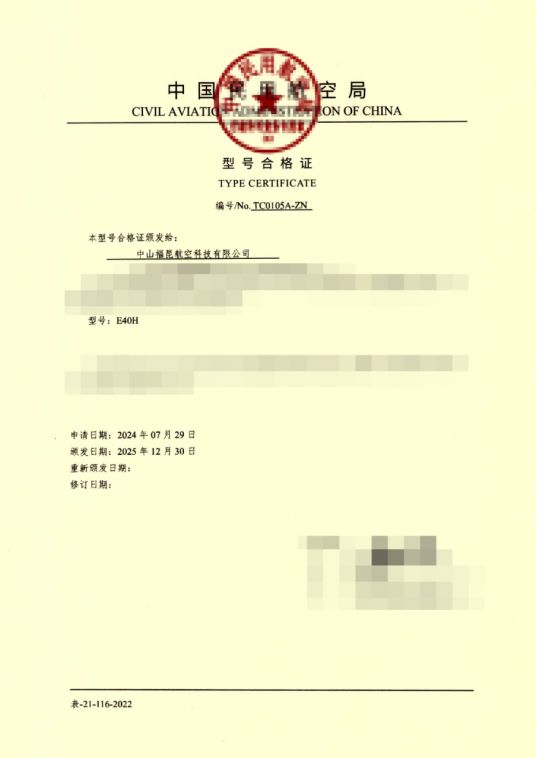
御风未来获首张混动+复合翼无人机型号合格证
Guan Cha Zhe Wang· 2026-01-04 09:08
Core Viewpoint - The E40H unmanned aerial vehicle (UAV) developed by Yufeng Future has successfully obtained the Type Certificate (TC) from the Civil Aviation Administration of China, marking it as the first hybrid-powered UAV to meet airworthiness requirements globally and the first to receive a TC under the new Civil Aviation Law in China [1][8]. Technical Specifications - The E40H has a total length of 3.78 meters, a height of 0.99 meters, a maximum flight speed of 115 km/h, a maximum altitude of 1000 meters, a maximum takeoff weight of 150 kilograms, an empty weight of 100 kilograms, a maximum payload of 50 kilograms, a maximum flight time of 10 hours, and a maximum range of 800 kilometers [1][3]. Development Timeline - The application for the TC was submitted on July 29, 2024, and the approval was granted on December 30, 2025, taking a total of 1 year and 5 months [3]. Industry Impact - The E40H is the first of its kind in the industry to achieve airworthiness certification for hybrid and composite wing UAVs, with expectations for a series of similar eVTOLs to follow [3]. - The primary application scenarios for the E40H include emergency cargo transport and surveillance operations, with operational restrictions such as not flying over densely populated areas and prohibiting manned flights [3]. Operational Achievements - The E40H participated in various real-world rescue operations, including flood relief and typhoon rescue missions, and successfully completed logistics flights over a distance of 150 kilometers [5][8]. Future Plans - Yufeng Future is advancing its large eVTOL model M1B, which has already submitted its TC application and is expected to complete certification within the year, focusing on emergency firefighting and logistics [5][8]. - The company plans to submit a TC application for a manned version of the M1 at an appropriate time, gradually moving towards commercial operations [7]. Financing and Commercial Strategy - Yufeng Future has completed nine rounds of financing and is currently in the B round, with a recent funding round aimed at accelerating the testing and certification of the M1 model [8]. - The company follows a development path outlined by the National Development and Reform Commission, focusing on cargo transport before moving to manned operations, with a target for commercial deployment of large eVTOLs by the second half of 2026 [8]. Certification Landscape - As of December 30, 2025, a total of 12 aircraft have received TC certificates this year, with Yufeng Future's E40H being the first UAV certified under the revised Civil Aviation Law [8][9].
赣锋锂业:公司已与知名无人机及eVTOL企业达成合作
Zheng Quan Ri Bao Wang· 2025-12-17 11:45
Core Viewpoint - Ganfeng Lithium has established partnerships with well-known drone and eVTOL companies, indicating a strategic move towards expanding its market presence in the aviation sector [1] Group 1 - The company has entered the certification process for battery samples, which is a crucial step for compliance and market entry [1] - High-energy density battery cells developed for leading clients have passed the Civil Aviation Administration's manufacturing compliance review, showcasing the company's commitment to quality and safety [1] - The company is now in a substantive phase of commercial cooperation and market expansion, highlighting its proactive approach in the industry [1]

露出獠牙,欧洲终于对C919下逐客令,外媒:不怕断供发动机?
Sou Hu Cai Jing· 2025-11-22 07:15
Core Viewpoint - The C919 aircraft is unlikely to receive European certification this year, with a projected delay of three to six years, indicating that the European market is not ready to accept large Chinese aircraft in the short term [1][5]. Group 1: Certification and Market Impact - The C919 has been a key focus for COMAC after receiving domestic certification, as obtaining EASA certification is crucial for international credibility [3]. - EASA's recent evaluations have been positive, but the certification process is still lengthy, with estimates suggesting the earliest certification could occur in 2028 and possibly as late as 2031 [5]. - The delay in certification is seen as a protective measure for Airbus, especially following the grounding of Boeing 737 MAX aircraft, which has allowed Airbus to expand its market share significantly [5]. Group 2: Engine and Production Challenges - The C919 is currently equipped with the LEAP-1C engine, but U.S. export licenses were temporarily suspended due to technology leak concerns, impacting production schedules [7][8]. - Despite these challenges, COMAC has made progress with the domestically developed Changjiang 1000A engine, which is expected to undergo in-flight testing soon and could mitigate reliance on foreign suppliers [8][10]. - The production line is operating at full capacity, with plans to deliver 30 aircraft by 2025, indicating strong domestic demand despite European market challenges [10]. Group 3: Future Prospects - The C919 is not solely dependent on the European market, as bilateral agreements allow it to operate in Southeast Asia, the Middle East, and Africa [10]. - The Changjiang 1000A engine is anticipated to be certified by 2026, and the C929 wide-body aircraft is expected to enter service by 2030, further reducing reliance on Western markets [10].
制造强市”无锡强势撬动航空万亿“新赛道
Xin Hua Ri Bao· 2025-11-02 21:45
Core Viewpoint - Wuxi is actively developing its large aircraft components industry, aiming to become a new highland in the Yangtze River Delta region, supported by strategic policies and a focus on innovation and collaboration [1][9]. Group 1: Industry Development - Wuxi is transforming from "component support" to "system-level breakthroughs," leveraging its manufacturing foundation to create a large aircraft component industry cluster [1]. - The city has established a "3+X" industrial system focusing on three core areas: aircraft engine manufacturing, specialized onboard systems, and new aviation materials, supplemented by high-value sub-industries [2][3]. - By 2027, Wuxi plans to cultivate over 200 large aircraft component enterprises, driving the output of related industries to reach 50 billion yuan [5]. Group 2: Innovation and Research - Wuxi has formed a complete industrial chain from materials to systems in the aircraft engine sector, with nearly 40 large-scale enterprises and a leading position in the country [3]. - The establishment of the Wuxi Aviation Engine Basic Components Industry Innovation Research Institute has led to significant technological breakthroughs, enhancing the reliability of domestic aircraft engine components [7]. - The city has gathered over 200 PhDs in the aerospace field, creating a talent pool that supports innovation and development [8]. Group 3: Policy Support - Wuxi is implementing a "policy combination" to create an optimal ecosystem for the large aircraft component industry, including spatial planning and financial support [9][10]. - The city has established various aviation and aerospace special funds exceeding 15 billion yuan to support industry development [9]. - Policies include substantial financial incentives for companies achieving key certifications and entering the aerospace supply chain, promoting innovation and reducing risks [10].
尼日利亚:正考虑为C919认证
Guan Cha Zhe Wang· 2025-09-30 00:17
Core Viewpoint - Nigeria's Civil Aviation Authority is considering the airworthiness certification for China's C919 aircraft, aiming to enhance its domestic aviation market and strengthen ties with China [1][3]. Group 1: Airworthiness Certification - Nigeria's Civil Aviation Authority is planning to initiate a months-long airworthiness certification process for the C919 to allow its operation on domestic routes [1][3]. - The C919 has not yet received certification from Western regulatory bodies, which is a critical step for broader market acceptance [1][4]. Group 2: Market Potential - Nigeria, with a population of 230 million, is viewed as a significant aviation market with substantial growth potential [3]. - The Nigerian government has expressed interest in becoming a base for Chinese aircraft manufacturer COMAC to enter the wider African market [1][3]. Group 3: Support and Collaboration - COMAC has proposed to provide maintenance and training support for Nigerian airlines operating its aircraft, as well as explore "dry leasing" arrangements [3][4]. - The CEO of Nigeria's NG Eagle airline indicated a willingness to expand its fleet if the C919 receives airworthiness certification along with support from COMAC [4]. Group 4: Competitive Landscape - The C919 is designed to compete with Western aircraft manufacturers Airbus and Boeing, specifically targeting the large and medium-capacity market [5][7]. - The C919's catalog price is lower than that of its competitors, which may enhance its attractiveness in the market [5]. Group 5: Regulatory Challenges - The C919 faces challenges in obtaining certification from Western regulatory bodies, which is essential for accessing foreign markets [7]. - Analysts suggest that achieving certification from either the European Union Aviation Safety Agency (EASA) or the Federal Aviation Administration (FAA) would be a significant milestone for the C919 [7]. Group 6: Production Capacity - The immediate focus for the C919 is to increase production capacity to meet growing domestic demand, rather than prioritizing overseas exports [7].