
活着么App

Search documents
死了么App爆火后更名,有开发者用AI 6小时做出「活着么」
Di Yi Cai Jing· 2026-01-14 03:20
Core Viewpoint - The "Dead or Alive" app, which gained significant attention due to its name, has officially rebranded to "Demumu" to promote a global identity while continuing to focus on safety for solitary individuals [1][12]. Group 1: App Performance and User Engagement - The app has seen explosive growth, ranking first on the Apple App Store's paid list for four consecutive days starting January 10, with daily new user registrations increasing to 500 times the pre-viral rate [1]. - Within three days, over 60 investors approached the app's team, raising its valuation to several tens of millions [2]. - The app's initial development cost was under 1,500 yuan, and it features a simple daily check-in function that alerts emergency contacts if the user fails to check in for two consecutive days [5][10]. Group 2: Competition and Market Dynamics - Following the app's success, a competing app named "Alive or Not" was developed in just six hours using AI, highlighting the low technical barriers for creating similar applications [2][6]. - Industry experts noted that the low technical threshold makes it easy for similar apps to be replicated, and many new variants have already appeared in the App Store [2][10]. - The app's core value is perceived as limited, with the potential for user retention being low unless new features that resonate emotionally with users are developed [10][11]. Group 3: Target Audience and Future Prospects - The app primarily targets young individuals aged 25 to 35 in first- and second-tier cities, with a focus on solitary young women [11]. - Despite its current popularity, the app's long-term viability is questioned, as many similar applications have short lifespans unless they can establish a deeper connection with users [10][11]. - The app's team initially aimed to sell 10% of the company for 1 million yuan, but due to investor interest, the price has surged to nearly 10 million yuan, indicating strong market interest [12].

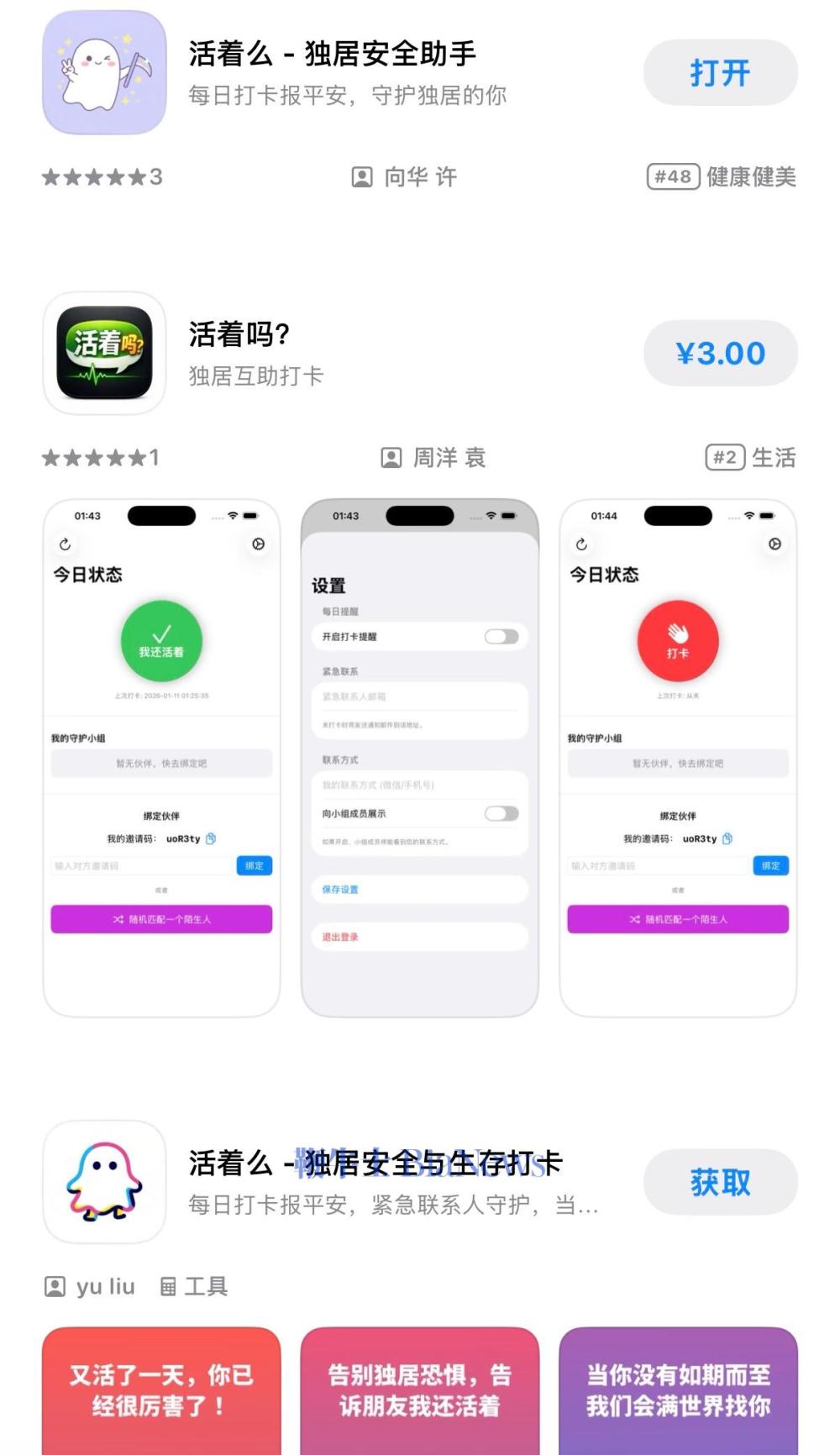
死了么App爆火后更名 有开发者用AI 6小时做出“活着么”
Di Yi Cai Jing· 2026-01-14 02:52
Core Viewpoint - The "Dead or Alive" app, which gained significant attention due to its name, has officially rebranded to "Demumu" to promote a global identity while continuing to focus on safety for solitary individuals [1][12]. Group 1: App Performance and User Engagement - The app has seen explosive growth, ranking first on the Apple App Store's paid list for four consecutive days starting January 10, with daily new user numbers increasing to 500 times the previous rate [1]. - In just three days, over 60 investors expressed interest, raising the app's valuation to several tens of millions [1][11]. - The app's initial user base primarily consists of young women aged 25 to 35 living in first- and second-tier cities, indicating a target demographic focused on entertainment rather than long-term engagement [11]. Group 2: Development and Competition - The app was developed by a team of three individuals with minimal costs, reportedly under 1,500 yuan, and features a simple daily check-in function [5][6]. - A competing app, "Alive or Not," was created within six hours using AI technology, highlighting the low technical barriers for replication in this market [2][5]. - Industry experts note that the low technical threshold makes such apps easy to replicate, with many similar applications already appearing in the App Store [2]. Group 3: Market Challenges and Future Outlook - Despite initial success, the longevity of such apps is questioned, as their core value is perceived to be limited, and user retention may decline over time [9][11]. - The app's concept was inspired by community discussions and internet trends, but it faces criticism for potential plagiarism regarding its design and functionality [12][13]. - The app's future success may depend on its ability to innovate and connect emotionally with users, as many similar apps have failed to maintain user interest [9][11].
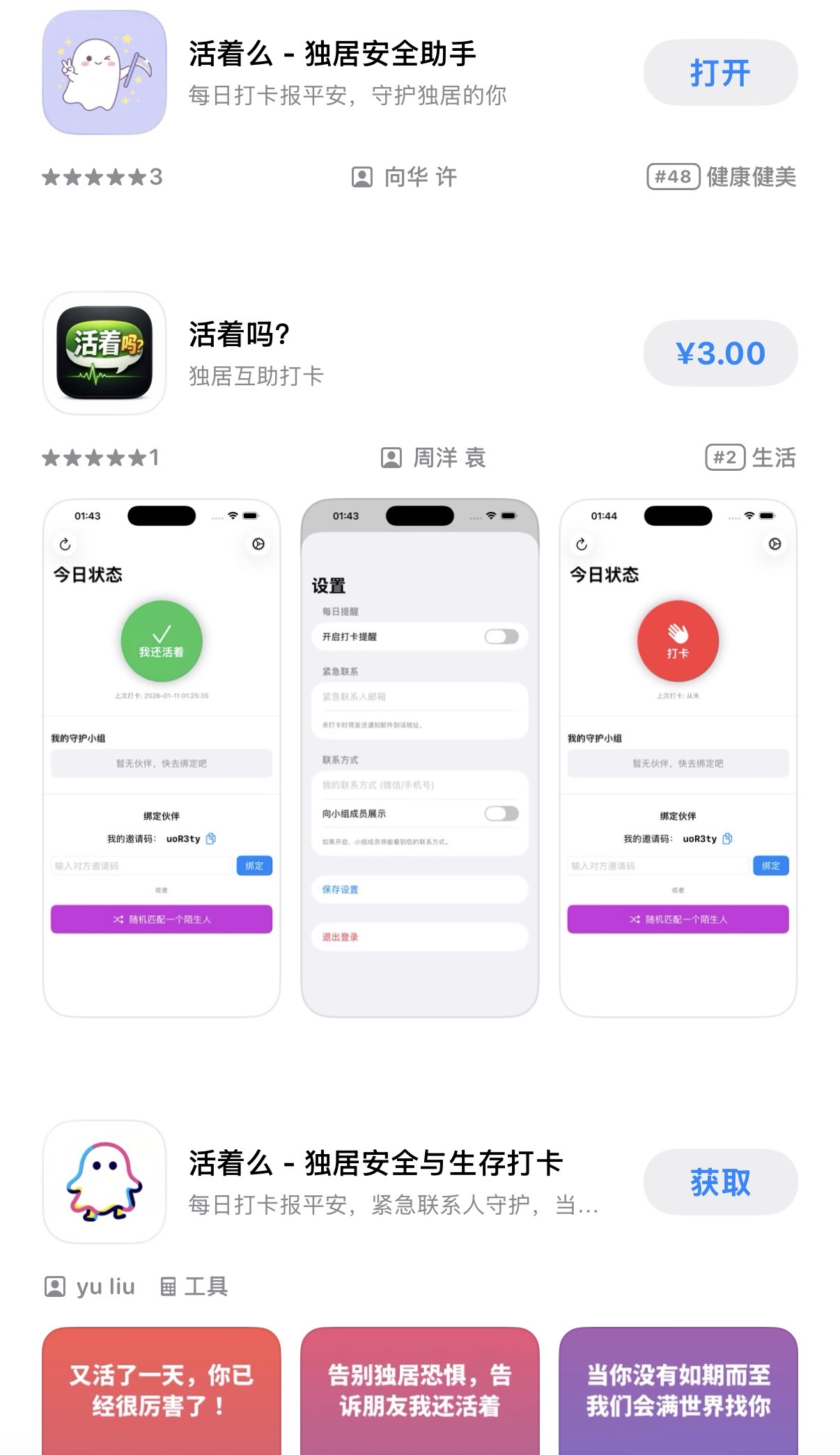
“死了么”App更名,有开发者用AI 6小时做出“活着么”
Di Yi Cai Jing Zi Xun· 2026-01-14 00:56
Core Viewpoint - The app "死了么" has officially rebranded to "Demumu" after gaining significant attention and user growth, with a focus on promoting safety solutions for solitary individuals globally [2][12]. Group 1: App Performance and User Growth - "Demumu" reached the top of the Apple App Store paid chart for four consecutive days starting January 10, with daily new user numbers increasing to 500 times pre-viral levels [2]. - The app's valuation has surged to several tens of millions, with over 60 investors expressing interest within three days [12][13]. Group 2: Competition and Market Dynamics - The low technical barrier for similar apps has led to the emergence of multiple clones, including "活着么," which was developed in just six hours using AI tools [3][6]. - Industry experts suggest that the success of such apps often relies on luck rather than technical complexity, with many similar apps failing to achieve lasting popularity [3][11]. Group 3: Development Insights - The development cost of "死了么" was under 1500 yuan, and its functionality is relatively simple, primarily involving daily check-ins and emergency notifications [6]. - The developer of "活着么" utilized AI to streamline the development process, completing the project in less than six hours, highlighting the potential of AI in app development [9][10]. Group 4: User Demographics and Market Potential - The primary target demographic for "Demumu" includes young adults aged 25 to 35 in first- and second-tier cities, with a focus on solitary individuals [12]. - Despite initial popularity, the app's long-term retention may be challenged, as users may prefer more established platforms that can integrate similar functionalities [12]. Group 5: Controversies and Challenges - The app has faced criticism for alleged plagiarism regarding its concept and design, with claims that it closely resembles a previously released concept video [13]. - The team behind "Demumu" asserts that the app's idea was inspired by community discussions rather than any single individual's input [13].

“死了么”App更名,有开发者用AI 6小时做出“活着么”
第一财经· 2026-01-14 00:54
Core Viewpoint - The article discusses the rapid rise and subsequent rebranding of the safety app "死了么" (translated as "Are You Dead?") to "Demumu," highlighting its explosive popularity and the controversies surrounding it, including accusations of plagiarism and the emergence of similar apps [2][15][16]. Group 1: App Popularity and User Growth - The app "死了么" gained significant traction, ranking first in the paid category on the Apple App Store for four consecutive days starting January 10, with daily new user registrations increasing to 500 times the pre-viral rate [2][15]. - Within three days, over 60 investors expressed interest, raising the app's valuation to several tens of millions [2][15]. - The app's initial development cost was under 1500 yuan, and it transitioned from a free to a paid model, increasing the price from 1 yuan to 8 yuan after its popularity surged [8][15]. Group 2: Development and Technology - The app was developed by a team of three individuals born in the 1990s, utilizing AI tools like Google's Gemini to create a similar app called "活着么" (translated as "Are You Alive?") in just six hours [7][9][11]. - The developer of "活着么" noted that the technical barriers for creating such apps are low, making them easy to replicate [3][4]. - AI played a crucial role in the development process, allowing for rapid project completion and serving multiple roles, including programmer and product manager [11][12]. Group 3: Market Challenges and Future Outlook - Despite the initial success, the developer expressed skepticism about the long-term viability of such apps, citing limited core value and the likelihood of user attrition [13][14]. - The target demographic for "死了么" primarily includes young adults aged 25 to 35 in first- and second-tier cities, with the app's appeal being more entertainment-oriented rather than a serious safety solution [14][15]. - The article emphasizes the need for apps to find unique features that foster emotional connections with users to extend their lifecycle beyond initial popularity [13][14].

死了么App爆火后更名,有开发者用AI 6小时做出“活着么”
Di Yi Cai Jing· 2026-01-14 00:25
Core Viewpoint - The "Die or Not" app, which gained rapid popularity, has rebranded to "Demumu" and aims to expand its services globally, targeting the safety of solitary individuals [1][12]. Group 1: App Popularity and User Growth - The app reached the top of the Apple App Store's paid chart for four consecutive days starting January 10, with daily new user numbers increasing to 500 times prior levels [1]. - Over a span of three days, more than 60 investors expressed interest, raising the app's valuation to several tens of millions [2][11]. - The app's initial development cost was under 1,500 yuan, and it was designed to send alerts to emergency contacts if users fail to check in for two consecutive days [5][10]. Group 2: Competition and Replication - The low technical barrier of the app has led to the emergence of similar applications, such as "Alive or Not," which was developed in just six hours using AI tools [2][5]. - Industry experts noted that the ease of replication for such apps poses a significant challenge for long-term success [2][9]. Group 3: Market Positioning and Target Audience - The app primarily targets young adults aged 25 to 35 in first- and second-tier cities, focusing on solitary individuals, particularly young women [10]. - There is skepticism about the app's long-term viability, as many similar applications have short lifespans unless they can establish a deeper emotional connection with users [9][10]. Group 4: Investment and Future Prospects - The app's valuation surged from an initial offer of 1 million yuan for 10% equity to nearly 10 million yuan due to competitive bidding among investors [11]. - Investors are attracted by the potential for user aggregation and various monetization strategies, including advertising and potential shifts towards social and entertainment features [11]. Group 5: Controversies and Challenges - The app has faced accusations of plagiarism regarding its concept and logo, with claims that it closely resembles a previously released concept video [11][12]. - The team asserts that the app's idea originated from community discussions rather than a single source, emphasizing the collaborative nature of its development [12].