浩宇文旅数字化平台

Search documents
山东数文集团实现省级重点科研平台全覆盖
Qi Lu Wan Bao· 2026-01-01 16:25
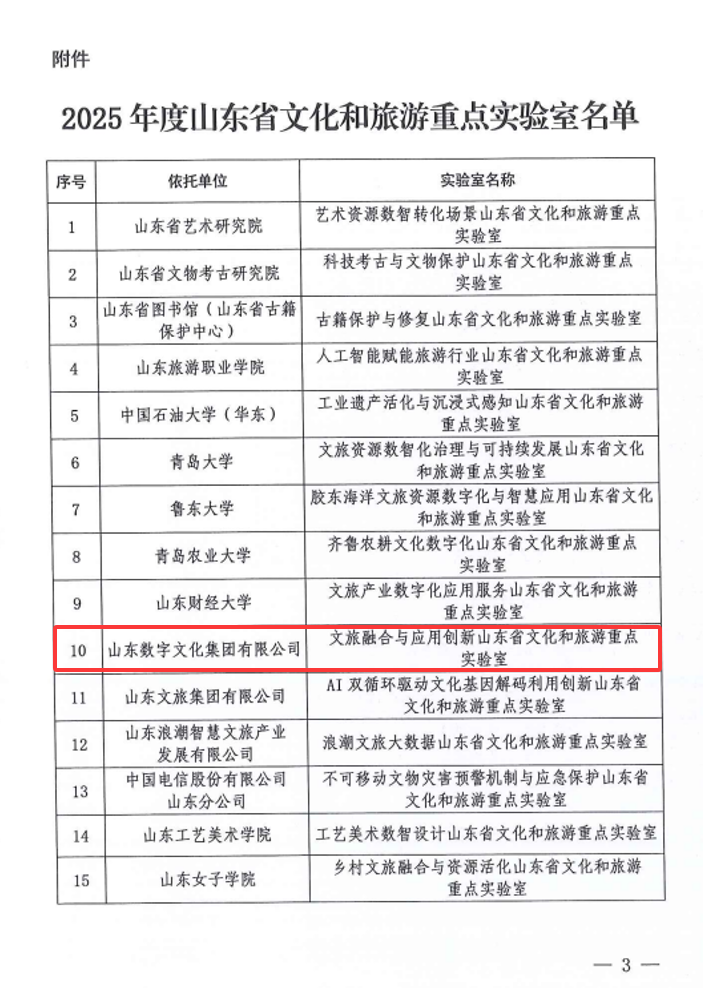
Core Insights - Shandong Digital Culture Group has successfully established the "Cultural Tourism Integration and Application Innovation Key Laboratory" as part of the 2025 annual key laboratory list by the Shandong Provincial Department of Culture and Tourism, focusing on technological innovation in the cultural and tourism sectors [1] Group 1: Laboratory and Research Initiatives - The newly approved laboratory aims to leverage Shandong's rich cultural tourism resources and the group's technological advantages in areas such as large model development, digital replication, and intelligent interaction [1] - The laboratory will focus on four core research directions: construction of large models and AI agents for the cultural tourism industry; decoding cultural genes and building high-quality datasets; panoramic digitalization of scenic spots based on 3DGS technology; and empowering local cultural tourism development through rural culture [1] Group 2: Cultural Gene Decoding and Model Development - The group is accelerating the implementation of the cultural gene decoding and utilization project, which has been recognized by the National Internet Information Office and included in the 2025 provincial government work report [2] - The project has achieved five-star certification from the China Academy of Information and Communications Technology and is part of the major scientific innovation projects in Shandong Province [2] - Collaborative efforts have led to the development of various cultural models, including the Confucius Digital Model and the Shandong Literature Model, in partnership with several cultural institutions [2] Group 3: Digital Platforms and Applications - The group has launched several digital platforms, including the "Star" intelligent agent development platform and the "Hao Yu" cultural tourism digital platform, to facilitate the creative transformation and innovative development of Qilu culture [3] - Over 60 national patents have been applied for, and more than 140 software copyrights have been obtained, showcasing the group's commitment to digital technology [3] - The group and its subsidiaries have received numerous accolades, including recognition as a national high-tech enterprise and inclusion in various prestigious brand rankings [3]
山东数文集团获批建设省文旅重点实验室
Qi Lu Wan Bao· 2025-12-28 17:50
Group 1 - The "Cultural Tourism Integration and Application Innovation Key Laboratory" led by Shandong Digital Culture Group has been successfully included in the 2025 key laboratory list by the Shandong Provincial Department of Culture and Tourism [1] - The laboratory aims to leverage Shandong's rich cultural tourism resources and the group's technological advantages in areas such as large model development, digital replication, and intelligent interaction [1] - The focus areas of the laboratory include the construction of large models and AI agents for the cultural tourism industry, decoding cultural genes, 3DGS technology for panoramic digitalization of scenic spots, and empowering local cultural tourism development through rural culture [1] Group 2 - The group is accelerating the implementation of the cultural gene decoding and utilization project, which has been recognized by the National Internet Information Office and included in the 2025 provincial government work report [2] - The project has achieved five-star certification from the China Academy of Information and Communications Technology and is part of the major scientific innovation projects in Shandong Province [2] - Collaborations have been established to develop various cultural models, including the Confucius digital model and the Yimeng Spirit digital model, alongside the construction of a cultural data annotation platform [2] Group 3 - The group has launched several digital platforms and applications, such as the "Star" intelligent agent development platform and the "Hao Yu" digital tourism platform, to facilitate the creative transformation of Qilu culture [3] - Over 60 national patents have been applied for, and more than 140 software copyrights have been obtained by the group [3] - The group and its subsidiaries have received numerous honors, including being listed among the top 500 brands in China and Asia, and achieving various provincial-level recognitions for innovation and technology [3]
山东数字文化集团获批建设山东省文化和旅游重点实验室
Qi Lu Wan Bao· 2025-12-26 12:32
Core Viewpoint - The Shandong Digital Culture Group has successfully established a key laboratory for cultural tourism integration and application innovation, reflecting the province's commitment to advancing digital culture and tourism initiatives [1][3]. Group 1: Key Laboratory Establishment - The "Cultural Tourism Integration and Application Innovation Key Laboratory" led by Shandong Digital Culture Group has been included in the 2025 key laboratory list announced by the Shandong Provincial Department of Culture and Tourism [1]. - The laboratory aims to leverage Shandong's rich cultural tourism resources and integrate technological advantages in areas such as large model development, digital replication, and intelligent interaction [2][3]. Group 2: Research Focus and Technological Advancements - The laboratory will focus on four core research areas: construction of large models and AI agents, decoding cultural genes and building high-quality datasets, panoramic digitalization of scenic spots using 3DGS technology, and empowering local cultural tourism development through rural culture [3]. - The Shandong Digital Culture Group has filed over 60 national patent applications and obtained more than 140 software copyrights, showcasing its commitment to technological innovation [4]. Group 3: Strategic Initiatives and Collaborations - The group is collaborating with various institutions to develop multiple cultural models, including the Confucius Digital Model and the Yimeng Spirit Digital Model, enhancing the integration of cultural heritage and modern technology [4]. - The group has launched several digital platforms and applications, such as the "Star" intelligent agent development platform and the "Hao Yu" digital tourism platform, to facilitate the creative transformation and innovative development of Qilu culture [4].

精彩亮相行业盛会,山东数字文化集团展现强劲创新动能
Qi Lu Wan Bao· 2025-11-27 07:35
Core Viewpoint - The 17th China (Jinan) International Information Technology Expo highlights the achievements of Shandong Digital Culture Group in integrating artificial intelligence with cultural innovation, showcasing its strong technological capabilities and commitment to cultural digitalization [1][3][5]. Group 1: Event Overview - The expo is recognized as a significant international event in the information technology sector, co-hosted by the United Nations and China, emphasizing its high standards and global influence [2]. - The theme of the event focuses on "Artificial Intelligence Empowering the Future," addressing cutting-edge areas such as general models and industry-specific models [3]. Group 2: Company Achievements - Shandong Digital Culture Group has become a frequent participant in major international forums, showcasing its innovative products and receiving widespread recognition [4]. - The group has introduced several advanced digital cultural models, including the Qilu Cultural Model and Confucius Intelligent Model, at various prestigious events throughout the year [4][6]. Group 3: Product Innovations - The group presented six innovative products at the expo, including the Qilu Cultural Model and the "Memory Yiyuan" intelligent entity, which enhance cultural engagement and accessibility [7][8]. - These products demonstrate the integration of advanced AI technology with cultural heritage, making historical figures and events more relatable to the public [6][7]. Group 4: Future Directions - The company aims to build a digital cultural industry system that aligns with Shandong's status as a major economic and cultural province, focusing on the deep integration of AI in cultural innovation [5][8]. - Shandong Digital Culture Group is committed to advancing the digitalization of culture in the province, contributing to national cultural strategies and enhancing its global presence [8].
数字技术赋能齐鲁文脉,山东数字文化集团亮出文化科技融合新成果
Qi Lu Wan Bao· 2025-11-26 22:51
Core Insights - The Shandong Digital Culture Group is actively responding to national strategies by promoting cultural digitalization and has established itself as a key player in this mission [2][3] Group 1: Company Initiatives - The Shandong Digital Culture Group has been approved to build three provincial-level research platforms: Shandong New Media Key Laboratory, Shandong Digital Culture Innovation Laboratory, and Shandong Data Open Innovation Application Laboratory, which serve as strong foundations for technological research [2] - The group has applied for 60 invention patents and obtained over 140 software copyrights, leading the formulation of 8 industry technical standards and successfully creating benchmark products like the Qilu Cultural Model [2][3] Group 2: Cultural Integration and AI Development - The group has embraced artificial intelligence technology, developing significant projects that integrate culture and technology, including the Qilu Cultural Model, which utilizes over 20 million media data points [3][4] - The Qilu Cultural Model has received multiple recognitions, including being included in the 2025 Shandong Provincial Government Work Report and passing the China Academy of Information and Communications Technology's five-star evaluation for trustworthy AI [4] Group 3: Product Applications and Collaborations - The Shandong Digital Culture Group is expanding applications of the Qilu Cultural Model across various cultural domains, including the creation of models for Red Culture and Confucian Culture, and is working on additional local cultural models [5][6] - The group has developed several innovative platforms for cultural digitization, such as the "Star" intelligent entity development platform and the "Lingxi" platform for gamifying traditional culture [5][6] - Collaborations with 16 cities in Shandong, universities, and companies like Tencent and Inspur are being established to enhance cultural databases and promote AI and cultural data integration [6]
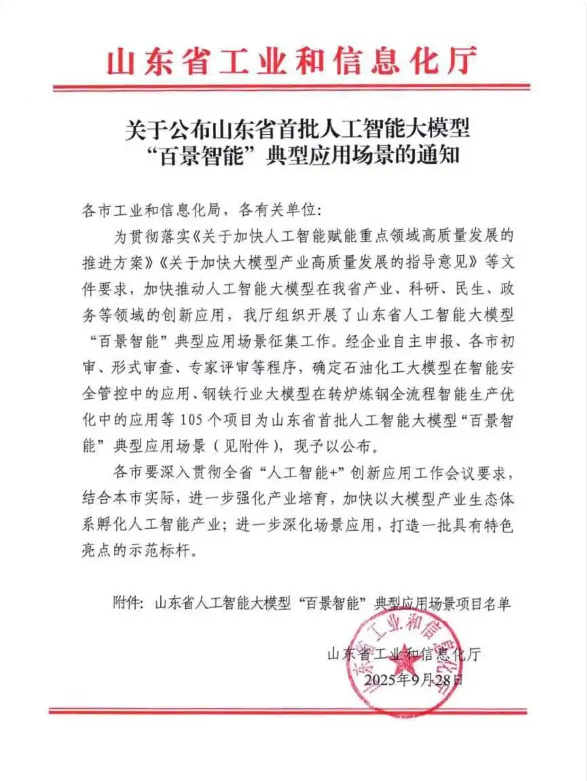
人工智能+文旅领域唯一!齐鲁文化大模型入选山东省首批人工智能大模型典型应用场景
Qi Lu Wan Bao Wang· 2025-10-12 11:04
Core Insights - The first batch of typical applications for the "Bai Jing Intelligent" AI large model has been announced in Shandong Province, with the "Qilu Cultural Large Model" being the only entry in the "AI + Cultural Tourism" sector [1][3] Group 1: Application and Innovation - The Shandong Provincial Department of Industry and Information Technology initiated the collection of typical application scenarios for AI large models to promote innovation in various fields, including research, government, industry, and public welfare [3] - The selected applications demonstrate strong practical and promotional value, showcasing the integration of AI large models with industry-specific advantages [3] Group 2: Qilu Cultural Large Model - The Qilu Cultural Large Model, developed by Shandong Digital Culture Group, addresses issues such as the scarcity and fragmentation of multimodal data resources, and aims to enhance cultural dissemination and interaction in the cultural tourism sector [4] - The model has a data scale exceeding 150,000 entries and aims to provide precise data supply, intelligent model evolution, low-cost scene implementation, and an open ecosystem for cultural technology integration [4] - Since its launch in November 2024, the model has received multiple certifications and recognitions, including a level 5 evaluation from the China Academy of Information and Communications Technology and 21 national technology invention patents [4][5] Group 3: Technological Development - Shandong Digital Culture Group emphasizes the role of technology in driving innovation, having developed various platforms such as "Yidian Tianyuan" for the metaverse, "Yidian Tianji" media large model, and "Yidian Tianyan" multimodal content risk control platform [5] - The company is focused on creating a replicable technical system and industry empowerment model to support the national strategy of deep integration of AI with various industries [4][5]