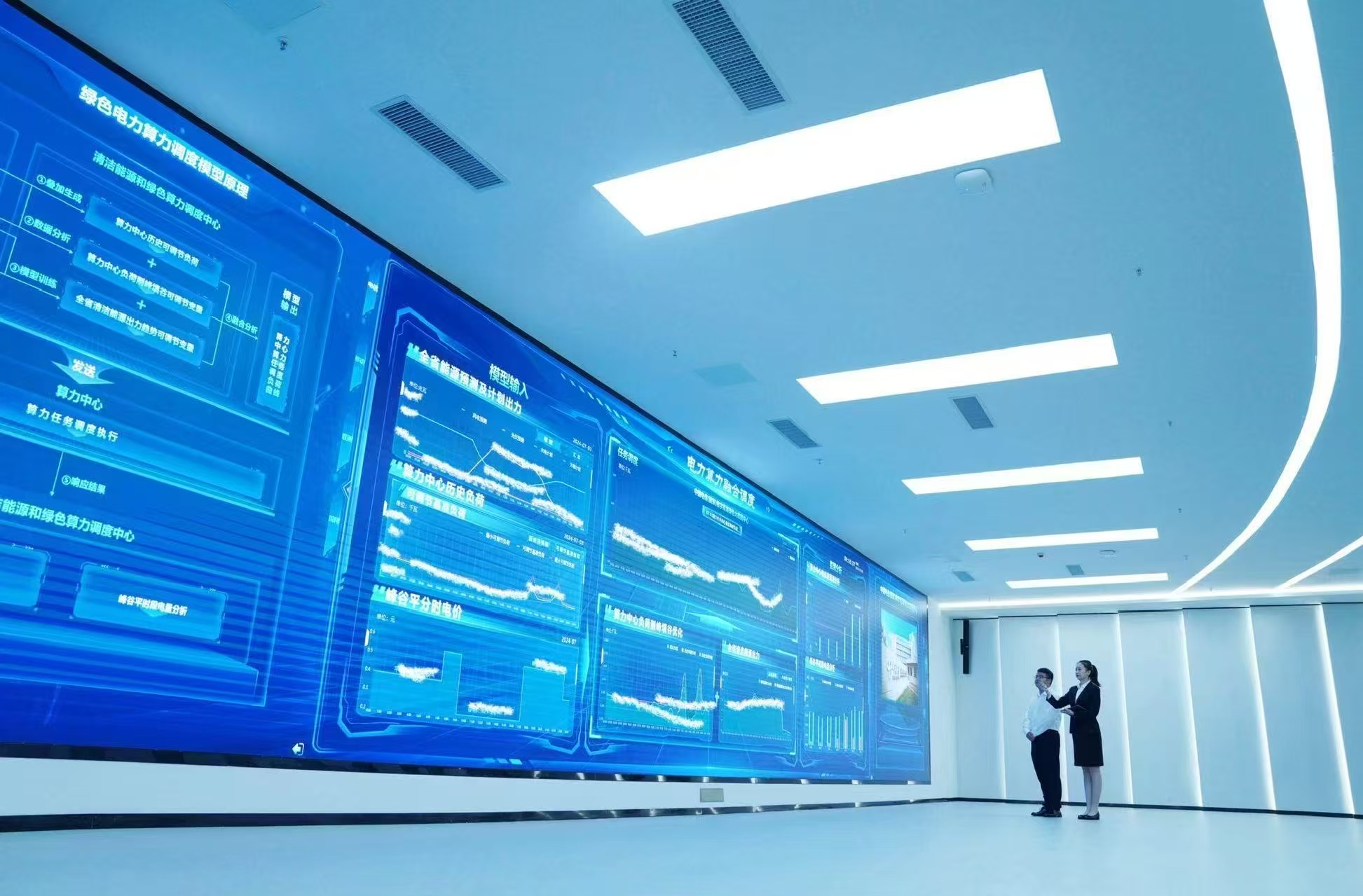
清洁能源和绿色算力调度中心

Search documents
各地真抓实干 加快推动高质量发展
Yang Shi Wang· 2026-02-26 06:01
Group 1 - The article emphasizes the acceleration of high-quality development across various regions, establishing a solid foundation for the "14th Five-Year Plan" [2] - Major engineering projects are actively underway, including the construction of the Wenfu High-Speed Railway and the installation phase of the nuclear island for the No. 1 unit at the Liaoning Xudabao Nuclear Power Project, with a target of achieving a 3% growth in fixed asset investment in 2026 [2] - There is a strong push for the deep integration of technological and industrial innovation, with Hubei aiming to achieve over 30 significant technological breakthroughs and initiate 10 key projects in advanced AI chips and synthetic biology [2] Group 2 - The establishment of China's first clean energy and green computing scheduling center in Xining marks a significant step in collaborative computing power, with plans to enhance infrastructure for data storage and model training [3] - Tianjin is set to accelerate the construction of 300 landmark projects, including the Intelligent Connected Vehicle Research Base, and introduce 100 benchmark scenarios for "AI + manufacturing" [3] - Guangdong aims to create a high-end industrial cluster through innovative mechanisms and technological empowerment, fostering a modern industrial system with greater international competitiveness [3]

青海省数据要素流通服务创新中心揭牌
Zhong Guo Xin Wen Wang· 2025-09-21 15:14
Core Viewpoint - The establishment of the Qinghai Data Element Circulation Service Innovation Center aims to provide comprehensive support for data element circulation and trading, fostering a collaborative innovation ecosystem involving government, industry, academia, research, and application [1][2] Group 1: Infrastructure and Capacity - Qinghai Province has a unique geographical advantage, with total installed power capacity exceeding 71 million kilowatts, where clean energy and renewable energy account for 94.6% and 70% respectively [1] - The province has established China's first clean energy and green computing scheduling center, integrating resources from major telecom operators and local computing centers, with green electricity usage around 95% [1] - Qinghai has built approximately 190,000 standard racks, with over 95% utilization, and a computing power scale exceeding 17,000 PFLOPS, forming a comprehensive computing supply system [1] Group 2: Policy and Standards - The province has developed local standards for green computing and established China's first 100% clean energy traceable green data center and a market-oriented shared energy storage trading platform [1] - Qinghai aims to promote deep cooperation with countries and regions along the Silk Road Economic Belt in areas such as smart logistics, digital trade, and cross-border data applications [2]
电算协同赋能青海高质量发展
Zhong Guo Jing Ji Wang· 2025-07-22 06:59
Core Insights - The establishment of the first clean energy and green computing scheduling center in Xining, Qinghai Province, aims to integrate power and computing resources for enhanced efficiency and monitoring [1][3] - Qinghai Province has made significant strides in clean energy development, with total installed power capacity exceeding 71 million kilowatts and a clean energy share of 94.6% [3] - The scheduling center provides various services including power grid safety monitoring, clean energy monitoring, and green computing resource management [3][5] Group 1 - The scheduling center is operated by Qinghai Green Energy Data Co., Ltd., and is built on an existing big data center platform [1] - The center has already provided services to 290 enterprise users, enabling centralized monitoring of 558 clean energy power stations and power forecasting for 175 renewable energy stations [5] - The center has developed a green electricity traceability model, supporting an annual average of over 90% green electricity application ratio in provincial computing centers [6] Group 2 - The center has connected data from three major telecom operators and Qinghai University’s supercomputing center, with a total of 7,650 racks and 17,851 servers, achieving a total computing power of 15,521 PetaFLOPS [6] - The integration of clean energy and computing industries is expected to further enhance collaborative development [3] - The centralized monitoring system has significantly reduced labor costs for companies operating multiple dispersed power stations [5]