湘办通

Search documents
解锁基层“数治密码” “指尖上”的政务服务更便民更利民
Yang Shi Wang· 2026-02-26 09:29
Core Insights - The article discusses the implementation of digital platforms in local governance in Hunan and Gansu provinces, aimed at reducing the administrative burden on grassroots officials and enhancing their ability to serve the public [1][3][5]. Group 1: Hunan's "Xiangban Tong" Platform - The "Xiangban Tong" online platform was launched in September last year, designed to streamline government operations by allowing public officials to apply online, make payments, and verify identities through a QR code system [1][3]. - Since the implementation of "zero reception" for public officials, the reception expenses in Chenzhou City have decreased significantly, with a projected 81.2% reduction by 2025 [1]. - The platform has improved the efficiency of document processing in the tax system, reducing the time from "hour-level" to "minute-level" and significantly cutting down on paper usage and associated costs [3]. Group 2: Gansu's "Minqing Map · Xiao Lan Good Governance" Platform - The "Minqing Map · Xiao Lan Good Governance" platform was developed to enhance service delivery and reduce the workload of community workers in Lanzhou, integrating multiple data resources for better efficiency [5][6]. - The platform allows for streamlined data collection and reporting, reducing the daily data entry time for community workers from over 2 hours to under 40 minutes, benefiting more than 15,000 grassroots officials [8]. - The initiative aims to improve the efficiency of service delivery and conflict resolution in communities, providing better support for grassroots workers [8].

从公务餐桌到社区网格 “智慧治理”为基层增能减负
Yang Shi Xin Wen· 2026-02-26 06:06
Core Viewpoint - The implementation of digital platforms like "Xiangban Tong" in Hunan and "Minqing Map·Xiao Lan Good Governance" in Gansu is significantly reducing the administrative burden on grassroots officials, allowing them to focus more on serving the public and enhancing local governance [1][12]. Group 1: Hunan's "Xiangban Tong" Platform - "Xiangban Tong" was launched in September last year, designed to streamline government operations by allowing public officials to apply online and make payments digitally [3]. - Since the implementation of "zero reception" for public officials, reception expenses in the city of Chenzhou have decreased by 81.2% year-on-year by 2025 [5]. - The platform has improved the efficiency of document flow in the tax system from "hour-level" to "minute-level," significantly reducing paper usage and associated costs [7][9]. - The platform covers over 16,000 units across four administrative levels, reducing redundant office applications and freeing up time for grassroots officials to focus on public service [11]. Group 2: Gansu's "Minqing Map·Xiao Lan Good Governance" Platform - The "Minqing Map·Xiao Lan Good Governance" platform was developed to integrate multiple data resources, allowing for efficient reporting and data sharing among various departments [19]. - The time spent by grassroots officials and grid workers on data reporting has been reduced from over 2 hours to under 40 minutes daily, benefiting more than 15,000 personnel [21]. - The platform enhances service delivery to the public and improves the efficiency of conflict resolution and issue reporting [21][23].

过紧日子 炼好作风(前沿观察)
Ren Min Ri Bao· 2025-11-18 00:31
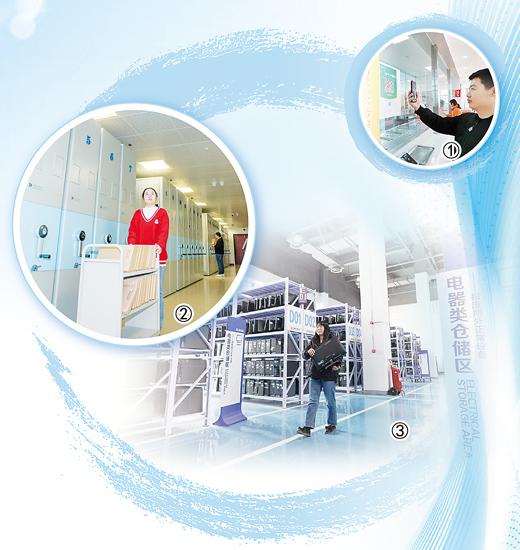
Core Insights - The article discusses the implementation of new regulations aimed at promoting frugality and reducing waste within government agencies, highlighting the positive changes observed in various regions [4]. Group 1: Public Asset Management - The "Public Goods Warehouse Online" system in Shapingba District, Chongqing, has facilitated the efficient allocation of idle assets, allowing for the transfer of 9,728 items across 91 units, resulting in a cost saving of 20.07 million yuan [7]. - A mechanism has been established to prioritize the use of existing assets before making new purchases, with strict controls on over-purchasing and redundant procurement [8]. - The system has improved transparency and accountability in asset management, helping to prevent misuse and loss of public property [7]. Group 2: Public Reception and Hospitality - The "Xiangban Tong" application in Hunan Province has streamlined the process of managing official receptions, leading to a 94.4% reduction in public reception expenditures [11]. - The system allows for real-time tracking of expenses and ensures that all costs are covered by the respective departments, eliminating the need for upfront payments by individuals [11]. Group 3: Vehicle Management - The Guangdong Province has implemented a centralized public vehicle management platform that tracks vehicle usage and maintenance, significantly reducing the risk of misuse [12]. - The province has adopted a "unified procurement and separate signing" model for purchasing new energy vehicles, resulting in a cost saving of approximately 38 million yuan across 1,336 vehicles [13]. Group 4: Space Utilization - In Changzhou, Jiangsu Province, the consolidation of archives into a centralized storage facility has freed up 2,400 square meters of office space, enhancing operational efficiency [14]. - The local government has actively sought to repurpose idle properties, transforming them into innovation hubs that generate rental income and support local startups [16].