
潮新闻

Search documents
中国主流媒体系统性变革的演进轨迹、理论建构与实践互动
Bei Jing Ri Bao Ke Hu Duan· 2026-02-11 05:39
Core Viewpoint - The mainstream media in China is undergoing a systematic transformation driven by the challenges posed by the internet and new technologies, leading to user loss, revenue decline, and a decrease in trust. The government is promoting this transformation strategically, moving from partial explorations to a comprehensive ecological integration approach [1][2]. Group 1: Historical Trajectory of Media Integration - The transformation of mainstream media has evolved from a passive response to the internet to a user-centered, technology-driven, and ecologically focused deep restructuring phase [2]. - The initial phase of media integration was characterized by a "small integration" approach, where the internet was seen merely as a tool for extending existing business [6][7]. - The "medium integration" phase involved a deeper understanding of integration, where media began to reconstruct internal operations and management processes [8][9]. Group 2: Driving Forces and Challenges - The crisis of traditional media was triggered by the rise of the internet, which diluted the advantages of administrative resources and led to a significant decline in audience size and advertising revenue [3][4]. - The number of published newspapers in China dropped from 48.23 billion copies in 2012 to 24.99 billion copies in 2024, indicating a drastic decline in traditional media consumption [4]. - The advertising revenue for traditional broadcasting and television fell from 109.92 billion yuan in 2018 to 58.37 billion yuan in 2023, highlighting the financial challenges faced by mainstream media [5]. Group 3: Systematic Transformation and Theoretical Framework - The systematic transformation of mainstream media is not just a technical upgrade but involves a comprehensive reshaping of development concepts, organizational logic, and institutional arrangements [10]. - The "big integration" theory emphasizes the need for media organizations to transcend traditional boundaries and engage in cross-sector integration to create a new hub that serves the digital economy [12][14]. - The "big integration" approach aims to leverage institutional advantages and actively participate in the modernization of governance systems, focusing on building autonomous and controllable internet platforms [14]. Group 4: Progress and Innovations in Media Transformation - A modernized communication system has begun to take shape, characterized by a technology-driven, matrix-linked, and innovative discourse system [26]. - The establishment of a comprehensive media matrix that integrates various forms of media has been achieved, enhancing the effectiveness of communication [27]. - The "news+" model has emerged as a fundamental approach for mainstream media, integrating news dissemination with public services and business resources [38]. Group 5: Existing Challenges in Systematic Transformation - Despite progress, mainstream media still faces challenges in creating autonomous and controllable platform ecosystems, with user engagement and self-sustaining revenue models needing improvement [44]. - Structural issues persist, affecting resource allocation efficiency and overall competitiveness within the media system [46].
浙报集团社长、党委书记姜军:推出“十大计划”深化系统性变革
Xin Lang Cai Jing· 2026-01-29 00:08
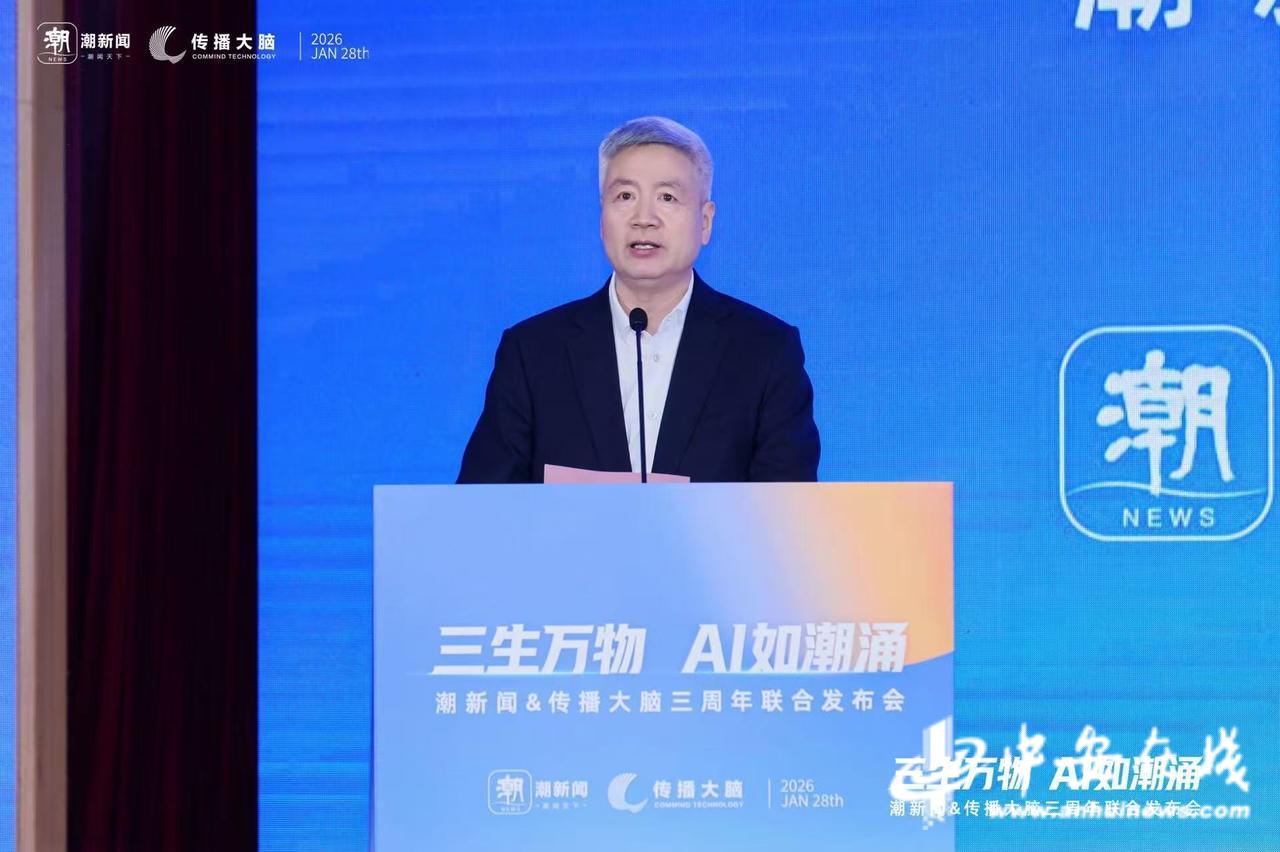
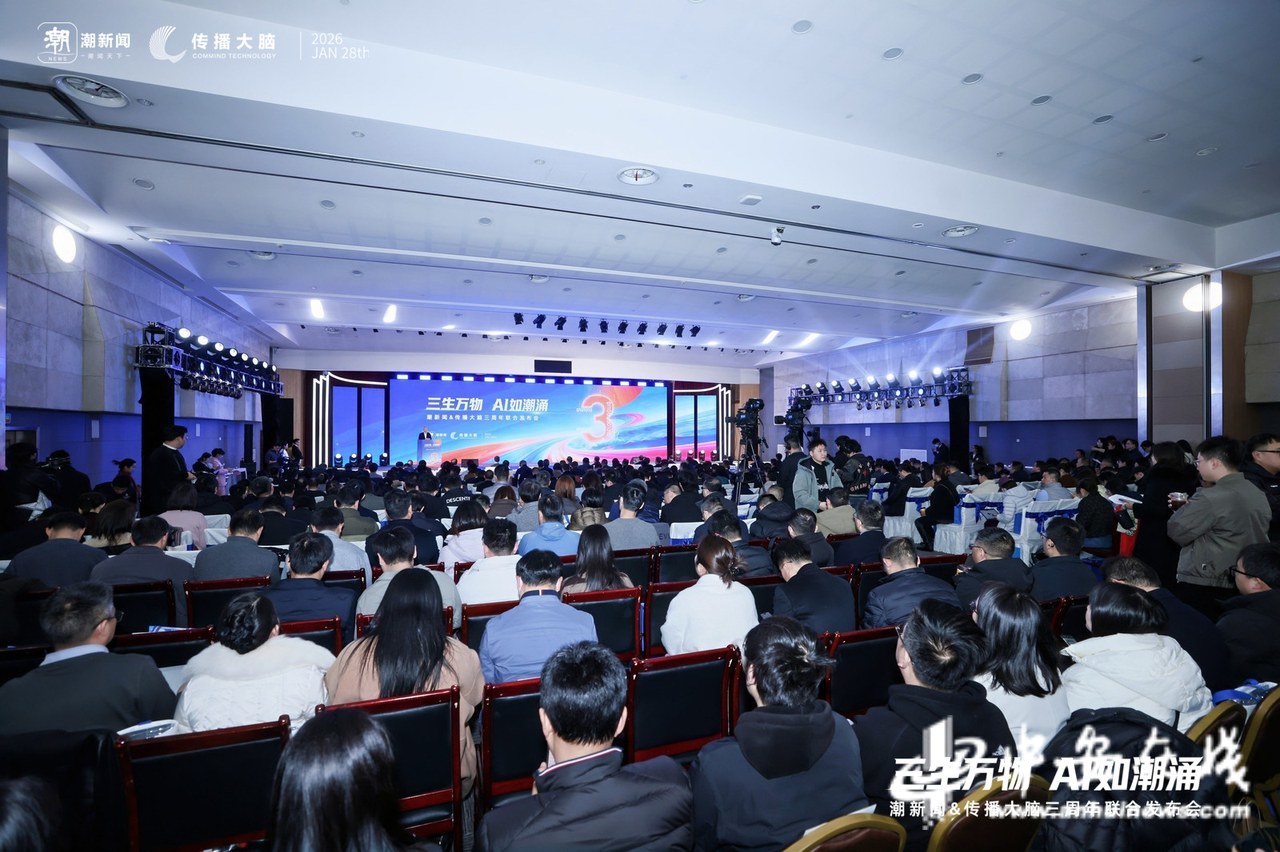
Core Insights - The event "Three Lives, All Things: AI Surges" marks the third anniversary of the Tide News and Communication Brain, highlighting the achievements and future plans of the Zhejiang Daily Group in media transformation [1] Group 1: Organizational Changes - Zhejiang Daily Group has utilized challenges as motivation and innovation as a key to reform, achieving significant transformations through the "Seven New Array" strategy [3] - The group has introduced the "Ten Major Plans" to address the challenges faced by mainstream media during the 14th Five-Year Plan period [3] Group 2: Platform Transformation - The "Aggregation Plan" and "Autumn Harvest Plan" aim to enhance Tide News's capabilities in aggregating content, users, and resources, exploring sustainable development through "traffic + influence" [3] Group 3: Content Transformation - The "Seedling Plan" and "Tide Review Plan" focus on engaging with youth and leveraging commentary and opinion to guide public discourse [3] Group 4: Technological Transformation - The "Web Connection Plan" and "Intelligent Control Plan" are designed to maximize the data, communication, and commercial value of the network, enhancing news production and dissemination capabilities through a "communication big model" [4] Group 5: Industrial Transformation - The "Wall Breaking Plan" and "Strong Chain Plan" aim to create chain master businesses with revenue capabilities in the tens of millions, reshaping the value creation system of the group [5] Group 6: Organizational Development - The "Starlight Plan" and "Elite Plan" focus on developing influential personal brands for journalists and editors, cultivating a new type of party newspaper team that adapts to industry innovations [5]

潮新闻与传播大脑发布“178”方案 打造主流媒体系统性变革的“浙江样本”
Xin Lang Cai Jing· 2026-01-29 00:08
Core Insights - The event marked the third anniversary of Chao News and the Communication Brain, highlighting their evolution from a "platform" to an "ecosystem" in media integration [1][4] - The "178" plan and new AI products "Wanmei" and "NewsPower" were launched, aiming to enhance AI applications and resource integration in mainstream media [1][11] Group 1: Evolution and Achievements - Chao News has transformed into a major news dissemination platform, achieving over 65 million app installations and 145 million users, ranking high among provincial mainstream media [5] - The integration of various media platforms under Chao News has created a comprehensive production and dissemination system, enhancing content aggregation and technological integration [4][10] Group 2: Strategic Directions - The company has identified eight strategic directions for future development, including AI-driven platform intelligence, enhanced user socialization, and expansion into the cultural technology sector [9][12] - The launch of new products like "Wanmei" and "NewsPower" aims to address systemic changes in media management and provide advanced AI capabilities for media professionals [11] Group 3: Innovation and Future Outlook - Continuous innovation is emphasized as a key to navigating challenges such as technological iteration and competitive pressures in the media landscape [9][12] - The focus is on deepening systemic changes in mainstream media while also broadening the scope into cultural technology, indicating a commitment to sustainable growth [12]

推动实现传播思维转变、传播阵地转移、传播功能拓展 加快推进主流媒体系统性变革(专题深思)
Ren Min Ri Bao· 2026-01-25 22:51
Core Viewpoint - The article emphasizes the need for a systematic transformation of mainstream media in China, focusing on enhancing its communication capabilities, guiding power, influence, and credibility to support the modernization of China [1] Group 1: Transformation of Communication Thinking - The shift from "supply-oriented" to "effect-oriented" communication thinking is essential for mainstream media to meet growing user demands and effectively implement the recommendations from the 20th Central Committee [2] - Utilizing big data to analyze user profiles will help in content production, allowing for precise planning and targeted dissemination to improve content-user matching [2] - A new evaluation system is necessary for the all-media era, focusing on the effectiveness of communication rather than traditional metrics like publication volume and viewership [2] Group 2: Shift in Communication Platforms - The transition from "traditional main stage" to "internet main battlefield" requires mainstream media to adapt resources and focus towards the internet, especially mobile platforms [3] - An integrated production and communication mechanism must be established to align with internet communication characteristics, addressing the mismatch of traditional processes [3] - Mainstream media should develop independent new media platforms to gain control over user data and reduce reliance on commercial platforms, thereby enhancing their influence [3] Group 3: Expansion of Communication Functions - Mainstream media should evolve from being a mere information provider to a comprehensive service platform that connects the government and the public [4] - Strengthening local news service capabilities is crucial, as many mainstream media outlets currently focus on trending topics at the expense of local news [4] - The construction of comprehensive service platforms should include not only news but also embedded services related to people's livelihoods, government affairs, and smart city operations [4]
深化主流媒体系统性变革 提高舆论引导能力
Ren Min Ri Bao· 2025-11-25 22:42
Group 1 - The core viewpoint emphasizes the necessity for mainstream media to undergo systematic transformation to enhance core competitiveness and sustainable operational capabilities [4][6][8] - Shanghai Media Group has initiated significant reforms, including shutting down five apps and restructuring two newspapers to align with internet dynamics, showcasing a shift towards an integrated media model [4][5] - The integration of technology and culture is highlighted as a key feature of media transformation, with a focus on developing autonomous capabilities in data, algorithms, and virtual reality [4][5] Group 2 - The importance of human capital in media transformation is stressed, with initiatives like the "Three Integration" projects aimed at empowering over 250 specialized studios [5][6] - The need for mainstream media to adapt to changes in communication structures and leverage market mechanisms is discussed, including the establishment of a diverse media market system [6][7] - The call for a new media ecosystem that integrates social systems and media systems is made, emphasizing the need for a comprehensive approach to media reform [8][9] Group 3 - The focus on enhancing the public relations and brand image of major corporations, such as China Nuclear Industry Group, through innovative communication strategies and media collaborations is noted [11][12] - The establishment of a comprehensive cultural communication platform by China Petroleum is highlighted, aiming for integrated operations across domestic and international media [13][14] - The restructuring of local media organizations, like Qingdao Daily, to create new advantages through technology and social governance integration is emphasized [14][15] Group 4 - The integration of local resources and the enhancement of media influence in Wuhan are discussed, with a focus on building a strong local media presence and collaborative efforts [16][17] - The Zhejiang Daily Group's strategy to consolidate mobile platforms and enhance user engagement through innovative content and technology is outlined [18][19] - The establishment of a "smart media" ecosystem through technological advancements and user interaction improvements is emphasized as a future direction for media organizations [19][20]
