
火箭网系回收海上平台‘领航者’

Search documents
可复用火箭技术关键突破!长征十号运载火箭一级箭体受控溅落 专家:网系回收更加稳定
Mei Ri Jing Ji Xin Wen· 2026-02-11 17:24
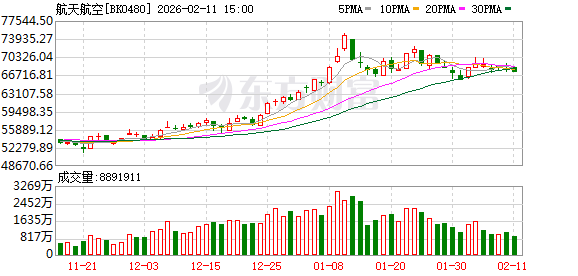
"神舟"之后,"梦舟"蓄势待发。 2月11日,我国在文昌航天发射场成功组织实施长征十号运载火箭系统低空演示验证与梦舟载人飞船系 统最大动压逃逸飞行试验,标志着我国载人月球探测工程研制工作取得重要阶段性突破。 《每日经济新闻》记者(以下简称"每经记者")了解到,此次试验具有新型号火箭、新型号飞船、新发 射工位,以及火箭、飞船海上回收新任务等诸多亮点,参加试验的火箭和飞船均为初样状态。 闯过"最危险时刻":梦舟飞船最大动压逃逸试验成功 据中国载人航天工程办公室介绍,"梦舟"为我国自主研制的新一代可重复使用载人飞船,在神舟飞船基 础上全面升级研制,采用模块化设计,由返回舱和服务舱组成,未来用于近地空间站运营和载人月球探 测任务,登月版型号为"梦舟Y"。 此次开展的最大动压逃逸试验是梦舟载人飞船研制中一次重要"大考"。 资本市场反应迅速。2月11日,航海装备与火箭回收板块表现较为活跃,中国海防(600764.SH)、海兰 信(300065.SZ)、同益中(688722.SH)等个股收涨。 雨广表示,海上网系回收在本质上仍属于垂直降落回收,但与商业航天惯常使用的"着陆腿"式降落回收 不同,网系回收的核心差异在于系统的稳 ...

可复用火箭技术关键突破!长征十号运载火箭一级箭体受控溅落,剑指“网系回收”,专家:网系回收更加稳定
Mei Ri Jing Ji Xin Wen· 2026-02-11 13:09
Group 1 - The successful test of the "Dream Boat" manned spacecraft marks a significant breakthrough in China's manned lunar exploration program, following the "Shenzhou" missions [1][2] - The "Dream Boat" is a new generation reusable manned spacecraft developed independently by China, featuring a modular design and intended for near-Earth space station operations and lunar exploration missions [2][3] - The maximum dynamic pressure escape test is a critical evaluation in the development of the "Dream Boat," highlighting the high risks associated with the launch and return phases of manned space missions [2][3] Group 2 - The Long March 10 rocket, which successfully completed the test, is a new generation manned launch vehicle designed to support the "Dream Boat Y" lunar landing missions [3] - The test included a controlled splashdown of the rocket's first stage in the ocean, marking a significant advancement in reusable rocket technology [4][7] - The market reacted positively to the news, with stocks in marine equipment and rocket recovery sectors showing notable increases [7] Group 3 - The net recovery technology for rockets, which differs from traditional landing leg recovery methods, aims to enhance stability and efficiency in rocket recovery operations [7][8] - The first Chinese rocket net recovery sea platform, named "Navigator," is set to be delivered by November 30, 2025, contributing to a reliable and precise rocket recovery system [8]

新火箭、新飞船、海上回收梦舟闯过发射阶段“最危险时刻”,我国载人登月新突破
Mei Ri Jing Ji Xin Wen· 2026-02-11 09:33
"神舟"之后,"梦舟"蓄势待发。 2月11日,我国在文昌航天发射场成功组织实施长征十号运载火箭系统低空演示验证与梦舟载人飞船系 统最大动压逃逸飞行试验,标志着我国载人月球探测工程研制工作取得重要阶段性突破。 梦舟飞船的逃逸系统需要通过一系列严格的试验来验证其可靠性。雨广表示,无论是之前的零高度逃逸 试验,还是这次的最大动压逃逸试验,都属此类必不可少的"考验"。此次梦舟飞船最大动压逃逸飞行试 验圆满成功,为未来执行载人任务以及支撑载人登月工程迈出重要一步。 承担本次任务的是长征十号系列火箭一子级。据中国载人航天工程办公室介绍,长征十号是我国自主研 制的新一代载人运载火箭,将在载人登月任务中承担梦舟Y载人飞船和揽月月面着陆器发射任务。其 中,长征十号甲是基于长征十号衍生出的一子级可重复使用运载火箭,主要用于近地轨道飞行任务。 海上回收技术获突破:火箭一子级受控溅落,剑指"网系回收" 《每日经济新闻》记者(以下简称"每经记者")了解到,此次试验具有新型号火箭、新型号飞船、新发 射工位,以及火箭、飞船海上回收新任务等诸多亮点,参加试验的火箭和飞船均为初样状态。 闯过"最危险时刻":梦舟飞船最大动压逃逸试验成功 据中国 ...
A股震荡盘整 冰雪经济概念表现活跃
Shang Hai Zheng Quan Bao· 2025-12-02 18:09
Group 1 - The A-share market is experiencing a weak consolidation, with major indices declining, including the Shanghai Composite Index down 0.42% to 3897.71 points, Shenzhen Component Index down 0.68% to 13056.70 points, and ChiNext Index down 0.69% to 3071.15 points, with total trading volume decreasing by 280.5 billion yuan to 1.5934 trillion yuan [2] - The ice and snow economy concept is gaining traction, with stocks like Iceberg Cold and Snowman Group seeing significant increases, driven by a new initiative in Jilin Province that designates December 3-7, 2025, as "Ice and Snow Holiday" for students, promoting ice and snow sports [2] - According to a report by Tongcheng Travel, there has been a rapid increase in flight bookings to popular ice and snow destinations since November, indicating a growing interest in ice and snow tourism, with ski resorts and themed parks expected to be major attractions [3] Group 2 - The commercial aerospace sector is witnessing a surge, with stocks like Tongyu Communication and Shunhao Co. experiencing consecutive gains, following the successful delivery of China's first rocket recovery platform, "Navigator," which enhances the country's capabilities in reusable rocket technology [4] - The National Space Administration has issued a plan for the high-quality development of the commercial aerospace industry from 2025 to 2027, aiming for significant growth and improved safety and innovation within the sector [5] - There is optimism for a year-end market rally in A-shares, supported by favorable conditions such as a vacuum in the fundamental market, rising policy expectations, and historical trends indicating upward movements during this period [6]

我国首个海上火箭回收平台交付 什么是“网系回收”?
Ke Ji Ri Bao· 2025-12-02 06:00
Core Viewpoint - The successful delivery of China's first offshore rocket recovery platform "Navigator" marks a significant advancement in the development of a stable, reliable, and precise rocket recovery system at sea [1] Group 1: What is Network Recovery? - Network recovery is a unique method of vertical landing recovery, which involves deploying a network of cables at high altitudes to capture the rocket as it descends [2] - This method differs from traditional recovery techniques, such as parachute recovery and vertical landing, by utilizing a hook on the rocket that latches onto a grid-like structure [2] Group 2: Advantages of Network Recovery - Network recovery enhances the success rate of capturing and buffering during the recovery process through high coordination between the recovery system and the rocket's recovery device [3] - It is more forgiving on landing parameters, as the ground buffering system absorbs most of the rocket's kinetic and potential energy, reducing design requirements for the rocket's buffering structures [3] - The system simplifies the rocket's structure, improving efficiency and effectiveness, and can be adapted for different sizes of rockets [3] Group 3: Technical Challenges of "Navigator" - "Navigator" is the first offshore rocket recovery platform certified by a classification society, measuring 144 meters in length and 50 meters in width, with a displacement of 25,000 tons [4] - The platform requires high precision in positioning to coordinate with the rocket's landing, necessitating advanced design considerations for stability and load distribution [4] - The design must account for various sea conditions and the unique structural challenges posed by the network recovery system, which has a high center of gravity and significant weight [4]
