燃煤发电机组

Search documents
以青春之力破238米高塔建设难题
Zhong Guo Qing Nian Bao· 2026-02-10 07:23
Core Viewpoint - The Huainan Pingwei Power Plant Phase IV, a 2×1000 MW ultra-supercritical coal-fired power project, has officially commenced commercial operation after a successful 168-hour full-load trial run, showcasing the commitment to quality and safety through the establishment of youth technical teams [1][7]. Group 1: Project Overview - The project is located in Huainan City, Anhui Province, known as the "hometown of tofu and energy capital," and is the largest pithead power station in East China [1]. - The Phase IV project includes the construction of two 1000 MW ultra-supercritical reheat coal-fired generating units, along with efficient denitrification, desulfurization, and dust removal facilities [1]. Group 2: Technical Innovations - The project features the world's tallest and largest all-concrete cooling tower, standing at 238.9 meters high and 181.7 meters in diameter, with a water surface area of 21,200 square meters [2]. - The cooling tower employs a three-vertical-shaft water distribution system, allowing flexible operation based on the number of running units, load, and temperature conditions, which helps reduce outlet water temperature and unit operating back pressure [5]. Group 3: Youth Involvement and Efficiency - A youth task force, with an average age of 28, has been established to tackle key challenges in the project, focusing on precision control and high-altitude operations [1][2]. - The team has integrated 31 smart construction modules and deeply applied BIM (Building Information Modeling) technology across 14 scenarios, enhancing construction visualization and traceability, thereby improving work efficiency [5][7]. - The youth team comprises 92% members under 30 years old, who view challenging tasks as opportunities for growth and practical experience [7]. Group 4: Economic Impact - Upon completion, the project will have a total installed capacity of 6.54 million kW, making it the largest power plant in Anhui Province, with an annual electricity generation exceeding 33 billion kWh, sufficient to meet the annual electricity needs of 12 million households [7].


5×1000MW燃煤发电机组,投产!
Xin Lang Cai Jing· 2026-01-04 01:19
Group 1 - The completion of the second phase of the Beihai project includes two 1,000 MW ultra-supercritical once-through coal-fired power generation units, which have all been put into operation [1][4] - The second phase of the Qingyuan project features two 1,000 MW ultra-supercritical reheat coal-fired power generation units, with the third unit recently entering commercial operation [2][5] - The Qingyuan project is part of Guangdong's "14th Five-Year Plan" for energy security, utilizing efficient clean coal technology with a designed coal consumption of 262.23 grams per kilowatt-hour [2][5] Group 2 - The Dapu Power Plant's second phase project consists of two 1,000 MW ultra-supercritical reheat coal-fired power generation units, with a total investment of 8.122 billion yuan and an expected annual power generation of 9 billion kilowatt-hours [3][7] - The Dapu project aims to provide stable and sufficient electricity supply for Guangdong Province, supporting regional economic transformation and enhancing the company's market competitiveness [3][7] - The completion of these projects is expected to alleviate energy supply pressure in their respective regions and contribute to energy security in the Guangdong-Hong Kong-Macao Greater Bay Area [2][3][5]


广西装机容量最大火电厂诞生 1天可发电9600万千瓦时
Zhong Guo Xin Wen Wang· 2025-12-28 13:24
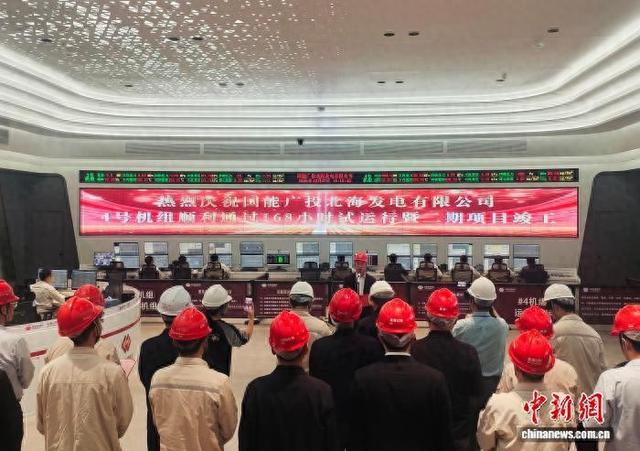
Core Insights - The Guangxi Beihai Power Plant, operated by Guoneng Guangtou Beihai Power Co., has successfully completed a 168-hour trial run of its 4th coal-fired power generation unit, marking the establishment of the largest thermal power plant in Guangxi [1][3]. Group 1: Plant Specifications and Capacity - The plant is designed to include eight 1 million kilowatt ultra-supercritical coal-fired units, four 100,000-ton berths, and an annual coal storage and transportation capacity of 30 million tons [2]. - The 4th unit has a capacity of 1 million kilowatts and a coal consumption rate of 266.86 grams per kilowatt-hour, which is among the best in the country [2]. - The plant can generate 96 million kilowatt-hours of electricity per day at full load, which can support approximately 2.63 times the electricity demand of Beihai or about 1/7 of the total electricity consumption in Guangxi for 2024 [5]. Group 2: Environmental and Technological Features - The plant employs advanced technologies such as high-efficiency seawater desulfurization, low-nitrogen burners, and low-temperature electrostatic precipitators, ensuring that all pollutant emissions are significantly below the standards for coal-fired power plants [7]. - As the only plant in Guangxi utilizing seawater desulfurization, it eliminates solid waste by using natural seawater as an absorbent, thus avoiding limestone mining and gypsum desulfurization processes [7]. - The plant's 4th unit is expected to achieve an annual power generation capacity exceeding 20 billion kilowatt-hours, contributing to a comprehensive energy base that integrates coal transportation, storage, and power generation [7].
中国神华(01088):北海二期4号机组通过168小时试运行
智通财经网· 2025-12-28 12:39
Core Viewpoint - China Shenhua (01088) announced the successful completion of the 4th unit of the Beihai Phase II expansion project, which has now entered commercial operation after a 168-hour trial run [1] Group 1: Project Details - The Beihai Phase II project consists of two 1 million kilowatt ultra-supercritical once-through coal-fired generating units, both of which are now operational [1] - The trial operation period showed stable performance of the units, with environmental indicators being excellent [1] Group 2: Environmental Standards - Emission concentrations of smoke, sulfur dioxide, and nitrogen oxides are significantly below ultra-low emission standards, reaching levels comparable to gas-fired power generation units [1] Group 3: Regional Impact - With the commissioning of Beihai Phase II, Beihai Power has become the largest supportive and adjustable power source in the region, providing strong support for the safety and stability of the regional power grid and the construction of a new power system [1]
294项“两新”相关国家标准全部完成批准发布 标准提升激发更大消费活力
Jing Ji Ri Bao· 2025-12-27 02:34
Core Insights - The article discusses the implementation of national standards to support high-quality development in various sectors, particularly focusing on equipment updates and the replacement of consumer goods [1][2]. Group 1: National Standards and Their Impact - The "Two New" initiative targets the automotive, home appliance, and emerging consumer sectors, with 115 national standards being revised to enhance the quality of durable consumer goods and stimulate domestic demand [2]. - New safety standards for electric vehicle batteries now mandate that they must not catch fire or explode, which is expected to improve the safety of new energy vehicles significantly [2]. - The introduction of a new mandatory national standard for coal-fired power generation is projected to reduce average coal consumption to below 302 grams per kilowatt-hour by 2030, leading to a decrease in carbon dioxide emissions by approximately 160 million tons [3]. Group 2: Environmental and Circular Economy Standards - The "Two New" initiative also emphasizes the need for upgrading energy consumption and emission standards, with 113 national standards being revised to facilitate the elimination of outdated production capacity and enhance advanced capacity [2]. - The initiative includes the development of 66 national standards focused on green product design, second-hand product transactions, and recycling, which aim to promote resource circulation and efficient recovery of strategic resources like nickel, cobalt, and lithium [3]. Group 3: Industry Development and Future Plans - The Ministry of Industry and Information Technology has completed the revision of 44 key national standards under the "Two New" initiative, which is crucial for driving investment growth and industrial development [4]. - The focus for the upcoming year includes the revision of over 1,800 standards across traditional industries such as petrochemicals, machinery, and textiles, to support high-quality development and meet consumer demands for safety, quality, and sustainability [5].
13个重点领域294项国家标准发布
Xin Lang Cai Jing· 2025-12-26 19:59
Core Viewpoint - The release of 294 national standards across 13 key areas aims to enhance the upgrade of traction equipment and promote the recycling of consumer goods, supporting the transition to a greener economy and improved product quality [1][2][3] Group 1: Energy Consumption and Emission Standards - The 294 national standards focus on upgrading energy consumption and emission technology standards, enhancing product quality and safety standards, and increasing the supply of recycling and circular economy standards [1] - New mandatory national standards for coal-fired power generation units are expected to reduce average coal consumption to below 302 grams per kilowatt-hour by 2030, leading to a decrease in carbon dioxide emissions by approximately 160 million tons [1] Group 2: Consumer Product Standards - A total of 115 national standards have been revised in sectors such as automotive, home appliances, and emerging consumption, aimed at improving product quality and safety, thereby facilitating the entry of high-quality durable consumer goods into households [2] - Significant advancements in electric vehicle battery safety standards now include mandatory requirements for "no fire, no explosion," which will enhance the safety of new energy vehicles and boost consumer confidence [2] Group 3: Recycling and Resource Utilization Standards - The establishment of 66 national standards for the recycling, disassembly, and regeneration of waste products aims to ensure that product design considers recyclability and to streamline the recycling process [2] - New mandatory standards for electronic product information clearance have been introduced to ensure the safety and privacy of second-hand product circulation [2] Group 4: Impact on Industry and Economy - The implementation of these standards is expected to support the government's policies for stable growth and consumption, effectively driving the transformation and upgrading of the light industry [3] - From January to November, over 12.8 million home appliances were replaced under the old-for-new policy, generating sales exceeding 2.5 trillion yuan, while approximately 8.6 million units of various appliances were dismantled, yielding around 1.9 million tons of recycled resources [3]
今年前11月中国家电以旧换新超1.28亿台
Zhong Guo Xin Wen Wang· 2025-12-26 12:37
Core Insights - In the first 11 months of this year, over 128 million home appliances were replaced through China's trade-in program, generating sales exceeding 2.5 trillion yuan [1] Group 1: Policy and Standards - The National Market Regulation Administration introduced the "Action Plan for Upgrading Equipment and Trade-in of Consumer Goods" which focuses on upgrading energy consumption and emission standards, enhancing product quality and safety standards, and increasing recycling standards [1] - A total of 294 national standards across 13 key areas have been approved and published, aimed at driving equipment upgrades and releasing consumer potential [1] Group 2: Environmental Impact - The new mandatory national standard for coal-fired power generation is expected to reduce average coal consumption to below 302 grams per kilowatt-hour by 2030, leading to a decrease in carbon dioxide emissions by approximately 160 million tons [1] Group 3: Consumer Confidence and Safety - Significant breakthroughs in safety standards for electric vehicle batteries have been achieved, with "no fire, no explosion" now a mandatory requirement, enhancing the safety of new energy vehicles and boosting consumer confidence [1] Group 4: Industry Transformation - The implementation of these standards has effectively driven the light industry sector towards transformation and upgrading, with leading companies accelerating the launch of mid-to-high-end smart furniture products, creating a market size exceeding 10 billion yuan [2]
中国神华(601088.SH):九江二期4号机组通过168小时试运行
Ge Long Hui A P P· 2025-10-21 09:29
Core Viewpoint - China Shenhua Energy Co., Ltd. has successfully completed the commercial operation of its Jiujiang Phase II project, enhancing energy security in Jiangxi Province and the Central China region [1] Group 1: Project Overview - The Jiujiang Phase II project includes two 1 million kilowatt ultra-supercritical secondary reheating coal-fired power generation units [1] - The project is located in Liusi Town, Hukou County, Jiujiang City, Jiangxi Province, and is recognized as a significant project during the "14th Five-Year Plan" [1] Group 2: Operational Performance - The fourth unit of the Jiujiang Phase II project has successfully passed a 168-hour continuous full-load trial operation [1] - During the trial operation, the units demonstrated stable performance with excellent environmental indicators, achieving ultra-low emission standards for dust, sulfur dioxide, and nitrogen oxides [1] Group 3: Economic Impact - The operation of Jiujiang Phase II is expected to provide strong support for energy security in Jiangxi Province and the Central China region [1] - The project will further stimulate regional social and economic development [1]
2×100万千瓦,开工!
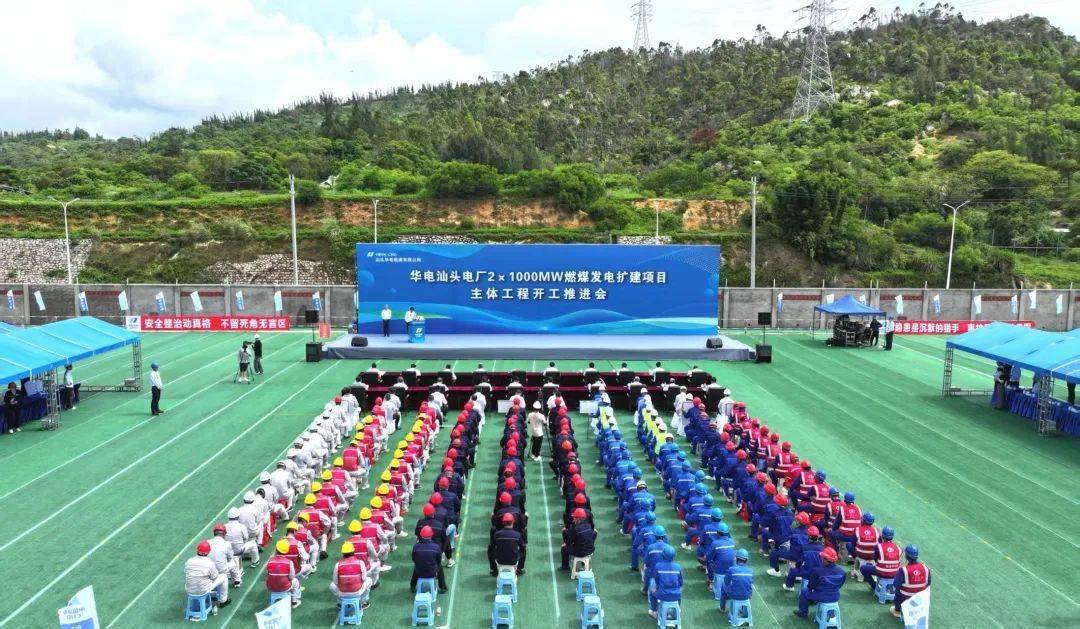
Sou Hu Cai Jing· 2025-08-21 00:36
Group 1 - The project is officially launched on August 19, with a focus on the expansion of the Huaneng Shantou Power Plant, which includes two 1 million kilowatt coal-fired power generation units [1][3] - The project is located in Haimen Town, Chaoyang District, Shantou City, Guangdong Province, and is a key construction project in the province [3] - The expansion will feature the highest main engine parameters among newly built once-reheated million-kilowatt units in China, utilizing advanced clean coal combustion and efficient dust removal, desulfurization, and denitrification technologies to achieve ultra-clean emissions and zero wastewater discharge [3] Group 2 - The project is scheduled to be fully operational by the end of 2027, and once completed, it will become a major power source for the eastern Guangdong power grid [5] - The project aims to enhance the long-term energy and electricity supply security for Guangdong Province and is expected to play a significant role in promoting investment, stabilizing growth, and ensuring power supply [5]