
牙科用毛刷

Search documents
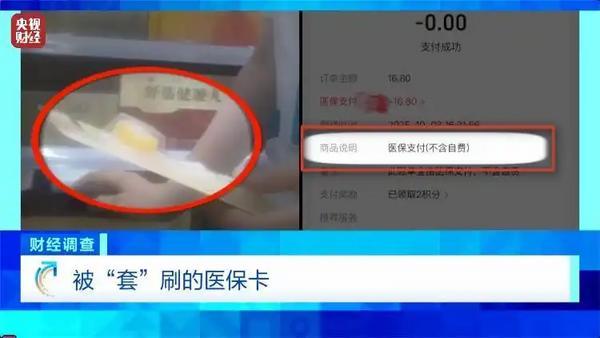
医保卡变“购物卡”?央视曝光大参林、海王星辰等“套”刷医保卡黑链条
Yang Shi Wang· 2025-11-12 07:52
Core Viewpoint - The article highlights the ongoing misuse of medical insurance cards in China, where non-medical products are being fraudulently classified as medical devices to allow consumers to purchase everyday items using their insurance funds [1][3][5]. Group 1: Misuse of Medical Insurance Cards - Various pharmacies are openly promoting the ability to use medical insurance cards for purchasing daily necessities, such as toothbrushes and skincare products, which violates regulations that restrict insurance funds to medical-related expenses [3][5]. - Investigations reveal that some products, like "dental brushes" and "medical dressings," are essentially ordinary items but are labeled as medical devices to facilitate insurance payments [7][10][14][17]. - A significant number of consumers are being encouraged to exploit these loopholes, with online platforms sharing strategies for using insurance cards to buy non-medical items [3][5]. Group 2: Pharmaceutical Companies' Role - Companies are producing everyday products under the guise of medical devices, claiming they are "cleaner and safer" to attract consumers and increase profits [24][26]. - A specific company reported a substantial contract worth 90 million yuan for supplying these products to nearly 20,000 pharmacies, indicating a lucrative market for such practices [26][28]. - The production of these items is described as legal and compliant, as they possess the necessary medical coding to qualify for insurance payments, despite their actual use being unrelated to medical care [30][28]. Group 3: Impact on the Market - In Gansu, a chain of pharmacies is prominently displaying "medical skincare products" that are registered as medical devices, allowing them to be purchased with insurance funds, despite being marketed as regular skincare items [32][34]. - The profitability of pharmacies is closely tied to the ability to process insurance claims, leading to aggressive promotion of these products [38][39]. - A specific company revealed that approximately 60% of its sales in Gansu are processed through insurance payments, amounting to an estimated 6 million yuan being drawn from consumers' insurance accounts [45].


刷医保买面膜,医保卡岂能变购物卡
Xin Jing Bao· 2025-11-11 00:17
Core Points - The article highlights the misuse of medical insurance cards for purchasing non-medical products, such as ordinary toothbrushes and face masks, which have been falsely classified as medical devices to exploit insurance benefits [1][2] - There is a growing concern regarding the deceptive practices by companies and pharmacies that mislabel everyday items as medical equipment, leading to significant financial losses for the medical insurance fund [1][2] Summary by Sections Medical Device Misclassification - Ordinary toothbrushes have been reclassified as "dental brushes," and face masks as "medical dressings" to enable insurance reimbursement [1] - This practice has been ongoing, with various products being sold under the guise of medical devices, despite their actual non-medical use [1] Regulatory Challenges - The article discusses the challenges in regulating these practices, as consumers are often misled by the medical device labeling [2] - It emphasizes the need for stricter enforcement of medical device certification and improved oversight by regulatory bodies [2] Recommendations for Improvement - To combat the misuse of medical insurance cards, the article suggests enhancing consumer education about insurance policies and encouraging active participation in monitoring [2] - It calls for a robust regulatory framework that includes immediate action against identified violations to deter further misuse [2]