牛奶木瓜

Search documents
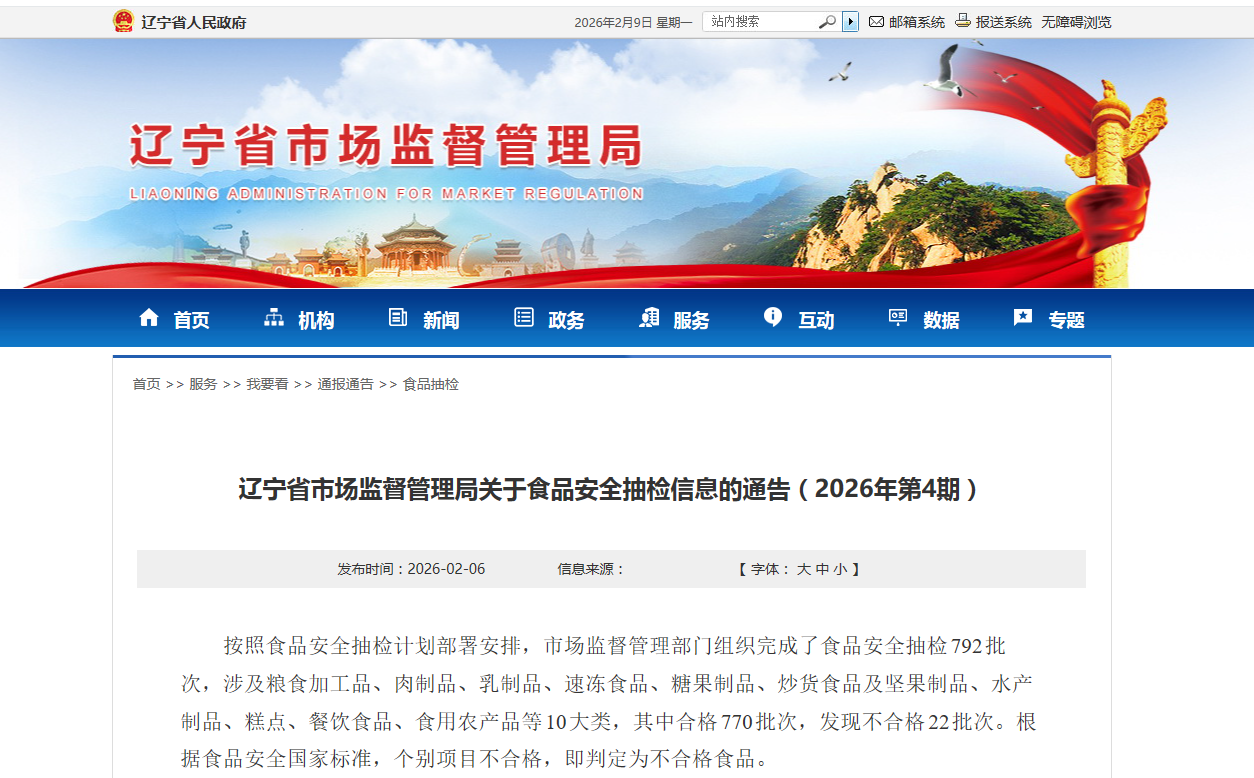
辽宁省市场监督管理局关于食品安全抽检信息的通告(2026年第4期)
Xin Lang Cai Jing· 2026-02-09 05:10
Core Insights - The food safety inspection conducted by the market supervision department involved 792 batches of food products across 10 categories, with 770 passing and 22 failing the safety standards [3] Group 1: Inspection Results - A total of 792 food samples were tested, covering categories such as grain products, meat products, dairy products, frozen foods, candy, nuts, seafood, pastries, catering foods, and agricultural products [3] - Out of the 792 batches, 770 were found to be compliant with food safety standards, while 22 batches were deemed non-compliant [3] Group 2: Non-compliance Details - The non-compliant batches included various food items, with specific issues such as the presence of coliform bacteria and pesticide residues exceeding permissible limits [4][5] - The inspection revealed specific instances of non-compliance, such as the detection of coliform bacteria in food samples and pesticide levels in excess of the allowed limits [4][5]

23批次食品安全抽检不合格
Liao Ning Ri Bao· 2026-02-08 01:04
Summary of Key Points Core Viewpoint - The recent food safety inspection conducted by market regulatory authorities in the province revealed that out of 876 batches tested, 23 batches were found to be non-compliant, highlighting ongoing concerns regarding food safety standards in the region [1]. Group 1: Food Safety Inspection Results - A total of 876 batches of food products were inspected, covering ten categories including grain products, meat products, biscuits, frozen drinks, vegetable products, pastries, and catering foods [1]. - 23 batches were identified as non-compliant, indicating a failure rate of approximately 2.6% [1]. Group 2: Non-compliance Details - Among the non-compliant items, 15 batches of catering utensils were found to be unsatisfactory, with specific restaurants using utensils that tested positive for coliform bacteria and anionic synthetic detergents [1]. - Three batches of fruits were also reported as non-compliant, with specific instances of excessive residues: fresh longan from a store in Dalian exceeded sulfur dioxide limits, pears from a store in Shenyang exceeded chlorine dioxide limits, and papayas from a store in Chaoyang exceeded thiamethoxam limits [1].
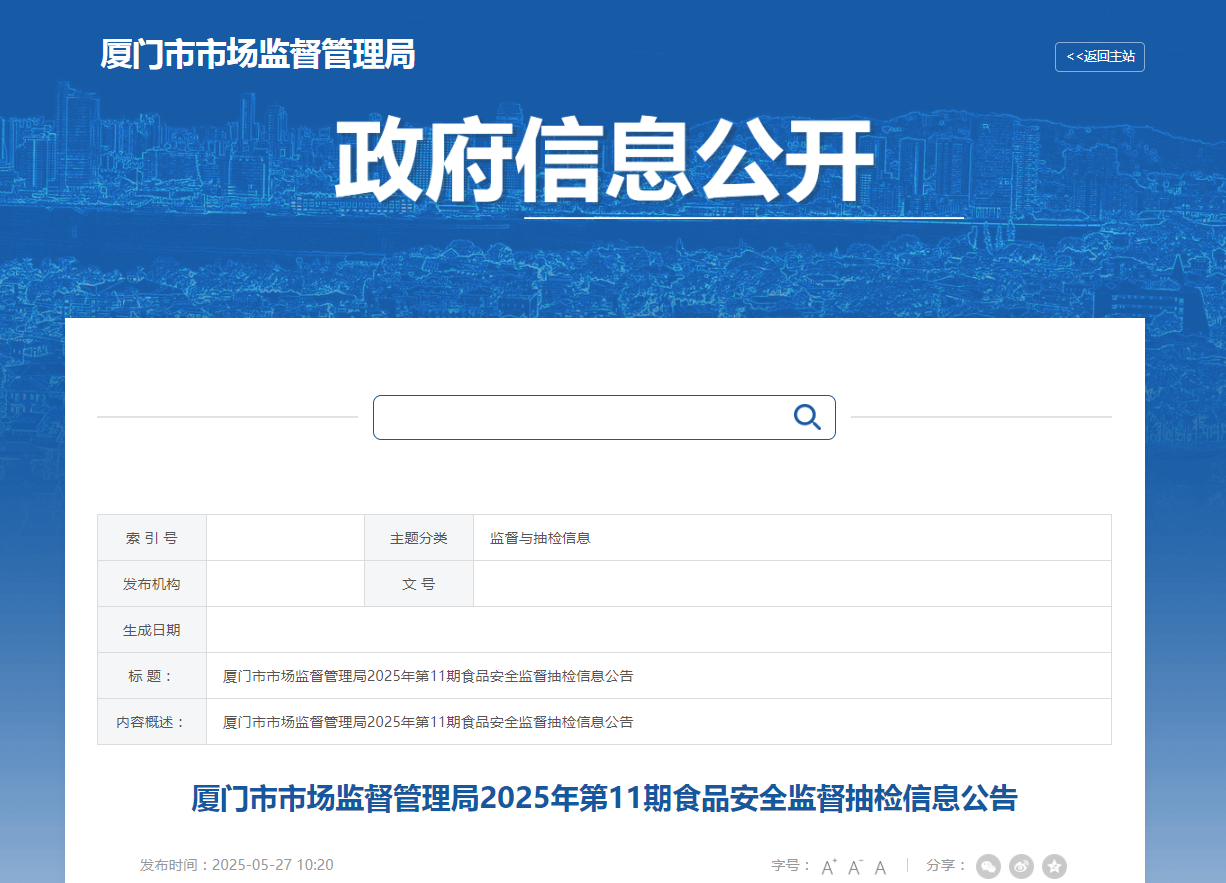
厦门市市场监督管理局2025年第11期食品安全监督抽检信息公告
Zhong Guo Zhi Liang Xin Wen Wang· 2025-05-28 06:33
Core Points - The announcement from Xiamen Market Supervision Administration details the food safety supervision and inspection results for the 11th period of 2025, covering 27 categories and 1,133 batches of food products, with 1,100 passing and 33 failing inspections [3][13]. Summary by Categories - **Inspection Results**: Out of 1,133 batches inspected, 1,100 were qualified, while 33 were found to be non-compliant [3]. - **Categories of Food Products**: The inspection covered a wide range of food products including biscuits, catering food, tea, egg products, starch, condiments, bean products, convenience foods, honey products, pastries, canned goods, frozen drinks, grain products, meat products, dairy products, food additives, sugar, edible agricultural products, edible oils, vegetable products, aquatic products, fruit products, candy, special dietary foods, beverages, and infant formula [3]. - **Specific Non-compliant Products**: - Fresh longan from a fruit store had excessive sulfur dioxide residue [3]. - Milk papaya from another store failed due to the presence of pesticide residues (thiamethoxam and acetylmethamidophos) [3]. - Water ginger from a trading company also failed for pesticide residues (thiamethoxam and thiamethoxam) [4]. - Red sugar steamed buns from a snack shop were found to contain sodium saccharin and sweeteners above acceptable limits [4]. - Green onions from a commercial management company failed due to pesticide residues (chlorfluazuron and high-efficiency chlorfluazuron) [4]. - **Follow-up Actions**: The market supervision department initiated verification and disposal actions for the non-compliant products, including storage, production suspension, and product recalls, ensuring compliance with food safety regulations [13].