牛栏山陈酿

Search documents
茅台不再“飞天”,光瓶酒不再“低端”!次高端白酒的夹缝时代来了?
Sou Hu Cai Jing· 2026-02-22 08:45
Group 1 - The core viewpoint of the article highlights the structural differentiation in the Chinese liquor market, particularly the impact of Moutai's price rationalization on the mid-range liquor segment, which is facing significant challenges [2][6][7] - Moutai's price has shifted from a speculative high to a more rational level, with the official price set at 1499 yuan and market prices stabilizing between 1699 and 1999 yuan, enhancing market efficiency [6][7] - The rationalization of Moutai's pricing has weakened its role as a price benchmark, leading to a decline in the attractiveness of mid-range products as consumers opt for either Moutai or lower-priced options [7][10] Group 2 - The mid-range liquor segment is experiencing a "double squeeze," facing upward pressure from high-end products and downward competition from low-end products, particularly the rising quality of low-end liquors like light bottle wines [8][10] - Low-end products, priced between 30 and 80 yuan, are increasingly appealing to price-sensitive consumers, further constricting the market space for mid-range liquors [10] - The mid-range segment must move beyond price competition and focus on creating unique value propositions, such as targeting specific consumer scenarios and emphasizing the uniqueness of production processes [11][13] Group 3 - To survive, mid-range liquor brands need to optimize their channel structures and avoid over-reliance on inventory pressure, focusing instead on healthy relationships with distributors [13] - The return to rational pricing in the Moutai segment is not a market downturn but a re-evaluation of value, indicating that brands that can establish a clear identity and unique value will thrive in the evolving market landscape [13]



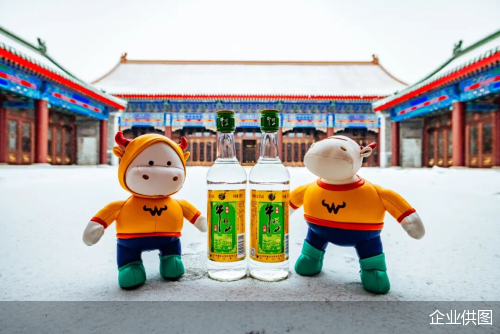
尚普咨询发布牛栏山品牌市场地位声明,十年累计销量60亿瓶,牛栏山陈酿全国销量领先
Bei Jing Shang Bao· 2025-10-17 12:23
Core Insights - The Chinese liquor industry is shifting from a focus on high-end products to a more consumer-oriented approach, with an emphasis on affordability and practicality, particularly in the light bottle segment [1][3] - Niulanshan's Chenxiang series has emerged as a leading representative of this trend, embodying the philosophy of "brewing for the people" and achieving significant market penetration [1][8] Industry Trends - The white liquor market is experiencing a transition towards rational consumption, with consumers prioritizing practical needs over brand prestige and packaging [3][8] - The demand for high-cost performance products is becoming a key driver of growth in the industry, with Niulanshan's Chenxiang series exemplifying this shift [3][8] Company Performance - Niulanshan's Chenxiang series has achieved cumulative sales of 6 billion bottles over the past decade, leading the national market in both volume and sales [3][4][5] - The brand has received recognition from Shangpu Consulting for its market leadership in the light bottle segment, highlighting its strong consumer acceptance [3][4] Product Characteristics - The Chenxiang series is designed to meet everyday consumer needs, featuring cost-effective pricing and flexible packaging options suitable for various social settings [8][9] - The product's quality is enhanced through a combination of traditional brewing techniques and modern microbiological fermentation, ensuring a rich flavor profile [9][11] Marketing Initiatives - Niulanshan has launched initiatives such as the "Jinbiao Niu Smoke and Fire Restaurant List" in collaboration with Alibaba's ecosystem, aimed at promoting local dining experiences and enhancing brand visibility [13] - These marketing efforts have resulted in significant exposure and engagement, aligning the brand with contemporary consumer preferences for quality and affordability [13]

酒业半年大考:八仙过海寻出路,三大趋势定格局
Sou Hu Cai Jing· 2025-07-21 07:29
Industry Overview - In 2024, the production of large-scale liquor enterprises is expected to reach 4.145 million kiloliters, a year-on-year decrease of 1.8%, while sales revenue is projected to increase to 796.38 billion yuan, a year-on-year increase of 5.3%, indicating a unique trend of "declining volume but increasing profit" [2] - By the first half of 2025, 59.7% of liquor companies reported a decline in operating profit, and 50.9% experienced a contraction in revenue, with an average inventory turnover period of 900 days, up 10% year-on-year, highlighting significant challenges in the industry [2] Key Trends - The industry is witnessing a simultaneous trend of "contraction and concentration," with smaller companies exiting the market and leading firms shifting focus from "high-speed growth" to "steady development" [3] - A "channel revolution" is underway, with major companies moving towards direct consumer engagement through new sales channels like online platforms and instant retail, indicating a shift in power from distributors to brands [4] - Consumer demand is evolving, driven by younger consumers, leading to product upgrades towards lower alcohol content and diverse flavors, with major brands launching new products to cater to these trends [5] Company Performance - **Kweichow Moutai**: Aims for a 9% revenue growth by 2025, with a first-quarter revenue of 51.443 billion yuan, up 11.07%, and a net profit of 26.847 billion yuan, up 11.56%, demonstrating strong execution of its strategic goals [6][7] - **Wuliangye**: Targets revenue growth in line with macroeconomic conditions, reporting a first-quarter revenue of 36.940 billion yuan, up 6.05%, and a net profit of 14.860 billion yuan, up 5.80%, with ongoing channel reforms [6][8] - **Luzhou Laojiao**: Focuses on low-alcohol products, with a first-quarter revenue of 9.352 billion yuan, up 1.78%, and a net profit of 4.593 billion yuan, up 0.41%, indicating a strong market position in lower alcohol segments [6][9] - **Shanxi Fenjiu**: Reports a first-quarter revenue of 16.523 billion yuan, up 7.72%, and a net profit of 6.648 billion yuan, up 6.15%, with ongoing efforts in national expansion and product innovation [6][10] - **Guojiao**: Achieves a first-quarter revenue of 5.099 billion yuan, up 9.17%, and a net profit of 1.644 billion yuan, up 7.27%, driven by a focus on the wedding market [6][12] Strategic Shifts - The industry is transitioning from "incremental expansion" to "stock optimization," with companies focusing on refining existing markets rather than pursuing aggressive growth [17] - A shift from "channel-driven" to "consumer-driven" strategies is evident, with companies prioritizing direct consumer engagement and enhancing consumer experiences [18] - The trend is moving from "high alcohol content" to "low and diverse products," with major brands launching lower alcohol options to attract younger consumers [20] - Companies are increasingly emphasizing "long-term value" over short-term performance, with a focus on cultural branding and sustainable growth strategies [21] - The shift from "national expansion" to "regional deepening" is becoming a survival strategy for many companies, focusing on local market penetration and brand recognition [22][23]