特斯拉V14

Search documents
贾鹏说24年底和特斯拉团队交流多,V14思路和理想一模一样
理想TOP2· 2026-03-26 13:37
Core Insights - The article discusses the similarities between the autonomous driving strategies of Tesla and Li Auto, particularly focusing on the development of their respective models, V14 and VLA, which share a common vision for integrated vehicle architecture [1][2]. Group 1: Tesla and Li Auto Comparison - Li Auto's CEO, Jia Peng, expressed surprise and disappointment upon discovering that Tesla's V14 development aligns closely with their own vision, indicating a shared approach to integrating world models with vehicle architecture [1]. - The timeline for Tesla's advancements shows that while they are adopting similar methodologies, Li Auto plans to achieve mass production of their technology by 2024, ahead of Tesla's timeline [1]. Group 2: Cultural and Technical Insights - Huang Renxun highlighted the unique social culture in China, emphasizing the importance of family and friends, which fosters a rapid information-sharing environment that supports open-source contributions [3][4]. - The article notes that the advancements in autonomous driving technology are becoming less about new methodologies and more about enhancing existing capabilities, with a focus on increasing computational power and model size [5]. Group 3: Future of Autonomous Driving - The article discusses the potential for vehicles to achieve human-like driving capabilities by addressing latency, comfort, safety, and efficiency, which are critical for the success of autonomous driving [7]. - It mentions that the performance of models will improve with increased computational resources and data, following the scaling laws that suggest a power-law relationship between model performance and resource allocation [8]. Group 4: Industry Developments and Predictions - The article suggests that while achieving Level 4 (L4) autonomy by 2027 may be uncertain, the direction of development is crucial, with rapid advancements in AI expected to continue influencing the industry [9].


李想:特斯拉V14也用了VLA相同的技术
自动驾驶之心· 2025-10-19 23:32
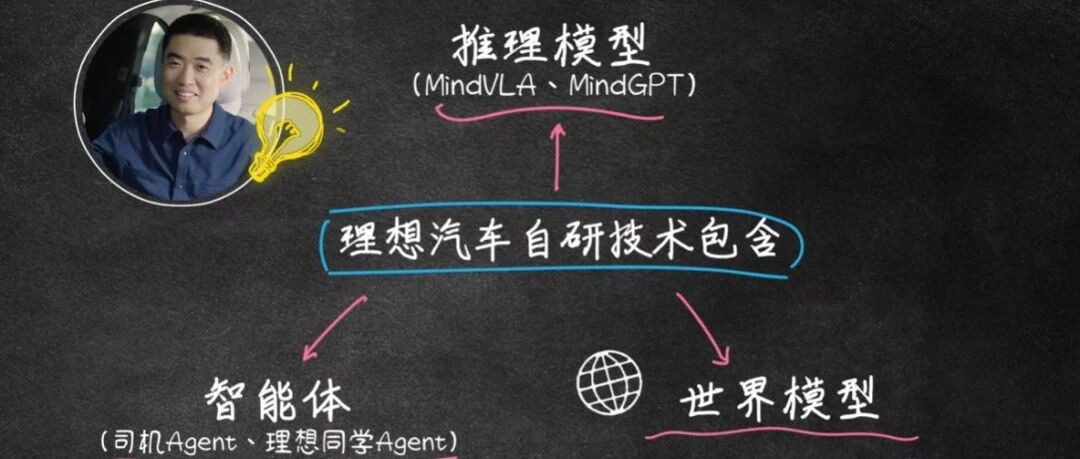
Core Insights - The article discusses the five stages of artificial intelligence (AI) as defined by OpenAI, emphasizing the importance of each stage in the development and application of AI technologies [17][18]. Group 1: Stages of AI Development - The first stage is Chatbots, which serve as a foundational model that compresses human knowledge, akin to a person completing their education [19][4]. - The second stage is Reasoners, which utilize supervised fine-tuning (SFT) and reinforcement learning from human feedback (RLHF) to perform continuous reasoning tasks, similar to advanced academic training [20][21]. - The third stage is Agents, where AI begins to perform tasks autonomously, requiring a high level of professionalism and reliability, comparable to a person in a specialized job [22][23]. - The fourth stage is Innovators, focusing on the ability to generate and solve problems through real-world training and feedback, which is essential for enhancing the capabilities of AI [25][26]. - The fifth stage is Organizations, which manage multiple agents and innovations to prevent chaos, similar to how businesses manage human resources [27][28]. Group 2: Computational Needs - The demand for reasoning computational power is expected to increase by 100 times in the next five years, while training computational needs may expand by 10 times [10][29]. - The article highlights the necessity for both edge computing and cloud-based processing to support the various stages of AI development [28][29]. Group 3: Ideal Automotive Applications - The company is developing its own reasoning models (MindVLA/MindGPT) and agents (Driver Agent/Ideal Classmate Agent) to enhance its autonomous driving capabilities [31][33]. - By 2026, the company plans to equip its autonomous vehicles with self-developed advanced edge chips for deeper integration with AI [12][33]. Group 4: Training and Skill Development - Effective training for AI involves enhancing three key abilities: information processing, problem formulation and solving, and resource allocation [39][40][41]. - The article emphasizes that successful AI applications require extensive training, akin to the 10,000 hours of practice needed for mastery in a profession [36][42].