玻璃基板技术

Search documents
先进封装技术的战略价值与研究背景
材料汇· 2025-12-01 14:10
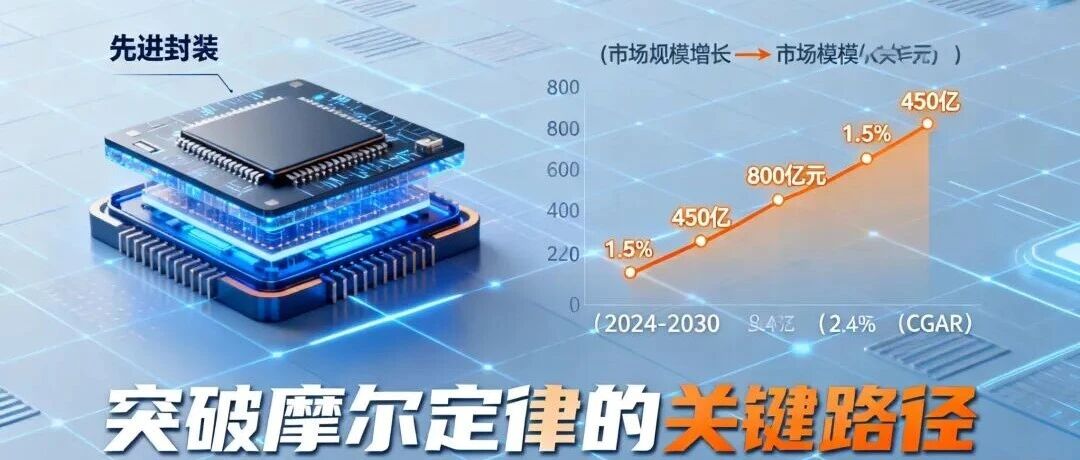
Core Insights - Advanced packaging technology is crucial for overcoming performance bottlenecks in the semiconductor industry, driven by emerging applications like AI, high-performance computing, and 5G communication [3] - The global advanced packaging market is projected to grow from approximately $45 billion in 2024 to $80 billion by 2030, with a compound annual growth rate (CAGR) of 9.4% [3][75] Technical Evolution Dimension - TSMC's CoWoS technology has evolved from supporting 1.5x to 3.3x mask sizes, with plans for a 5.5x version by 2025-2026 and a 9x version by 2027, significantly increasing integration density and reducing signal transmission latency [6][7] - Hybrid bonding technology is emerging as a core technology for next-generation advanced packaging, enabling direct wafer bonding without bumps, thus enhancing interconnect density and reducing power consumption [10][11] - AMD's MI300X AI accelerator utilizes a 3.5D packaging architecture, combining TSMC's SoIC and CoWoS technologies, achieving unprecedented integration levels with 1,530 billion transistors [14][15] - Intel employs a multi-technology strategy in advanced packaging, focusing on EMIB and Foveros technologies, with plans for further enhancements to improve performance and integration [18][19] - Glass substrate technology is gaining traction as a disruptive innovation, offering advantages in electrical performance, thermal stability, and cost-effectiveness, with a projected market penetration exceeding 50% within five years [22][23] Material System Analysis - BT resin substrates are the most widely used packaging material, accounting for over 70% of IC substrates, known for their excellent thermal and electrical properties [26][27] - ABF substrates, developed by Ajinomoto, are preferred for high-end chip packaging due to their superior processing capabilities and electrical performance, despite higher costs [28][30] - Ceramic substrates, particularly AlN and Si3N4, are ideal for high-performance applications due to their high thermal conductivity and mechanical strength [32][34] Equipment and Process Dimension - TCB equipment is critical for HBM packaging, with ASMPT holding over 80% market share, driven by the demand for AI chips and high-performance computing [45][47] - The global die bonder market is dominated by four major players, with ASMPT leading at 31% market share, followed by BESI, Ficontec, and Neways [49][51] - The back-end packaging equipment market is characterized by a diverse competitive landscape, with Disco leading in wafer thinning and cutting technologies [54] Industry Layout Analysis - TSMC is experiencing exponential growth in CoWoS capacity, projected to reach 65,000-75,000 units per month by 2025, driven by AI chip demand [63][65] - The HBM market is dominated by three players: SK Hynix, Samsung, and Micron, collectively holding over 95% market share, with SK Hynix leading at 60-70% [67][68] - China's packaging industry is rapidly advancing, with Jiangsu Changjiang Electronics Technology, Tongfu Microelectronics, and Huada Semiconductor becoming significant players globally [70][71] - The global advanced packaging market is shifting towards IDM manufacturers, who leverage integrated design and manufacturing advantages, with Taiwan companies holding a dominant position in the AI packaging market [73][74]