玻璃钢渔船

Search documents
“十五五”开好局起好步 | 渔船更新“木改钢”,新在哪里、改出了什么?
Yang Shi Wang· 2026-02-01 02:27
Core Viewpoint - Liaoning province is experiencing a surge in fishing vessel orders, particularly for the modernization of wooden boats to fiberglass or steel, driven by safety concerns and government policies aimed at upgrading the fishing fleet [1][11][19]. Group 1: Current Market Dynamics - Despite the cold weather, small shipyards in Dalian are bustling with activity, receiving a high volume of orders for fishing vessels, which is unusual for this time of year [5][9]. - The shipyard has built and delivered 12 fishing vessels since October 2025, with an additional 18 vessels on order, primarily due to the "wood to steel" policy encouraging fishermen to upgrade their boats [7][9]. - The production value for these shipyards has increased by over 200% year-on-year, with orders extending into May of the current year [9]. Group 2: Government Initiatives and Policies - The "wood to steel" initiative is part of a broader effort by the Liaoning government to modernize the fishing fleet, with a target to upgrade over 6,000 vessels within three years [9][19]. - Financial support measures have been introduced, including a phased reward system for upgrading wooden boats to new material vessels and loan interest subsidies, with rates of 2% and 1.5% planned for 2026 [15][17]. - As of now, 1,326 vessels have been initiated for upgrades, and banks have issued 216 million yuan in loans for vessel modernization, with 143 million yuan specifically for the "wood to steel" initiative [17]. Group 3: Safety Concerns and Upgrades - Historical data indicates that wooden fishing vessels have been involved in numerous emergency situations, highlighting significant safety risks associated with older boats [13]. - The government is focusing on not only replacing old vessels but also upgrading onboard equipment to enhance safety and efficiency [21]. - The establishment of a dedicated task force aims to streamline the modernization process and address challenges faced by fishermen, including the need for design blueprints for smaller vessels [21][25].

“老把式”换了“新坐骑”
Liao Ning Ri Bao· 2025-12-31 00:59
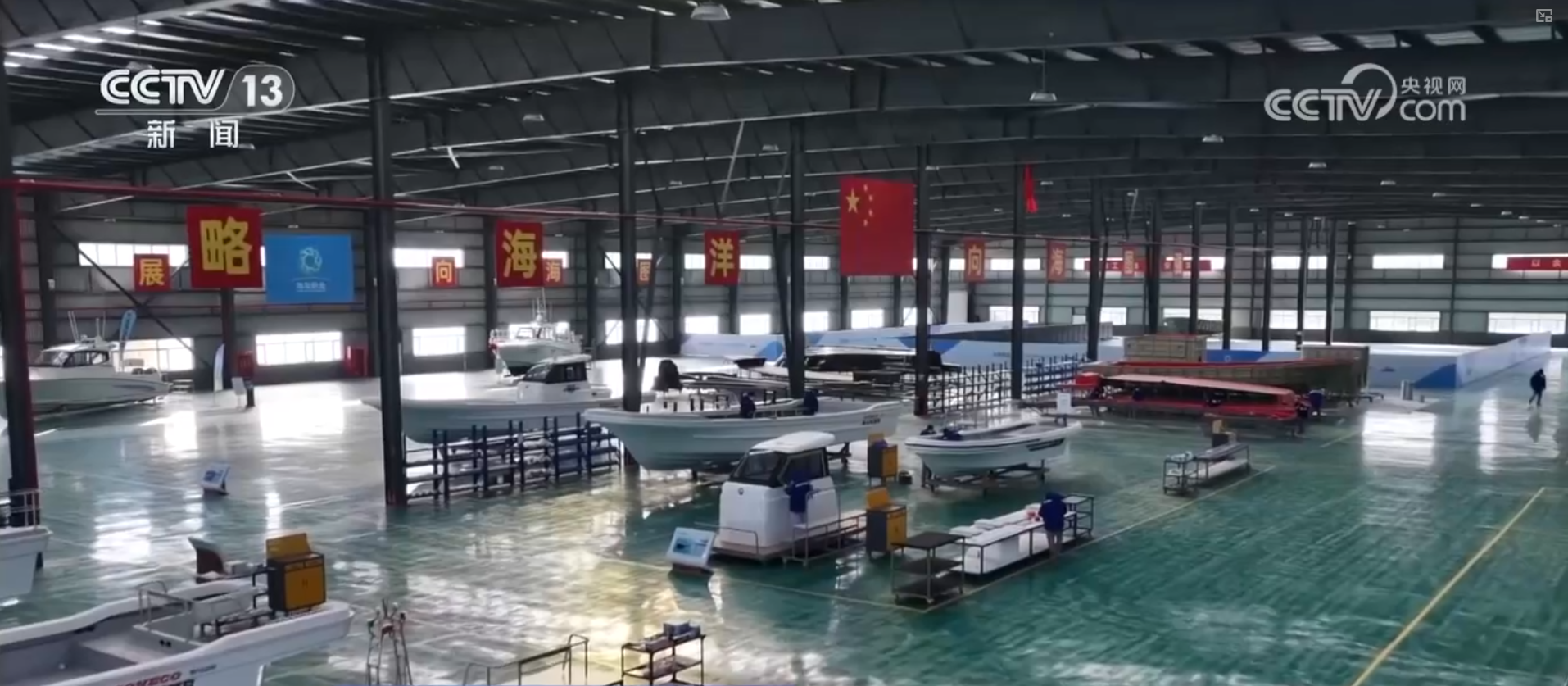
Group 1 - The article highlights the transition of fishermen from traditional wooden boats to modern fiberglass fishing vessels, emphasizing safety, environmental benefits, and cost savings [1][2] - The new fiberglass boats are designed to be more stable and efficient, with a lifespan of approximately 20 years, which reduces maintenance costs significantly compared to wooden boats [1][2] - The local government in Dalian is promoting a "wood to steel" subsidy policy, making it easier for fishermen to afford the initial investment in fiberglass boats through reduced down payments and bank loan interest subsidies [1][2] Group 2 - Dalian Haifa Shipbuilding has transformed from an idle factory into a modern production facility, covering 14,000 square meters and implementing 211 standard processes for boat manufacturing [2] - The company has received multiple orders for "wood to steel" fishing boats, indicating strong demand from local fishermen in Longhai County and neighboring regions [2] - The factory aims to provide the safest and most durable "Dalian-made" boats for fishermen, reflecting a commitment to quality and innovation in the industry [2]

研判2025!中国玻璃钢渔船行业发展历程、产业链、发展现状、竞争格局及发展趋势分析:渔船更新改造已迫在眉睫,玻璃钢渔船成为行业新宠[图]
Chan Ye Xin Xi Wang· 2025-06-07 02:04
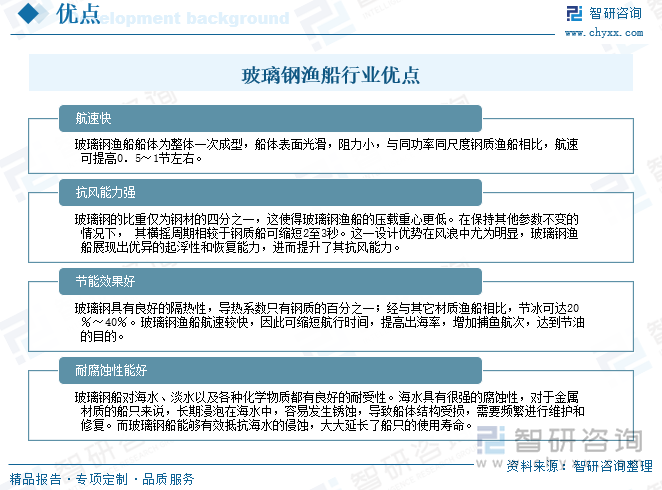
Core Viewpoint - The glass fiber reinforced plastic (GFRP) fishing boats industry in China is poised for significant growth due to the aging of existing wooden and small steel fishing vessels, with government initiatives promoting the replacement and modernization of fishing equipment. The number of GFRP fishing boats is expected to increase to 12,000 by 2025, representing a 20% year-on-year growth [1][14]. Industry Overview - GFRP fishing boats account for only about 2% of the total fishing vessels in China, compared to 80-90% in developed fishing nations [1][14]. - The existing wooden and small steel fishing vessels are over 50% aged, necessitating urgent updates and replacements [1][14]. - The Liaoning province has initiated a plan to promote large-scale equipment updates in the fishing industry, focusing on phasing out old wooden boats and enhancing subsidies for new steel or composite material boats [1][14]. Economic Aspects - GFRP fishing boats exhibit excellent energy-saving capabilities, with insulation performance leading to ice-saving rates of 20% to 40% and fuel savings of 10% to 15% compared to steel boats [4][5]. - The lifespan of GFRP boats can reach up to 50 years, significantly longer than the 10-15 years typical for steel boats, which require regular maintenance [4][5]. Industry Development History - The development of GFRP fishing boats in China began in the 1970s, with the first boat constructed in 1974 [7][8]. - The industry faced challenges in the 2000s due to quality issues and incidents, but recent government support has led to significant advancements in construction capabilities [7][8]. Industry Chain - The upstream of the GFRP fishing boat industry includes raw materials such as liquid synthetic resins and glass fibers, which are crucial for the durability and safety of the boats [8]. - The midstream involves the production and manufacturing of GFRP boats, while the downstream encompasses their applications in freshwater and marine aquaculture, marine capture, and seedling production [8]. Competitive Landscape - The GFRP fishing boat market in China is primarily dominated by state-owned enterprises, followed by military and private enterprises, with the former holding the largest market share [16][17]. - Key players in the industry include Jianglong Shipbuilding, Weihai Zhongfu Xigang Shipbuilding, and Qinhuangdao Yaohua Equipment Group [16][17]. Future Trends - The demand for GFRP fishing boats is expected to grow continuously due to the booming marine economy and increasing consumer interest in marine tourism [21]. - The industry is moving towards automation and smart technology integration, enhancing production efficiency and product quality [22]. - There is a growing emphasis on green development, with a focus on using recyclable materials and renewable energy technologies to reduce environmental impact [23][24].