
生态旅游项目

Search documents
不断增厚“绿色家底”还需持续发力
Jing Ji Ri Bao· 2025-09-12 06:08
Group 1 - The core viewpoint emphasizes the importance of forests as essential components of terrestrial ecosystems, serving as reservoirs, food sources, financial assets, and carbon sinks, which are fundamental to human survival [1] - Over the past five years, China's forest coverage rate has increased to over 25%, with new forest area equivalent to one Shaanxi Province, accounting for one-fourth of the global increase in greening [1] - China has maintained a dual growth in forest coverage and forest stock for over 30 years, making it the country with the largest increase in forest resources and artificial afforestation area globally [1] Group 2 - Current challenges in forest resource protection and utilization include uneven distribution, illegal land occupation, low compensation standards for ecological benefits, and small-scale forestry industries [2] - There is a need for optimized resource layout and regional coordinated development, including establishing a forest resource planning system and implementing strict protection policies for key ecological function areas [2] - Promoting regional cooperation mechanisms and cross-regional ecological protection projects can enhance the overall quality and stability of regional ecological environments [2] Group 3 - Advancements in technology are crucial for improving forest resource utilization, including the promotion of advanced forestry planting and nurturing techniques, and the use of modern biotechnologies [3] - The development of green industries can achieve a win-win situation for ecological and economic benefits, emphasizing the importance of ecological tourism and the sustainable use of forest resources [3] - Strengthening technical and model innovations can enhance the added value and market competitiveness of forest economy products, contributing to the overall competitiveness of regional economies [3]
挖掘本土资源 发展特色旅游(国际视点)
Ren Min Ri Bao· 2025-09-10 22:13
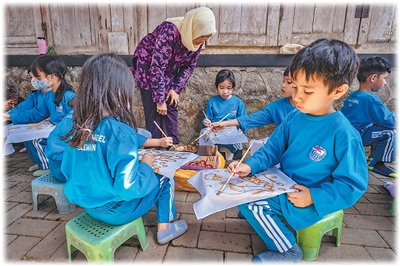
Core Insights - The article highlights the increasing focus of rural areas in various countries on leveraging local resources to develop unique tourism offerings, thereby enhancing cultural and tourism industries [4] - The United Nations World Tourism Organization has recognized 55 destinations as the "Best Tourism Villages" for 2024, showcasing diverse rural tourism development [4] Group 1: Indonesia - Ukil Sari Village - Ukil Sari Village in Indonesia has a rich heritage of hand-drawn batik dating back approximately 400 years, recognized as an intangible cultural heritage by UNESCO in 2009 [5][6] - The village initiated the "Batik Village" project in 2007, aiming to establish itself as a national center for hand-drawn batik, while also preserving other cultural heritages like shadow puppetry and bamboo weaving [5][6] - By 2025, the village expects to welcome nearly 10,000 visitors in January alone, marking a record for single-month visits, and is seen as a model for sustainable tourism development [6] Group 2: Mexico - Cuatro Ciénegas - Cuatro Ciénegas, located in a protected area of approximately 85,000 hectares, is home to over 100 endemic species and has a unique ecological system that attracts tourists for activities like hiking and camping [7][8] - The area has undergone significant ecological restoration efforts, improving its environment through wetland restoration and local species protection, which has enhanced its appeal for eco-tourism [8] - Cuatro Ciénegas was nominated as a "Pueblo Mágico" by the Mexican tourism department and was included in the UN's "Best Tourism Villages" list for 2024 [8] Group 3: Austria - St. Johann - St. Johann, located in the Tyrolean Alps, is known for its natural beauty and cultural heritage, offering various seasonal activities such as skiing in winter and hiking in summer [9][10] - The town emphasizes local cultural events, such as the Alpine International Dance Festival and the "Dumpling Festival," to engage visitors and promote cultural heritage [9] - St. Johann has introduced innovative services like shared office spaces to cater to remote workers, reflecting a commitment to sustainable tourism and community involvement [10]

印尼、墨西哥、奥地利探索乡村旅游多元化发展之路——挖掘本土资源 发展特色旅游(国际视点)
Ren Min Ri Bao· 2025-09-10 22:01
Core Insights - The article highlights the increasing focus of rural areas in various countries on leveraging local resources to develop unique tourism offerings, thereby enhancing the cultural tourism industry and attracting visitors [1] Group 1: Indonesia - Ukil Sari Village - Ukil Sari Village in Indonesia has a rich heritage of hand-drawn batik, recognized as a UNESCO intangible cultural heritage since 2009, and was included in the UNWTO's "Best Tourism Villages" list for 2024 [2][3] - The village initiated the "Batik Village" project in 2007, aiming to establish itself as a national center for hand-drawn batik, while also preserving other cultural heritages like shadow puppetry and traditional herbal medicine [2][3] - The village has over 1,200 batik artisans and offers various cultural events, enhancing the tourist experience through workshops and festivals, while also improving local infrastructure and services [3][4] Group 2: Mexico - Cuatro Ciénegas - Cuatro Ciénegas, located in a 85,000-hectare protected area, is known for its unique landscapes and biodiversity, featuring over 100 endemic species [5][6] - The area has undergone significant ecological restoration efforts, improving its environment through wetland recovery and local species protection, which has facilitated the growth of eco-tourism [6] - Cuatro Ciénegas was nominated as a "Magical Town" by the Mexican tourism department and was included in the UNWTO's "Best Tourism Villages" list for 2024, highlighting its potential for attracting eco-conscious tourists [6] Group 3: Austria - St. Johann - St. Johann in Austria is recognized for its stunning natural beauty and cultural heritage, offering a variety of seasonal activities such as skiing in winter and hiking in summer [7][8] - The town emphasizes local cultural events, such as the "Dumpling Festival," which showcases regional cuisine and engages the community in cultural preservation [7] - St. Johann has introduced innovative services like shared office spaces to cater to remote workers, reflecting a commitment to sustainable tourism and community involvement [8]
埃及旅游局来沪“揽客” 冀在中国市场找到更多机会
Zhong Guo Xin Wen Wang· 2025-05-28 15:33
Core Insights - The number of Chinese tourists visiting Egypt is expected to increase by 65% in 2024, with a continuation of this growth trend anticipated [1] - Egypt is focusing on developing tourism products tailored to Chinese tourists, emphasizing personalization, accessibility, and diversity [1] - Direct flights from major Chinese cities to Cairo have been established, with more expected by the end of the year [1] Marketing and Promotion - The Egyptian Tourism Authority plans to enhance marketing efforts, including organizing familiarization trips for professionals, conducting extensive market promotion activities, establishing dedicated social media platforms, and launching a Chinese website titled "Experience Egypt" [1] - New tourism products showcased at the expo include exhibition tourism, luxury tourism, and eco-tourism [1] Tourism Experience - Egypt offers a variety of high-end resorts along the Red Sea coast catering to families, diving enthusiasts, and spa lovers, while areas like Siwa Oasis are suitable for wellness tourism [1] - The aim is to provide Chinese tourists with a positive experience in Egypt, whether they seek historical culture, adventure, or relaxation [1] Cultural Exchange - Tourism cooperation is a significant aspect of Sino-Egyptian relations, with growing interest among Egyptians in Chinese culture, including television and film [2] - The 2025 Shanghai International Tourism Trade Fair features over 700 exhibitors from more than 80 countries, serving as a platform for tourism promotion and sustainable partnerships [3]