电休克疗法

Search documents
北京脑科学与类脑研究所:发现抑郁症治疗新机制,有望颠覆传统治疗手段
Ge Long Hui· 2025-11-06 02:17
Core Insights - Depression is a significant challenge in clinical psychiatry, as highlighted by the Beijing Brain Science and Brain-like Research Institute's recent findings [1] - The study published in Nature identifies adenosine signaling as a key pathway for the rapid antidepressant effects of ketamine and electroconvulsive therapy (ECT) [1] - The research proposes an "intermittent hypoxia intervention" (aIH) to safely and controllably induce adenosine release in the brain, leading to significant antidepressant effects [1] Summary by Categories Research Findings - The study confirms that adenosine signaling is a common mechanism underlying the rapid antidepressant actions of both ketamine and ECT [1] - This discovery enhances the understanding of rapid antidepressant mechanisms and provides a solid theoretical basis for developing new generation antidepressant strategies with fewer side effects [1] Implications for Treatment - The findings suggest potential for developing small molecule drugs and non-drug interventions targeting adenosine signaling [1] - The research opens avenues for safer and more effective treatment options for depression, addressing a critical need in mental health care [1]
我国科学家首次揭示抗抑郁治疗核心机制
Ren Min Wang· 2025-11-06 02:12
Core Insights - Chinese scientists have made a significant breakthrough in depression treatment research by revealing the common mechanism behind ketamine and electroconvulsive therapy (ECT), which is the adenosine signaling pathway [1][2][3] - This discovery provides a clear path for developing safer and more effective new treatment options for depression [1][3] Research Collaboration - The research was led by the Beijing Brain Science and Brain-like Research Institute, in collaboration with the Changchun Institute of Applied Chemistry and Peking University [1][2] - The project leader, Luo Minmin, has over 30 years of experience in neuroscience and has made several original contributions in various fields [1][2] Depression Statistics - Depression is one of the most common mental disorders globally, with the World Health Organization estimating over 300 million patients annually [1] - Approximately one-third of patients do not respond well to traditional medications, known as treatment-resistant depression [1] Mechanism of Action - The study utilized advanced gene-encoded fluorescent probe technology to observe that both ketamine and ECT cause a rapid and sustained increase in adenosine levels in key brain areas related to emotional regulation [2][3] - Blocking the brain's reception of adenosine signals negated the antidepressant effects of both therapies, while directly activating this pathway produced clear antidepressant effects [2][3] Drug Development - The research has led to the design and synthesis of more efficient ketamine derivatives that show superior antidepressant effects at lower doses with significantly reduced side effects [2][3] - The study provides a roadmap for developing next-generation drugs that retain the benefits of existing therapies while minimizing adverse effects [2][3] Non-Pharmacological Approaches - The research also opens new avenues for non-drug treatments, such as using acute intermittent hypoxia to activate the adenosine signaling pathway and produce antidepressant effects [3] - This shift from empirical use to mechanism-based precision medicine could revolutionize the treatment of depression [3] Future Directions - The team has applied for patents on related small molecule drugs and hypoxia treatment devices, and has initiated efficacy validation in collaboration with Beijing Anding Hospital [5] - The next steps involve advancing the translation of new drugs and treatment devices to provide groundbreaking solutions for depression treatment [5]

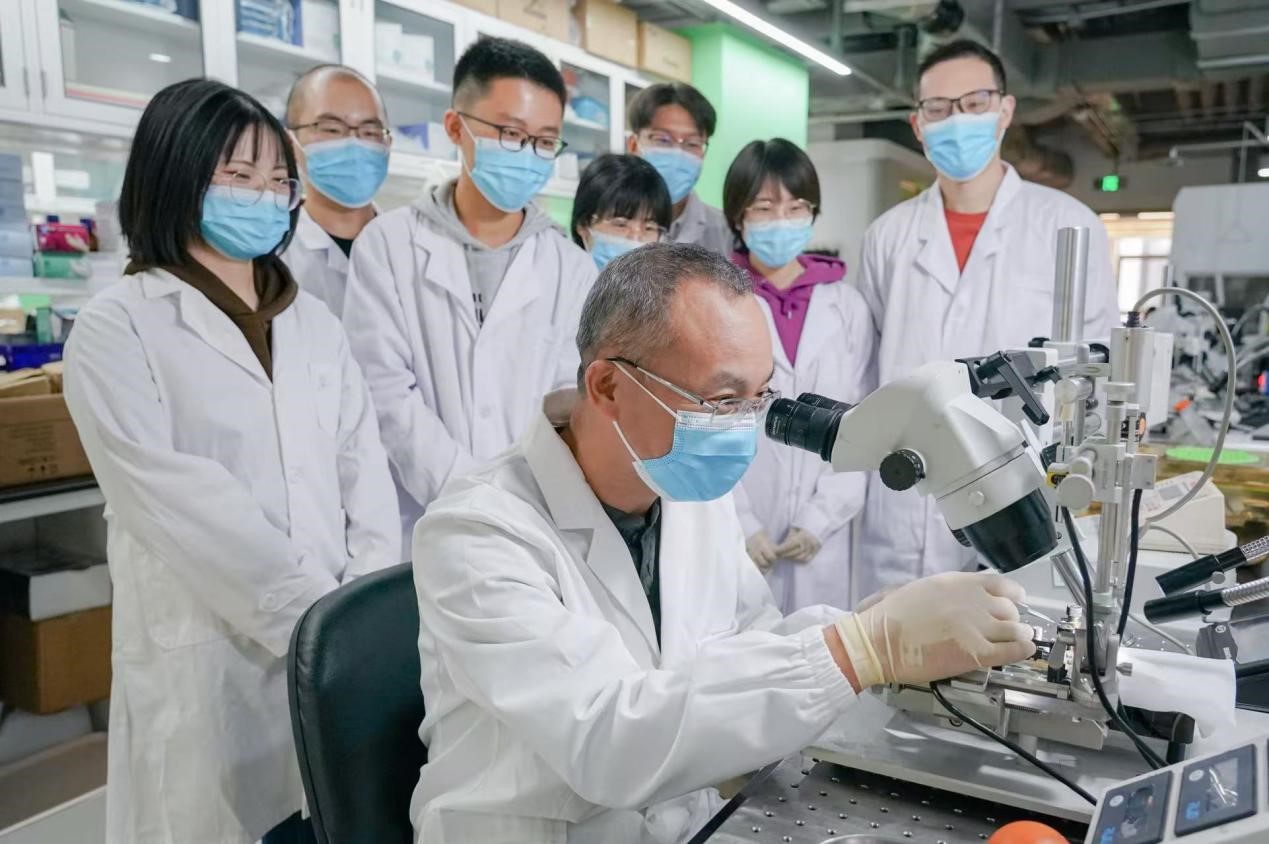
北京脑科学与类脑研究所:发现抑郁症治疗新机制 有望颠覆传统治疗手段
Zheng Quan Shi Bao Wang· 2025-11-06 01:55
Core Viewpoint - The research published by the Beijing Brain Science and Brain-like Research Institute highlights the significant role of adenosine signaling in the rapid antidepressant effects of ketamine and electroconvulsive therapy (ECT), proposing a new intermittent hypoxia intervention to safely induce adenosine release in the brain for effective depression treatment [1] Group 1: Research Findings - The study identifies adenosine as a key signaling molecule that mediates the rapid antidepressant actions of ketamine and ECT [1] - The research confirms that the adenosine signaling pathway is a common mechanism underlying the rapid antidepressant effects of both treatments [1] - The findings provide a solid theoretical basis and clear targets for developing new generation antidepressant strategies that are based on adenosine signaling modulation, potentially leading to smaller side effects [1] Group 2: Implications for Treatment - The proposed intermittent hypoxia intervention (aIH) aims to safely and controllably induce adenosine release in the brain, achieving significant antidepressant effects [1] - This research deepens the understanding of the mechanisms behind rapid antidepressant effects, which could lead to innovative treatment options [1] - The study opens avenues for the development of small molecule drugs and non-drug interventions targeting adenosine signaling for depression treatment [1]
Nature:罗敏敏团队发现抑郁症治疗新机制,带来更安全更有效的抗抑郁疗法
生物世界· 2025-11-06 00:06
Core Viewpoint - The study highlights that adenosine signaling drives the antidepressant effects of ketamine and electroconvulsive therapy (ECT), presenting a potential target for developing scalable non-invasive antidepressant therapies [4]. Group 1: Mechanism of Action - Ketamine and ECT rapidly alleviate symptoms of treatment-resistant depression, but their mechanisms remain unclear, which is crucial for improving treatment precision [5]. - The research team identified adenosine signaling as the core pathway through which these interventions exert their antidepressant effects using mouse models [5]. Group 2: Key Findings - Experiments with genetically encoded adenosine sensors and real-time optical recordings showed that both therapies induce a significant surge in adenosine levels in key emotional regulation brain regions, including the medial prefrontal cortex (mPFC) and hippocampus [6]. - Disruption of A1 and A2A adenosine receptors genetically or pharmacologically eliminates the antidepressant effects of ketamine and ECT, establishing the critical role of adenosine signaling in these effects [6]. Group 3: Implications for Treatment - Adenosine signaling specifically in the mPFC drives the antidepressant effects, with ketamine enhancing adenosine levels through metabolic regulation without causing excessive neuronal activity [8]. - The research team developed ketamine derivatives that enhance adenosine signaling and demonstrate better antidepressant effects with fewer side effects at therapeutic doses [8]. - Acute intermittent hypoxia, a non-drug intervention that lowers oxygen levels, can also increase brain adenosine levels and produce antidepressant effects, similar to ketamine and ECT [8].