电商平台商品

Search documents
电商平台商品抽检常见问题与解决路径(新版)
Sou Hu Cai Jing· 2025-12-14 09:08
Group 1 - The core issue of e-commerce platform product sampling inspections is the insufficient representativeness of samples, which may lead to biased results and affect management decisions [1] - There is inconsistency in the applicability of testing standards across different product categories, particularly for emerging products lacking clear standards [2] - The standardization of inspection processes is lacking, which can impact the fairness and reliability of test results [4] Group 2 - The efficiency of handling problematic products identified during inspections is low, with issues such as slow response times and unclear responsibilities between platforms and merchants [6] - There is insufficient sharing and utilization of inspection data, limiting its value in risk warning and quality management [7] Group 3 - To improve sampling, platforms should establish a scientific sampling mechanism that covers various regions, categories, and time periods, using a combination of random and stratified sampling methods [9] - Platforms should unify the application of testing standards by collaborating with testing agencies to clarify applicable standards for different product categories [10] - It is essential to standardize inspection operation processes to ensure transparency and traceability, potentially involving third-party oversight [11] Group 4 - A rapid response mechanism should be established for handling problematic products, ensuring timely removal and notification to relevant merchants [12] - Strengthening data integration and analysis is crucial for building quality risk warning models and optimizing inspection resource allocation [13] Group 5 - Continuous improvement of inspection work is necessary, with regular evaluations of the effectiveness of inspection mechanisms and adjustments based on market changes and consumer needs [14]


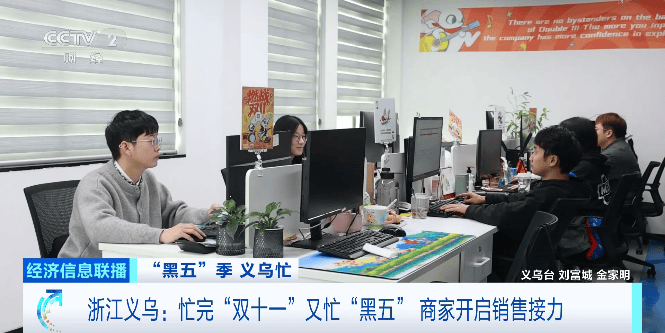
忙完“双十一”又忙“黑五” 义乌商家开启销售“接力赛”
Sou Hu Cai Jing· 2025-11-21 15:29
Group 1 - The core event of "Black Friday" in 2024 is projected to generate online sales of $10.8 billion in the US, reflecting a year-on-year growth of 10.2% [1] - E-commerce platforms have already initiated promotional activities ahead of "Black Friday," with businesses in Yiwu, Zhejiang quickly transitioning from the "Double Eleven" shopping festival to prepare for the upcoming sales [1][3] - Companies are adjusting their product selection, pricing, and promotional strategies based on the sales performance from "Double Eleven" to optimize their approach for "Black Friday" [3] Group 2 - A representative from a Zhejiang e-commerce platform reported total sales exceeding $120,000 on a single day, significantly higher than the usual daily sales of around $3,000, indicating a four to five-fold increase [5] - To handle the sales peak during "Black Friday," companies have increased inventory and optimized logistics processes, ensuring efficient delivery of products to consumers [7] - The warehouse staff have been reorganized to focus on preparing goods for "Black Friday," indicating a proactive approach to inventory management and logistics [9]
电商品牌控价方式有哪些?
Sou Hu Cai Jing· 2025-11-11 11:40
Core Viewpoint - In a competitive e-commerce environment, brands must establish a comprehensive pricing control system that includes "source prevention - real-time monitoring - layered rights protection" to effectively curb price chaos and protect brand pricing order and market interests [1] Group 1: Pricing Control System - Brands should build a pricing control system to reduce the possibility of violations from the source by establishing clear pricing standards and cooperation constraints for different levels of distributors and agents [1][4] - The pricing control clauses should be formally included in distributor agreements, specifying penalties for violations, such as a 20% deduction of the cooperation deposit for the first violation and termination of cooperation for severe cases [4] - Regular training sessions should be organized for partners to enhance their understanding of pricing policies and the consequences of violations, ensuring compliance from the outset [4] Group 2: Dynamic Monitoring - Brands need to implement a dual approach of "manual + tools" for comprehensive price monitoring across all channels to enable early detection and intervention [5] - Manual monitoring should focus on high-sales and high-review stores on major platforms like Taobao, JD.com, and Pinduoduo, as well as products using sensitive keywords that may indicate unauthorized sales [5] - Automated monitoring tools can enhance efficiency by setting up price alert thresholds, allowing brands to receive immediate notifications when prices fall below specified limits [6][7] Group 3: Layered Rights Protection - Upon discovering price violations, brands should adopt differentiated rights protection measures based on the severity of the violation and platform rules to ensure effective resolution while controlling costs [8] - For common violations, brands should utilize internal complaint channels on e-commerce platforms, providing complete evidence to support their claims [8][9] - For persistent violations, brands may resort to administrative complaints or legal actions, collecting and documenting evidence of long-term price disruptions and seeking compensation for economic losses [10]

下单前要查什么?投诉记录其实更有参考价值
Xin Lang Cai Jing· 2025-10-24 04:46
Core Viewpoint - The article emphasizes the increasing complexity of consumer decision-making in the face of overwhelming promotional information, highlighting the need for a reliable source to identify potential risks in online shopping [1]. Group 1: Consumer Behavior - Consumers often rely on sales volume and reviews, but many reviews are misleading due to practices like "buyer shows" and "cashback for negative reviews," making it difficult to assess product quality [1][2]. - The article suggests that consumers should focus on documented complaints to gain a clearer understanding of a brand's reliability and potential issues [2]. Group 2: Complaint Records as Risk Signals - The "Black Cat Complaints" platform serves as a transparent source for consumer feedback, allowing users to check a brand's complaint history and identify common issues [2]. - Complaints can reveal underlying problems such as delayed refunds or hidden fees, which indicate potential risks in the purchasing process [2]. Group 3: Value of Black Cat Complaints - Unlike social media complaints, records on the Black Cat platform require accurate submissions with supporting evidence, making the information more reliable [3]. - Consumers can track the progress of complaints, including whether companies respond and resolve issues, providing a basis for informed decision-making [3]. Group 4: Integrating Complaints into Decision-Making - Complaints are shifting from being seen as a last resort to a proactive step in the purchasing process, encouraging consumers to research complaints before making purchases [4]. - This approach fosters a more mature consumer behavior, allowing individuals to understand risks and make informed choices in a confusing market [4]. Conclusion - The article concludes that understanding consumer choices involves more than just price; it is fundamentally about information. Platforms like Black Cat Complaints help consumers navigate promotional noise by providing real experiences, ultimately leading to better purchasing decisions [5].
电商代理商乱价应对指南:处理策略、危害剖析与成因破解
Sou Hu Cai Jing· 2025-09-15 11:15
Core Viewpoint - The article discusses the widespread issue of price chaos among agents on e-commerce platforms like Taobao and Pinduoduo, emphasizing the need for brands to adopt scientific strategies to address this problem and protect market ecology [1] Group 1: Strategies to Address Agent Price Chaos - Brands can tackle agent price chaos through three main approaches: platform complaints, government-enterprise collaboration, and consumer guidance [3] - The first approach involves utilizing the intellectual property complaint system on e-commerce platforms to target specific violations by agents [3] - The second approach suggests collaborating with judicial and administrative bodies to enhance the deterrent effect of rights protection when platform complaints are ineffective [3] - The third approach focuses on guiding consumer behavior to indirectly pressure chaotic pricing stores, such as organizing compliant consumers to purchase and return products to disrupt inventory management [3] Group 2: Threefold Harm of Agent Price Chaos - Agent price chaos impacts multiple levels, including channel ecology, consumer decision-making, and brand reputation [4][5][6] - It compresses terminal agent profits, leading to potential channel loss as consumers gravitate towards lower-priced products, causing a significant drop in sales volume for compliant agents [4] - The low-price strategy of agents undermines the competitiveness of compliant agents, resulting in a vicious cycle of price competition that threatens the profitability of the entire channel [5] - The presence of low-priced products often includes counterfeit or inferior goods, which can damage consumer trust in the brand and lead to negative perceptions of quality and management [6] Group 3: Five Causes of Agent Price Chaos - To effectively address agent price chaos, it is essential to identify its root causes [7] - One cause is the imbalance in brand incentive models that prioritize short-term sales over long-term channel health, leading agents to resort to low pricing to meet sales targets [7] - Another cause is the lack of product differentiation, which forces agents to compete solely on price due to weak market competitiveness [8] - Low entry barriers for agents result in a lack of awareness of pricing rules, allowing opportunistic agents to engage in chaotic pricing practices [9] - Agents may also exhibit a herd mentality, following competitors into low pricing strategies due to perceived market pressures or inventory issues [10] - Lastly, insufficient brand competitiveness and unclear price anchors can lead agents to believe that high prices are unviable, prompting them to adopt low pricing strategies [11] Group 4: Recommendations for Brands - Brands should focus on optimizing incentive models to balance sales and compliance, creating differentiated products to enhance core competitiveness, and improving brand strength to establish clear price anchors [11]

电商平台乱卖价格怎么投诉(老手教你如何治理乱价)
Sou Hu Cai Jing· 2025-08-07 14:12
Core Viewpoint - The rapid growth of the digital economy has created new growth opportunities for e-commerce platforms, but the issue of price chaos remains a significant challenge for brands, affecting their profits and market order [1] Group 1: Complaint Strategies - Trademark infringement complaints can be initiated by collecting evidence and submitting trademark registration and authorization documents [3] - Copyright infringement complaints can be filed for unauthorized use of website images or product designs, requiring copyright registration certificates [4] - Patent infringement complaints can be made against sellers of counterfeit products, necessitating patent certificates and comparison images [4] - False advertising reports can be submitted for practices like "low-price traffic" and "false promotions," typically receiving results within 3-5 working days [5] Group 2: Root Cause Management of Price Chaos - Signing distribution guarantee letters with clear pricing terms and penalties for violations can help manage pricing issues [6] - Establishing a price monitoring mechanism, including software for real-time tracking and a team for regular checks, is essential [7] - Implementing a reporting reward system encourages supervision from all parties [7] - Timely price adjustment notifications through dedicated channels ensure effective policy implementation [8] - Developing differentiated products for online channels can reduce the likelihood of price chaos [9] Group 3: Long-term Preparedness - Brands must maintain strategic focus as price control is a long-term effort, often taking 3-6 months to stabilize prices [10] - Continuous monitoring and handling of new violations are necessary even after initial successes [10] - Establishing price control as part of daily operations and creating a long-term mechanism is crucial for fundamentally addressing price chaos [11] Group 4: Recommendations for Brands - Setting up a dedicated price control team is recommended [12] - Implementing a monthly analysis mechanism can enhance oversight [12] - Collaborating with professional price control companies can provide additional support [12] - Improving the training system for distributors is essential for effective price management [12]