番泻叶

Search documents
慢性便秘勿长期用药
Xin Lang Cai Jing· 2026-01-28 22:03
Core Viewpoint - The incidence of chronic constipation is rising in China, with a prevalence rate between 4% and 10%, particularly higher in women and increasing with age [1] Group 1: Patient Demographics and Impact - The number of chronic constipation patients at Tianjin People's Hospital has significantly increased due to changes in diet, lifestyle, and psychological factors [1] - Chronic constipation severely affects the quality of life, leading many patients to self-medicate or rely on long-term prescriptions, which can pose safety risks and delay diagnosis of underlying conditions [1] Group 2: Types of Laxatives - **Bulk-forming Laxatives**: Examples include polycarbophil and wheat cellulose; they are safe for long-term use and suitable for mild constipation, especially in pregnant women and the elderly [2] - **Osmotic Laxatives**: Examples include polyethylene glycol 4000 and lactulose; they soften stool and stimulate bowel movement, suitable for mild to moderate constipation [2] - **Stimulant Laxatives**: Examples include bisacodyl and senna; they act quickly but can lead to dependency and electrolyte imbalances if used long-term [3] - **Lubricant Laxatives**: Examples include glycerin suppositories and liquid paraffin; they provide rapid relief for short-term constipation [3] - **Prokinetic Agents**: Examples include mosapride and itopride; they enhance gut motility and are used in conjunction with other laxatives [3] - **Secretagogues**: Examples include linaclotide; they are prescribed for chronic constipation unresponsive to standard treatments [3] - **Probiotics**: Examples include various strains of Bacillus and Bifidobacterium; they help restore gut flora and improve bowel function, recommended for long-term use [3]
警惕!浙江女子长期喝这种“茶”,肠道被“染黑”……
Xin Lang Cai Jing· 2026-01-17 23:53
Core Viewpoint - The article highlights the health risks associated with the long-term use of laxatives containing anthraquinone compounds, which can lead to a condition known as colonic melanosis, as illustrated by the case of a 55-year-old woman who developed this condition after relying on laxative teas for constipation relief [1][2][3][4]. Group 1: Health Risks of Laxatives - Colonic melanosis is a non-inflammatory, reversible benign condition primarily caused by the long-term use of laxatives containing anthraquinone [2]. - Anthraquinone compounds can stimulate the intestinal mucosa, leading to the apoptosis of epithelial cells, which results in pigment deposition in the colon [3]. - The case of the woman who developed colonic melanosis illustrates the potential dangers of becoming dependent on laxative products, leading to a vicious cycle of constipation [1][4]. Group 2: Recommendations for Managing Constipation - Increasing dietary fiber intake is essential, with recommendations to consume 25-30 grams daily from sources like dragon fruit, kiwi, and whole grains [5][6]. - Adequate hydration is crucial, with a suggested daily intake of 1.5-2 liters of water to help fiber function effectively [7]. - Regular physical activity, such as 30 minutes of aerobic exercise daily, can stimulate intestinal activity [9]. - Establishing a regular bowel routine by attempting to defecate at the same time each day can enhance bowel movement [10]. - Caution is advised when using medications, with a recommendation to avoid long-term use of stimulant laxatives and consult a doctor for alternatives like lactulose or polyethylene glycol if necessary [11].
中国超1亿便秘人群,为何市场无爆款?
Zhong Guo Chan Ye Jing Ji Xin Xi Wang· 2025-08-12 08:45
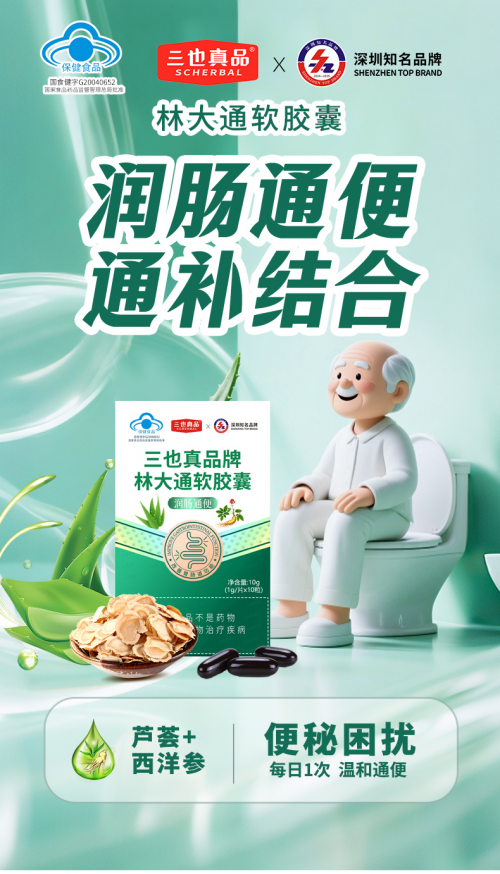
Core Insights - The article highlights the significant issue of constipation affecting over 100 million people in China, emphasizing the inadequacy of existing solutions in the market that fail to address the root causes of the problem [1] Industry Analysis - The current market for constipation relief products lacks a "breakthrough" product due to a focus on short-term solutions rather than long-term health [1] - Many existing products rely on harsh laxatives that can lead to dependency and further complications, creating a vicious cycle for users [1] - Probiotics, while a step in the right direction, often fall short due to slow effects and challenges in effective colonization, leading to user frustration [1] - Most products only aim for immediate relief without addressing the underlying issues of energy and moisture deficiency in the intestines, resulting in a high likelihood of recurrence [1] Company Overview - Shenzhen San Ye Biological has developed Lin Da Tong soft capsules, which integrate 22 years of research in the field of food and medicine, aiming to redefine the approach to constipation relief [3][9] - The product utilizes a unique "clear first, then supplement" methodology, combining effective ingredients like high-activity aloe vera and American ginseng to provide both immediate relief and long-term health benefits [4][9] - The aloe vera extract is designed to gently stimulate intestinal movement and soften stool, while the American ginseng nourishes the body and restores intestinal function [9] Product Value Proposition - Lin Da Tong soft capsules address user pain points by offering a dual solution that ensures both quick relief and prevention of recurrence, leading to a high repurchase rate of over 92% for related products [10] - The company is recognized as a national high-tech enterprise with a strong brand reputation, supported by over 20,000 successful agents, ensuring a reliable market presence and product safety [10][12] - The market for constipation relief is vast, with a potential worth billions, and Lin Da Tong is positioned as a key player ready to meet the unmet needs of this significant consumer base [12]