白羽肉鸡品种

Search documents
农业“芯片”守护中国饭碗
Jing Ji Ri Bao· 2026-01-17 01:52
Core Viewpoint - The article highlights the significant advancements in China's seed industry over the past five years, emphasizing the country's efforts to achieve self-sufficiency and innovation in seed technology, as well as the successful implementation of the Seed Industry Revitalization Action Plan [1][2][6]. Group 1: Seed Industry Development - Over 95% of crop varieties are now independently bred, with domestic market shares for livestock and aquaculture seeds exceeding 80% and 85% respectively [2] - The national seed supply guarantee rate has reached 80%, showcasing improved seed supply capabilities [2] - The establishment of key national seed breeding bases has optimized the layout of seed production, ensuring that "Chinese grain" primarily uses "Chinese seeds" [2][3] Group 2: Technological Innovation - Significant advancements in seed technology have been made, with the introduction of new crop varieties that are resistant to diseases and better suited for local conditions [3][4] - The use of smart greenhouses for testing rice varieties has improved the efficiency of seed quality assessment [4] - The overall level of technological innovation in the seed industry has entered the world's top tier, with ongoing projects aimed at addressing core technological challenges [4][5] Group 3: International Cooperation - China's seed industry has expanded its international cooperation, with seed exports expected to exceed imports for the first time in 2024, achieving a trade surplus [6][7] - Various companies are actively participating in the Belt and Road Initiative, promoting domestic seed varieties globally [7] - The focus on international collaboration is driving the entire agricultural industry to expand beyond single product exports to a comprehensive service model [7] Group 4: Future Directions - The next phase will focus on addressing industry needs by accelerating the breeding of high-yield, quality, and specialized seed varieties [5][6] - Plans are in place to enhance seed resource identification, improve seed quality, and strengthen the innovation capabilities of leading enterprises [6][7]
有种可用、风险可控 我国已查清畜禽资源“家底”
Yang Shi Xin Wen Ke Hu Duan· 2025-09-15 03:52
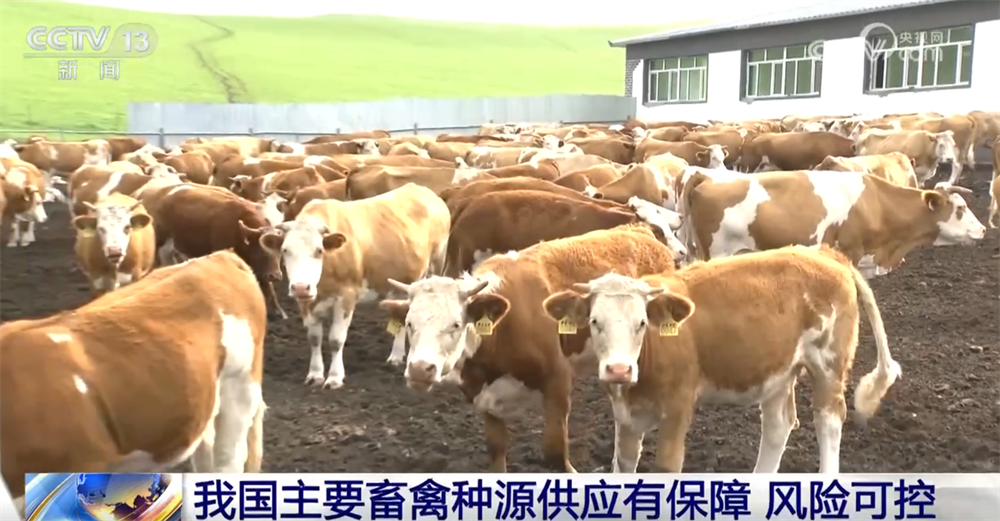
Core Insights - The implementation of the national breeding revitalization initiative has led to significant progress in the development of livestock and poultry breeding in China [1][2] - The country has established a comprehensive understanding of its livestock and poultry resources, with 240 national and 671 provincial conservation farms identified, and 159 national protected breeds achieving full live protection coverage [1] - Conservation measures have been successfully applied to all 61 endangered breeds, resulting in a recovery in population numbers, with over half of the breeds experiencing a decrease in their endangered status, and 6 breeds being classified as "safe" [1] Group 1 - The number of national core breeding farms has increased to 333, with efforts to expand core breeding populations and improve selection intensity [1] - The domestic market share of three self-bred white feather broiler breeds exceeds 28%, while the market share of Huaxi bull frozen semen stands at 22% [1] - The establishment of a commercial breeding system centered around enterprises has begun, ensuring a stable supply of livestock and poultry genetic resources [2] Group 2 - The Ministry of Agriculture and Rural Affairs has confirmed that the supply of major livestock and poultry genetic resources is secure and manageable, addressing the issues of availability and sufficiency of quality breeds [2] - Continuous improvement in the performance of genetic resources is being achieved through independent breeding efforts, which enhances the efficiency and standards of the livestock industry [2]
“数”说我国主要畜禽种源供应有保障、风险可控 畜禽种业发展取得积极进展
Yang Shi Wang· 2025-09-15 01:28
Core Insights - The revitalization action for China's seed industry has made significant progress in livestock and poultry breeding, with a comprehensive understanding of livestock resources established [1] - The number of national and provincial breeding conservation sites has reached 240 and 671 respectively, with 159 national-level protected breeds achieving full live protection coverage [1] - Endangered breeds have seen recovery measures implemented, resulting in over half of the breeds experiencing a decrease in endangerment levels, with six breeds transitioning from endangered to stable [1] Breeding Improvement - The implementation of a genetic improvement plan for livestock and poultry has enhanced the resilience of seed supply, with the number of national core breeding farms increasing to 333 [3] - The core breeding population is being expanded in an orderly manner, gradually increasing selection intensity [3] Market Position - The domestic market share of three self-bred white feather broiler breeds has exceeded 28%, while the market share of Huaxi bull frozen semen stands at 22% [5] Innovation and Commercialization - Efforts are being made to concentrate innovative resources towards leading enterprises, establishing a commercial breeding system primarily driven by companies [7] Supply Assurance - The supply of major livestock and poultry seed sources is secure and manageable, effectively addressing the issues of availability and sufficiency of quality breeds [9]