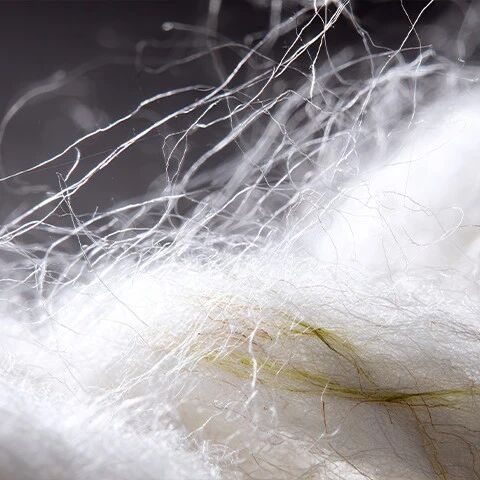
的确良

Search documents
辽阳“一根纱线”织出22亿元大产业
Liao Ning Ri Bao· 2026-02-05 01:01
Core Insights - The development of the Xiaobei River sock industry in Liaoyang is closely tied to the innovation and quality represented by the first domestic polyester fabric produced in China, which laid the foundation for the local textile industry [1] Group 1: Historical Development - The first batch of polyester short fibers produced by Liaoyang Petrochemical in the late 1970s marked the beginning of the domestic polyester fabric industry, which significantly impacted the local economy and laid the groundwork for the Xiaobei River sock industry [1] - In 1984, local villagers began to establish sock workshops, utilizing locally sourced polyester yarn, which led to the growth of a cottage industry in sock production [2] Group 2: Industry Growth and Transformation - The Xiaobei River sock industry has evolved from small-scale workshops to a significant industrial cluster, producing 1.5 billion pairs of socks annually with a production value exceeding 2.2 billion yuan [1] - The industry has transitioned from basic polyester socks to a diverse range of products, including antibacterial, breathable, and sports socks, driven by continuous improvements in technology and raw materials [2] Group 3: Current Industry Status - The Xiaobei River sock industry has become the fifth largest sock manufacturing cluster in China, with 25,000 knitting machines operating continuously and 257 related enterprises established in the region [3] - The socks produced in Xiaobei River are exported to over ten countries, including Germany, Mexico, and Chile, showcasing the global reach of the local industry [3]
用了几十年的聚酯纤维,是怎么在互联网塌房的?
36氪· 2025-12-12 00:09
Core Viewpoint - The article discusses the negative perception of polyester fiber in the clothing industry, highlighting its historical significance and current misconceptions about its quality and usage [9][12][66]. Group 1: Historical Context and Current Perception - Polyester fiber was once celebrated as a technological marvel in the 1950s, referred to as "black technology" and was highly sought after in the 70s and 80s [21][24]. - Over the decades, the perception of polyester has shifted dramatically, now being equated with cheapness and low quality [25][26]. - The article notes that polyester is often associated with negative attributes, such as being made from plastic waste and releasing toxic substances when heated, leading to its vilification in the fashion industry [17][18]. Group 2: Composition and Production - The most common polyester, PET (polyethylene terephthalate), is derived from the same material as plastic bottles, but the majority of polyester is produced from petroleum rather than recycled materials [27][30]. - Less than 15% of polyester fibers are made from recycled plastic, with most brands using virgin materials for cost-effectiveness [31][33]. Group 3: Advantages and Misconceptions - Despite its negative reputation, polyester has several advantages, including durability, wrinkle resistance, and quick-drying properties, making it suitable for various applications [42][49]. - The article argues that cotton, often perceived as superior, has limitations such as poor moisture management during physical activities, while polyester can effectively wick moisture away [50][52]. - The versatility of polyester allows it to be engineered into various forms, providing functionalities comparable to natural fibers like down [58][60]. Group 4: Consumer Misunderstanding and Marketing Issues - The article highlights the issue of misleading marketing practices where polyester products are disguised under various names, leading to consumer confusion and distrust [61][72]. - Many consumers dislike polyester not for its inherent qualities but due to deceptive marketing that misrepresents the material as something it is not [72].