短途运输

Search documents
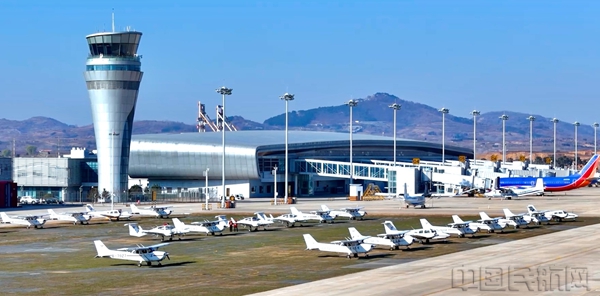
庆云通用机场预计今年10月竣工
Qi Lu Wan Bao· 2026-01-16 14:10
Core Insights - The Dezhou Qingyun General Airport is expected to be completed in October 2023 and will serve various aviation needs including low-altitude flight services, short-distance transportation, and emergency rescue operations [1][2] Project Overview - The airport is classified as an A1 type general airport with a flight area grade of 2B, featuring one runway, two vertical connecting roads, and a comprehensive business building that includes a control tower [1][2] - Current construction progress includes the successful topping out of the three-story comprehensive business building, completion of the concrete pouring for the hangar foundation, and the topping out of the living center [1][2] Location and Accessibility - The airport site is located in Beiwang Village, Shangtang Town, Qingyun County, approximately 7.5 kilometers from the county center and 1.2 kilometers from the Binde Expressway Qingyun toll station [1][2] Future Utilization - Upon completion, the airport aims to enhance infrastructure and industrial support, creating a general aviation industrial park to achieve both social and economic benefits [1][2]
东北亚宠物交易中心项目在沈阳启动
Liao Ning Ri Bao· 2025-12-19 02:31
Core Insights - The Northeast Asia Pet Trading Center project has officially commenced construction, aiming to create a comprehensive platform integrating live pet trading, smart warehousing, cross-border logistics, financial services, and brand incubation [1] Investment and Development - The project will leverage the region's advantages in live resource supply and cross-border channels to Japan, South Korea, and Russia [1] - The investment partner, China Storage Development (Shenyang) Logistics Co., Ltd., has signed a strategic cooperation agreement with the Shenyang Free Trade Zone to promote the construction of the local pet live resource industry belt [1] Business Model and Revenue Potential - The pet park has introduced e-commerce live streaming platforms to empower upstream and downstream enterprises in the industry chain through digital channels [1] - The Northeast Asia Pet Trading Center has attracted multiple upstream and downstream enterprises, with an expected daily transportation volume of 500 live pets and an annual revenue potential of 22.5 million yuan [1] - The project will also include pet boarding, short-distance transportation, and related businesses such as pet food and supplies, creating a diversified revenue structure [1] Cross-Border Operations - The project is advancing the establishment of the province's first pet cross-border customs clearance location, facilitating the export of high-quality domestic pet resources and the import of internationally renowned pet brands [1]
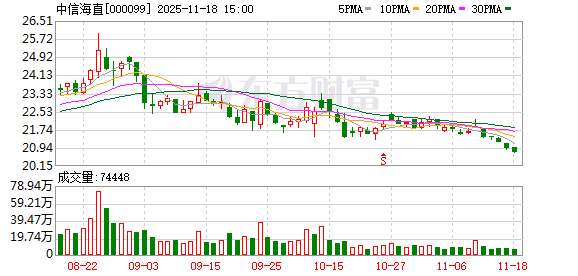
中信海直:公司股价波动受宏观经济环境等多重复杂因素的影响
Zheng Quan Ri Bao· 2025-11-18 11:38
Core Viewpoint - The company's stock price volatility is influenced by multiple complex factors including macroeconomic environment, industry policies, market sentiment, sector rotation, and short-term capital flows [2] Group 1: Company Management and Investor Relations - The company places high importance on market value management and investor returns, establishing a systematic mechanism to enhance these efforts [2] - The company has completed cash dividends for the fiscal year 2024 and for the first half of 2025, indicating a commitment to increasing dividend frequency and proportion [2] Group 2: Business Development - In addition to traditional business operations, the company is actively exploring opportunities in the low-altitude economy, including helicopter tourism, short-distance transportation, and drone services [2] - The company aims to discover more possibilities within the low-altitude economy sector [2]


四川省低空经济产业研究院成立
Xin Hua Cai Jing· 2025-11-14 06:20
Core Insights - The Sichuan Low Altitude Economic Industry Research Institute has been officially established, marking it as the first provincial-level research institute in China focused on low altitude economy [1][2] - The institute aims to promote the development of the low altitude economy through a collaborative innovation model involving government, leading enterprises, and market operations [1][2] - Recent policies have been introduced to support the development of low altitude economic applications, addressing challenges such as insufficient application scenarios and immature business models [1][2] Group 1 - The Sichuan Low Altitude Economic Industry Research Institute is supported by the Sichuan Port and Shipping Investment Group and will focus on research related to application scenarios in low altitude logistics, short-distance transportation, tourism, urban governance, and emergency rescue [2] - The institute will work on low altitude management, services, airworthiness certification, and safety to optimize the industry chain structure and promote collaborative development [2] - Recent agreements at the conference included 19 projects related to industry attraction, investment funds, and product orders, with over 50 key enterprises from outside Sichuan entering the market and a total investment exceeding 50 billion [2] Group 2 - Financial institutions have invested significantly in the low altitude economy, with an industry loan balance exceeding 19 billion, and the establishment of a 2 billion sub-fund dedicated to the sector [2] - Chengdu and Mianyang are highlighted as key areas for the low altitude economic industry chain, showcasing their development environment and unique advantages [2]
山东日照机场:“硬支撑、优服务、强业态”三向发力 持续深化“三融合”发展模式
Zhong Guo Min Hang Wang· 2025-09-19 05:48
Core Viewpoint - Shandong Province's Rizhao Airport is enhancing its low-altitude economy through a "three-integration" development model, focusing on hardware strength, service optimization, and advanced business cultivation, leading to a significant increase in general aviation flight volumes and contributing to the growth of the low-altitude economy [1][5]. Infrastructure Development - Rizhao Airport emphasizes the importance of infrastructure in supporting low-altitude economic development by building dedicated facilities such as general aviation aprons, hangars, and maintenance facilities, while also accelerating the construction of remote control towers and low-altitude flight service centers [2]. - The airport has achieved full coverage of ADS-B monitoring signals for low-altitude airspace management and provides efficient infrastructure support for general aviation enterprises through platforms like the Feiyiguan APP [2]. - In 2025, the airport accounted for nearly half of the province's general aviation flight operations, with flight hours reaching approximately 15,000 in the first half of the year, maintaining a steady operational trend [2]. Service Optimization - Rizhao Airport adopts a high-quality development approach, implementing flexible flight schedules and transparent cost structures to enhance operational efficiency and alleviate concerns for aviation enterprises [3]. - The establishment of a General Aviation Committee and a rapid response mechanism for on-site service aims to improve service processes and address operational needs effectively [3]. - The airport collaborates with the Shandong Low Altitude Economy Association to develop supportive policies for the low-altitude economy, enhancing service levels and operational capabilities [3]. Ecosystem Development - The airport is creating a favorable ecosystem for low-altitude economic development by scientifically managing airspace resources and establishing a clear and standardized operating environment for general aviation activities [4]. - The implementation of a "five unification" operational management system and close cooperation with aviation enterprises contribute to a stable and efficient operational environment [4]. - Rizhao Airport is exploring new applications in low-altitude logistics, sightseeing, short-distance transport, and educational aviation, continuously expanding the general aviation industry chain and low-altitude economic activities [4]. Future Outlook - Moving forward, Rizhao Airport aims to leverage strategic opportunities in low-altitude economic development, further solidifying its advantages and promoting the "three-integration" model to contribute to the high-quality development of the national low-altitude economy [5].